Red-eyed Tree Frog
Learn about the stunning red-eyed tree frog, a vibrant Central American amphibian famous for its brilliant colors, remarkable climbing abilities, and unique sleeping posture

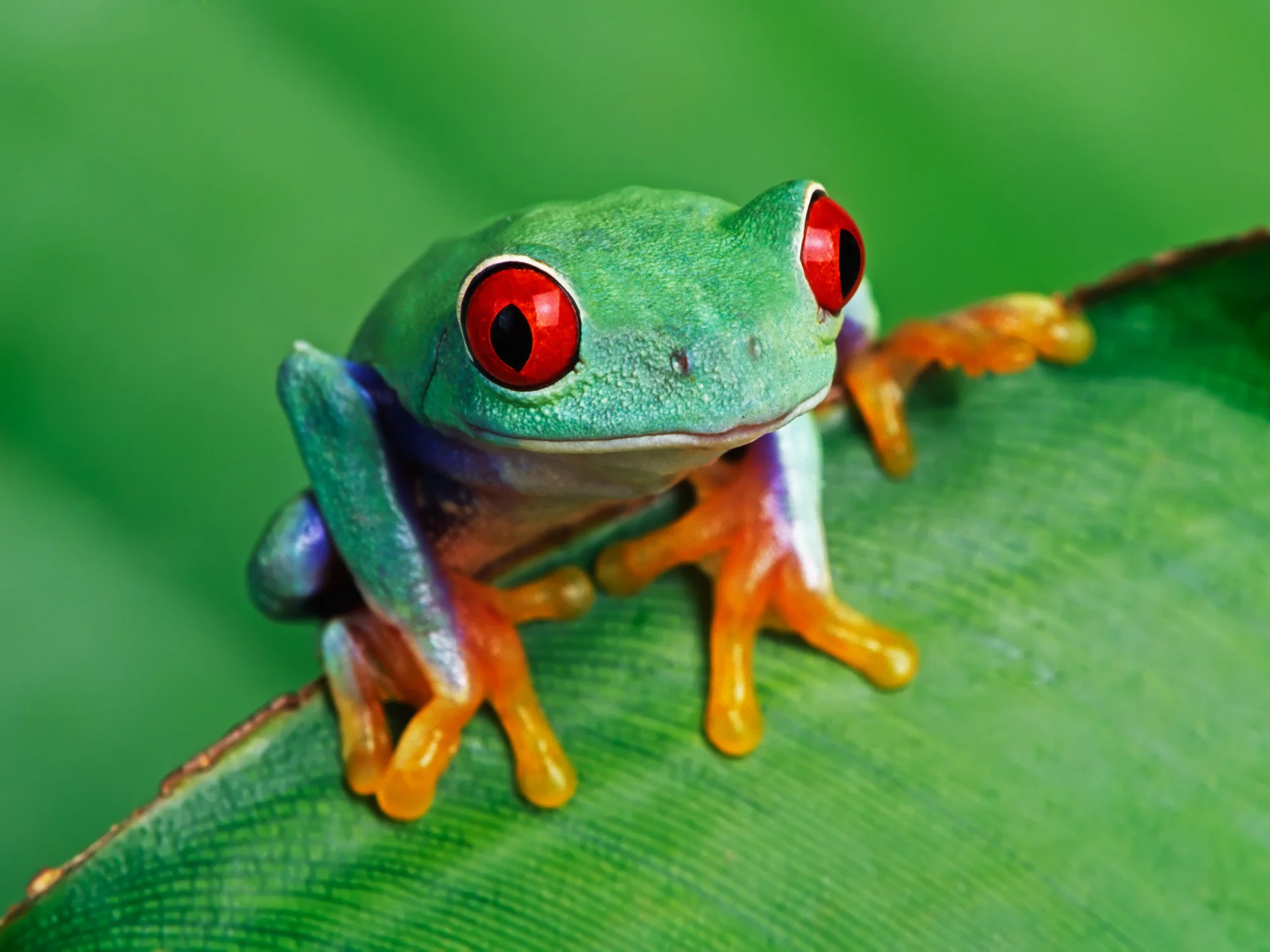
Red-eyed tree frog displaying its iconic bright red eyes and vibrant green coloration
Red-eyed tree frogs are living jewels of the Central American rainforest! These stunning amphibians are instantly recognizable with their enormous red eyes, brilliant green bodies, and vibrant blue and yellow markings. Despite their eye-catching appearance, they're masters of camouflage and stealth, spending their days hidden among leaves and coming alive at night in the forest canopy.

Where Red-eyed Tree Frogs Live
Red-eyed tree frogs inhabit the humid tropical rainforests of Central America, where they spend almost their entire lives high in the forest canopy.
Geographic Range:
- Mexico: Southern regions including Chiapas, Tabasco, Campeche, and Yucatan Peninsula
- Belize: Throughout the country's rainforest areas
- Guatemala: Tropical lowland regions and cloud forests
- Honduras: Northern and eastern rainforest areas
- Nicaragua: Eastern coastal rainforests and central mountains
- Costa Rica: Throughout the country's diverse rainforest regions
- Panama: Eastern rainforest areas connecting to South America
Preferred Habitats:
- Primary rainforests: Undisturbed tropical forests with complex canopy structure
- Secondary forests: Regenerating forest areas with dense vegetation
- Cloud forests: High-elevation forests with persistent mist and humidity
- Gallery forests: Forested corridors along rivers and streams
- Plantation edges: Borders of coffee, cacao, and banana plantations with remaining forest
- Riparian zones: Forest areas along permanent water sources
Diet and Hunting Behavior
Red-eyed tree frogs are specialized nocturnal predators that hunt exclusively for flying and crawling insects in the forest canopy.
Primary Prey:
- Flying insects: Moths, flies, beetles, and small flying ants
- Crickets: Tree crickets and other orthopteran insects
- Caterpillars: Soft-bodied larvae found on leaves and branches
- Spiders: Small arachnids encountered during nighttime foraging
- Smaller tree frogs: Occasionally other small frog species
Hunting Strategy: These frogs are "sit-and-wait" predators that remain motionless on leaves and branches until prey comes within striking distance. Their enormous eyes provide excellent night vision for spotting movement in low light conditions.
Feeding Technique: Like most frogs, they use their sticky tongues to capture prey. The tongue can extend nearly the full length of their body and retrieves food in a fraction of a second.
Feeding Schedule: They're most active during the first few hours after dark when insect activity is highest. During the day, they fast while sleeping in hidden locations.
Remarkable Camouflage and Defense
Red-eyed tree frogs are masters of disguise with multiple defense strategies:
Daytime Camouflage: When sleeping, they tuck their bright limbs beneath their bodies and close their eyes, appearing as simple green bumps on leaves that blend perfectly with the forest.
Startle Defense: When threatened, they suddenly open their huge red eyes and expose their bright orange feet and blue sides, creating a shocking color display that can startle predators long enough for escape.
Nocturnal Coloration: At night, their green coloration helps them blend with leaves while their red eyes become less conspicuous in the darker environment.
Behavioral Camouflage: They often sleep on the undersides of large leaves, making them nearly invisible to both predators and prey.
Incredible Climbing Abilities
Red-eyed tree frogs possess remarkable adaptations for life in the trees:
Sticky Toe Pads: Their toes end in specialized adhesive pads that can stick to any surface, allowing them to climb smooth leaves, wet bark, and even glass.
Flexible Joints: Highly flexible ankles and wrists allow them to maintain grip while reaching in any direction for prey or new perches.
Lightweight Build: Their small size and lightweight body structure reduce stress on delicate branches and leaves.
Perfect Balance: They can sleep clinging to the underside of leaves without falling, even during strong winds or rain.
Fascinating Reproductive Behavior
Red-eyed tree frogs have developed unique breeding strategies adapted to their arboreal lifestyle:
Breeding Season: Reproduction typically occurs during the rainy season when humidity is highest and water sources are abundant.
Amplexus: Males call from vegetation near water to attract females. When a female approaches, the male grasps her from behind in a mating embrace called amplexus.
Leaf Nesting: The unique aspect of their reproduction is that females lay their eggs on leaves overhanging water, not directly in the water like most frogs.
Egg Development: The 20-40 green eggs develop attached to the leaf for 6-8 days, with embryos clearly visible through the transparent egg jelly.
Hatching Strategy: When ready to hatch, tadpoles break out of their eggs and drop directly into the water below, where they continue development for 60-80 days.
Tadpole Life and Metamorphosis
Red-eyed tree frog tadpoles have their own fascinating adaptations:
Aquatic Phase: Tadpoles are purely aquatic, living in temporary pools, slow streams, or forest ponds created by rainfall.
Rapid Development: They must complete metamorphosis quickly before temporary water sources dry up during the dry season.
Omnivorous Diet: Unlike adult frogs, tadpoles eat both plant material and small organic particles in the water.
Metamorphic Changes: The transformation includes developing the iconic red eyes, growing limbs, absorbing the tail, and developing the sticky toe pads essential for climbing.
Rainforest Ecosystem Role
Red-eyed tree frogs play important ecological roles in Central American rainforests:
Insect Control: They help control populations of flying insects, including some species that can be agricultural pests.
Food Web Links: They serve as prey for birds, snakes, bats, and other arboreal predators, transferring energy between different forest levels.
Indicator Species: Their presence indicates healthy rainforest ecosystems, as they require high humidity, clean water, and intact forest canopy.
Pollination Assistance: While hunting, they occasionally transfer pollen between flowers, though this is not their primary ecological role.
Conservation and Threats
While currently not endangered, red-eyed tree frogs face several challenges:
Habitat Loss: Deforestation for agriculture, logging, and development threatens their rainforest homes throughout Central America.
Climate Change: Changing precipitation patterns and increased temperatures can affect the humidity levels they require for survival.
Pollution: Agricultural chemicals and water pollution can impact both adult frogs and aquatic tadpole stages.
Collection Pressure: Their striking appearance makes them popular in the international pet trade, though most are now captive-bred.
Red-eyed tree frogs remind us of the incredible beauty and complexity of tropical rainforests, serving as ambassadors for the conservation of these critical ecosystems. Their stunning appearance and remarkable adaptations make them one of nature's most photographed and beloved amphibians!