Garden Snail
Discover the garden snail, a remarkable mollusk known for its spiral shell, slimy trail, and surprising adaptability to environments worldwide

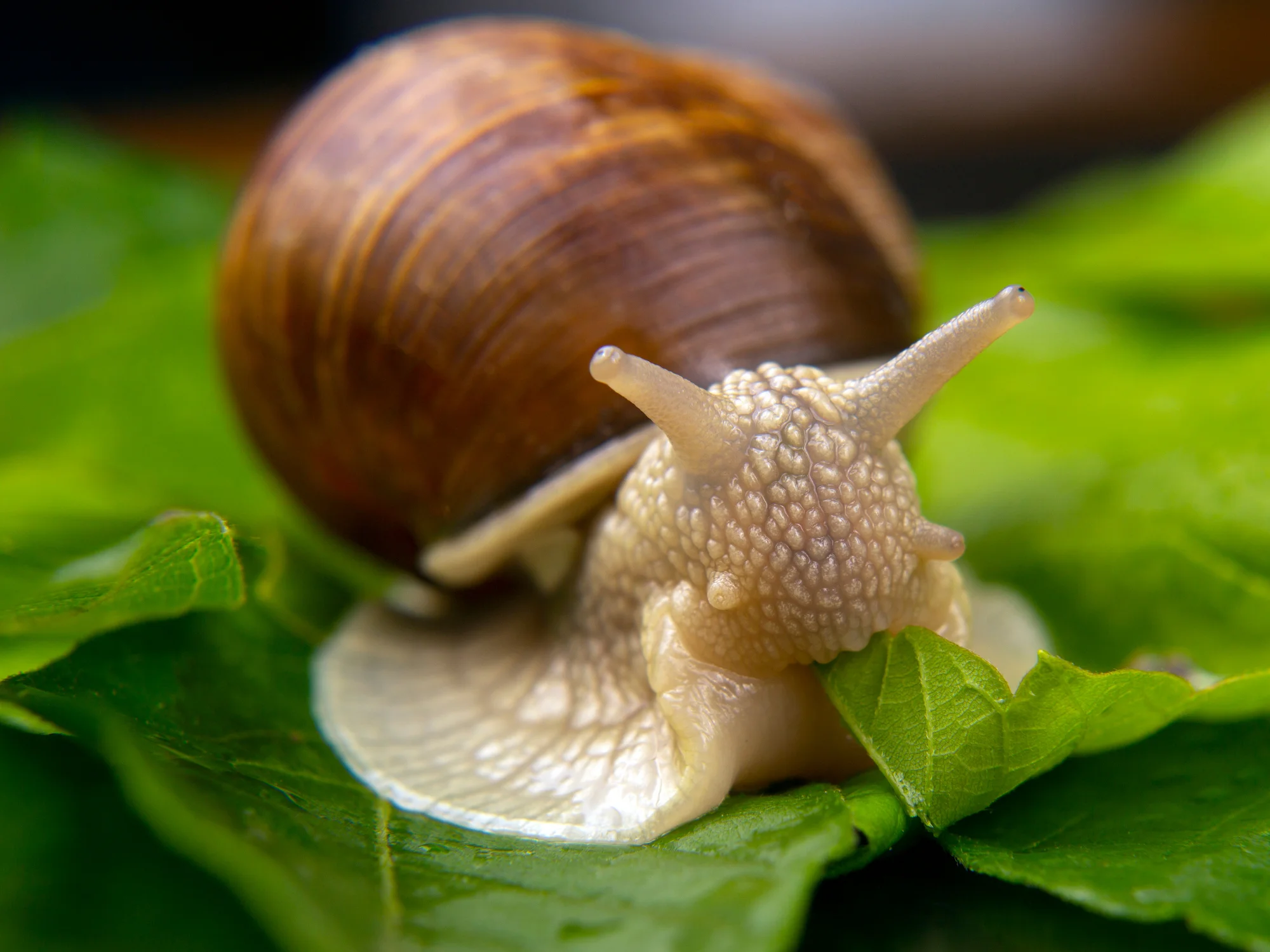
Garden snail showing its characteristic brown and yellow spiral shell and extended tentacles
Garden snails are among nature's most fascinating slow-motion creatures! These remarkable mollusks carry their homes on their backs and navigate the world using a muscular foot that secretes a trail of slime. Despite their reputation as garden pests, garden snails are incredible survivors with complex behaviors, sophisticated sensory systems, and the ability to seal themselves inside their shells to survive harsh conditions for months.

Where Garden Snails Live
Garden snails are one of the world's most successful invasive species, having spread from their Mediterranean origins to every continent except Antarctica.
Native Range:
- Mediterranean Region: Originally from coastal areas of southern Europe and North Africa
- Southern France: Native populations in Mediterranean coastal regions
- Spain: Iberian Peninsula coastal areas
- Italy: Southern regions and Mediterranean islands
- North Africa: Morocco, Algeria, and Tunisia
Introduced Range:
- North America: Throughout United States and southern Canada
- Australia: Established across most of the continent
- New Zealand: Common throughout both main islands
- South Africa: Cape region and other suitable climates
- South America: Chile, Argentina, and temperate regions
- British Isles: Widespread throughout England, Wales, and Ireland
Preferred Habitats:
- Gardens and parks: Cultivated areas with abundant vegetation and moisture
- Agricultural fields: Crop areas, especially during wet conditions
- Woodland edges: Forest margins with leaf litter and understory plants
- Urban environments: City parks, residential gardens, and green spaces
- Coastal areas: Mild maritime climates with consistent moisture
- Greenhouse environments: Protected spaces with ideal temperature and humidity
Diet and Feeding Behavior
Garden snails are herbivorous grazers with surprisingly diverse dietary preferences and some unusual feeding behaviors.
Primary Plant Foods:
- Garden vegetables: Lettuce, cabbage, beans, and other tender crops
- Fruit: Strawberries, citrus fruit, and fallen orchard fruit
- Flowers: Petals and soft flower parts, especially hostas and marigolds
- Young shoots: Tender new growth from trees and shrubs
- Fungus: Mushrooms and decomposing organic matter
- Seedlings: Newly sprouted plants with soft tissues
Unusual Dietary Items:
- Calcium sources: Eggshells, limestone, and mortar for shell construction
- Paper and cardboard: Occasionally consumed for cellulose content
- Dead organic matter: Decaying plant material and compost
- Soil: Consumed incidentally while feeding, providing minerals
Feeding Adaptations: Garden snails possess a radula - a ribbon-like tongue covered with thousands of tiny teeth that rasp food into small particles. They can eat particles as small as bacteria and as large as entire leaves.
Feeding Schedule: Most active during cool, moist conditions, typically feeding at night or during overcast, humid days. They can fast for weeks during dry or cold periods.
Remarkable Physical Adaptations
Garden snails possess numerous sophisticated adaptations for their lifestyle:
Shell Construction: Their spiral shells are made of calcium carbonate and grow continuously throughout their lives. The shell provides protection from predators, prevents dehydration, and serves as a calcium storage system.
Muscular Foot: The large muscular foot secretes mucus that serves as both lubricant and adhesive, allowing snails to crawl up vertical surfaces and even upside down.
Mucus Trail: The silvery slime trail serves multiple functions - reducing friction during movement, preventing water loss, and providing chemical communication with other snails.
Sensory Tentacles:
- Upper tentacles: Bear primitive eyes that detect light and shadows
- Lower tentacles: Contain chemical sensors for smell and taste
- Tentacle retraction: Can withdraw tentacles instantly when touched
Respiratory System: They breathe through a pneumostome - a breathing pore that can be opened and closed to regulate air flow and prevent water loss.
Incredible Survival Abilities
Garden snails demonstrate remarkable resilience to harsh environmental conditions:
Estivation: During dry periods, they can seal their shell opening with a mucus plug called an epiphragm and remain dormant for months, surviving on stored water and energy.
Hibernation: In cold climates, they bury themselves in soil or hide under debris, sealing their shells and entering a state similar to hibernation.
Desiccation Resistance: They can lose up to 60% of their body water and still survive, recovering quickly when moisture returns.
Temperature Tolerance: Garden snails can survive temperatures from just above freezing to over 100°F by adjusting their behavior and metabolism.
Regeneration: They can regenerate lost tentacles and repair shell damage using calcium from their diet.
Unique Reproductive System
Garden snails are hermaphrodites with one of the most complex mating systems in the animal kingdom:
Hermaphroditic Nature: Each individual possesses both male and female reproductive organs, though they typically require a partner for reproduction.
Courtship Behavior: Mating involves elaborate courtship rituals lasting several hours, including circling, touching, and chemical communication through mucus.
Love Darts: During mating, snails may shoot calcium carbonate "love darts" into their partner, which inject hormones that increase the likelihood of successful fertilization.
Egg Laying: After mating, snails lay 50-120 spherical white eggs in underground nests they dig with their muscular foot.
Development: Eggs hatch after 2-4 weeks, depending on temperature and moisture, emerging as miniature versions of adults with tiny shells.
Growth Rate: Young snails grow rapidly when conditions are favorable, reaching sexual maturity within 6-12 months.
Locomotion and Navigation
Despite their reputation for slowness, garden snails have sophisticated movement capabilities:
Speed and Efficiency: They travel at about 0.03 mph, but their energy-efficient locomotion allows them to cover surprising distances - up to 80 feet per night.
Climbing Abilities: Their muscular foot and adhesive mucus allow them to climb vertical surfaces, including glass, trees, and walls.
Navigation Skills: Snails can find their way home using chemical trails, landmark recognition, and possibly magnetic sensing.
Territorial Behavior: Individual snails often return to the same resting spots day after day, suggesting they maintain small territories.
Ecological Role and Impact
Garden snails play complex roles in ecosystems, both beneficial and problematic:
Positive Ecological Functions:
- Decomposition: Break down dead plant material, contributing to nutrient cycling
- Soil aeration: Their movement through soil helps improve structure and drainage
- Food source: Provide food for birds, beetles, frogs, and other predators
- Seed dispersal: Occasionally transport seeds attached to their shells
Agricultural Impact:
- Crop damage: Can cause significant losses to vegetables, fruits, and ornamental plants
- Economic costs: Billions of dollars in agricultural losses and control measures annually
- Biological control: Some regions use imported predators like beetles to control populations
Urban Ecology: In cities, they help break down organic waste and provide food for urban wildlife, though they can damage garden plants.
Human Relationships
Garden snails have complex relationships with human societies:
Culinary Traditions: In many cultures, especially French cuisine, garden snails (escargot) are considered a delicacy, prepared with garlic, herbs, and butter.
Pest Management: Gardeners use various control methods including copper barriers, beer traps, iron phosphate baits, and encouraging natural predators.
Educational Value: They're popular subjects for teaching about biology, ecology, and invertebrate life cycles in schools.
Scientific Research: Garden snails are important research subjects for studying memory, learning, neural development, and environmental toxicology.
Cultural Symbolism: In many cultures, snails symbolize patience, perseverance, and the importance of taking life slowly.
Garden snails remind us that even the smallest and slowest creatures can be remarkably complex and successful. Their sophisticated behaviors, incredible survival abilities, and worldwide distribution demonstrate that nature's success stories come in all sizes and speeds!