Humpback Whale
Explore the incredible migration journeys, complex songs, and acrobatic behaviors of humpback whales, the most musical animals in the ocean
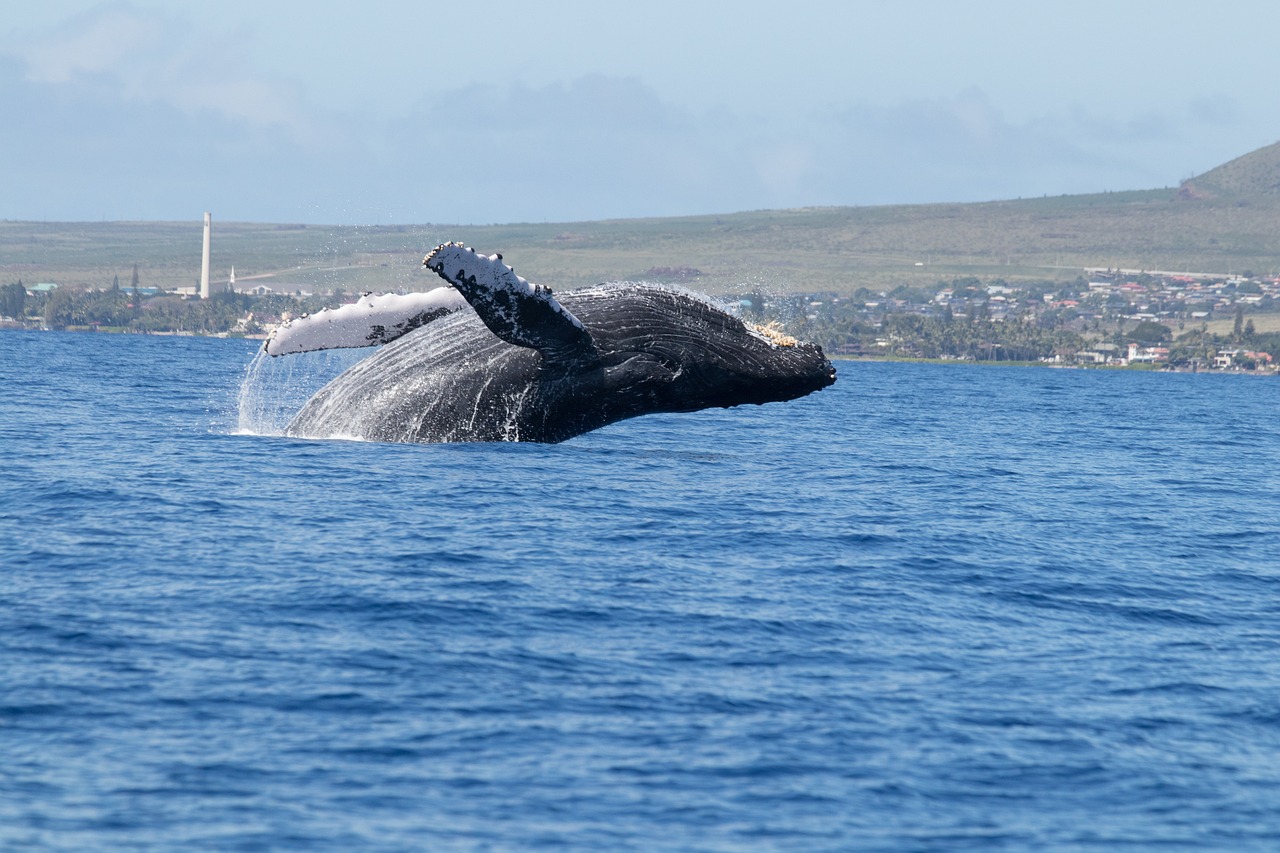
Massive humpback whale breaching completely out of the water, showing its distinctive long white pectoral fins
Humpback whales are among the most amazing and musical animals on our planet! These gentle giants are famous for their incredible songs, spectacular acrobatic displays, and epic migration journeys that cover thousands of miles. With their long white fins and playful behavior, humpback whales have captured the hearts of people around the world and become symbols of ocean conservation success.

The Ocean's Musicians
Humpback whales create some of the most complex and beautiful songs in the animal kingdom! Male humpbacks sing elaborate songs that can last 30 minutes and be heard underwater for up to 20 miles. These songs contain repeated themes, phrases, and patterns - just like human music!
Each population of humpback whales has its own unique song, and amazingly, all the males in a group sing the same song during breeding season. Even more incredible, they gradually change their songs over time, with new themes spreading through the population like hit songs on the radio!
Amazing Acrobats
Humpback whales are the most acrobatic of all the great whales. They regularly breach (jump completely out of the water), despite weighing as much as 12 elephants! Scientists think they breach to communicate with other whales, remove parasites, or simply because it feels good.
They also perform other spectacular behaviors like tail slapping, where they lift their massive tail flukes and slam them down on the water's surface, creating thunderous sounds that can be heard for miles.
Epic Migrations
Humpback whales make one of the longest migrations of any mammal, traveling up to 16,000 miles round trip each year! They spend summers feeding in cold, nutrient-rich polar waters, then swim to warm tropical waters to breed and give birth.
During their migration, humpbacks can fast for 5-7 months, living entirely off their stored blubber (fat). Mothers with newborn calves need the warm tropical waters to help their babies build up enough blubber to survive the journey to cold feeding areas.
Where They Live
Humpback whales are found in oceans worldwide, following predictable seasonal migration routes between feeding and breeding areas.
Major Populations and Migration Routes:
North Pacific:
- Summer feeding: Alaska (Glacier Bay, Frederick Sound)
- Winter breeding: Hawaii, Mexico (Baja California), Central America
- Migration distance: Up to 6,000 miles each way
North Atlantic:
- Summer feeding: Norway, Iceland, Greenland
- Winter breeding: Caribbean (Dominican Republic, Puerto Rico)
- Migration route: Along the Eastern US coast
Southern Hemisphere:
- Summer feeding: Antarctica (around the entire continent)
- Winter breeding: Australia (east and west coasts), Ecuador, Brazil, Oceania
- Migration distance: Up to 8,000 miles each way
Preferred Habitats:
- Feeding areas: Cold polar waters with krill swarms
- Breeding areas: Warm tropical shallow waters
- Migration routes: Along continental coastlines
Feeding and Diet
Humpback whales are filter feeders that eat enormous amounts of tiny prey. They can consume up to 3,000 pounds of food per day during feeding season! Their diet includes:
- Krill: Tiny shrimp-like creatures (main food source)
- Small schooling fish: Herring, sardines, anchovies
- Plankton: Microscopic marine organisms
Humpbacks use an amazing feeding technique called bubble net feeding, where they work together to create a "net" of bubbles around schools of fish, then swim up through the center with their mouths wide open.
Baby Whales
Humpback whale calves are born in warm tropical waters after an 11-month pregnancy. Newborns are already 12-16 feet long and weigh about 1 ton! They drink 100-150 gallons of rich milk every day and grow incredibly fast.
Mothers are very protective and will position themselves between their calves and any potential threats. Baby whales stay close to their mothers for about a year, learning essential survival skills and migration routes.
Conservation Success
Humpback whales were once nearly extinct due to commercial whaling, with populations reduced to just a few thousand worldwide. Thanks to international protection and the ban on commercial whaling, humpback whale populations have made an amazing recovery!
Today, there are approximately 80,000 humpback whales worldwide - a true conservation success story that shows how protection and international cooperation can save endangered species.
These magnificent singers of the sea continue to inspire us with their beauty, intelligence, and incredible journeys across our planet's oceans!