
Great White Shark
Learn about the incredible hunting abilities, amazing senses, and important role of great white sharks in keeping ocean ecosystems healthy

A massive great white shark gliding through deep blue ocean waters, showing its powerful, streamlined body
Great white sharks are some of the most powerful and impressive animals in our oceans. These amazing predators have been swimming in Earth's seas for over 400 million years, making them older than dinosaurs! Despite what movies might show, great whites are not monsters - they're incredibly important animals that help keep ocean ecosystems healthy and balanced.

Incredible Superpowers
Great white sharks have amazing abilities that make them perfect ocean hunters. They can smell a single drop of blood in 25 gallons of water and detect electrical signals from other animals' heartbeats! Their bodies are perfectly designed for swimming fast - they can reach speeds of up to 35 miles per hour when chasing prey.
These sharks also have incredible eyesight and can see in both bright and dim underwater conditions. When they attack, they roll their eyes back to protect them, which is why their eyes sometimes look completely white.
Amazing Body Features
Great whites have up to 300 sharp, triangular teeth arranged in several rows. When they lose a tooth (which happens often), a new one moves forward to replace it. A single shark can go through thousands of teeth in its lifetime!
Their skin feels like sandpaper because it's covered in tiny tooth-like scales called denticles. These scales help them swim faster by reducing drag in the water.

Great White Shark specimen from the Australian Museum showing its awesome teeth!
Source: Auckland Museum, Wikimedia Commons
Where They Live
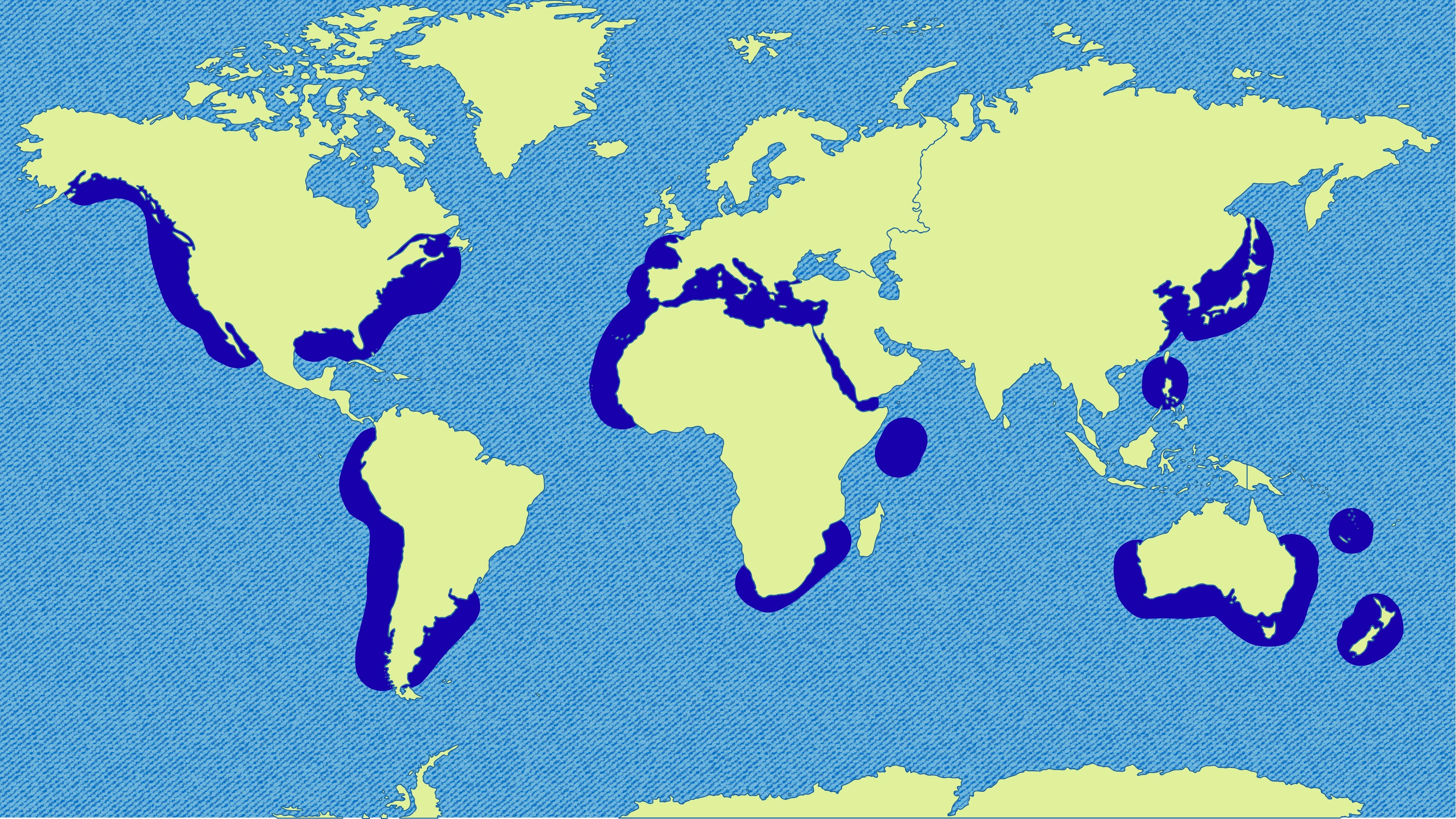
Great white sharks are found in oceans all around the world, but they prefer cooler coastal waters where their favorite prey lives.
Specific Locations:
- California Coast: Especially around the Farallon Islands and Monterey Bay
- South Africa: Near Cape Town and Gansbaai (famous for cage diving)
- Australia: Around South and Western Australia, including near Adelaide and Perth
- New Zealand: Both North and South Island coastal waters
- Mediterranean Sea: Near Italy, Spain, and southern France
- East Coast USA: From North Carolina to New England
- Chile and Argentina: Along the Pacific and Atlantic coasts
Diet and Hunting
Great white sharks are apex predators, which means they're at the top of the food chain. They mainly eat seals, sea lions, fish, and sometimes other sharks. Young great whites start by eating smaller fish and rays, then graduate to hunting larger prey as they grow.
They're ambush hunters, often attacking from below where their prey can't see them coming. Their gray backs and white bellies help them blend in with the ocean - this is called counter-shading.
Important Role
Great white sharks are like ocean doctors, keeping marine ecosystems healthy by removing sick and weak animals. Without these important predators, the ocean's food chain would become unbalanced, affecting many other sea creatures.
Though they might seem scary, great white sharks rarely interact with humans and attacks are extremely rare. These magnificent animals deserve our respect and protection!

_(AM_MA120955-1).jpg)