Green Sea Turtle
Explore the fascinating life journey of green sea turtles, from tiny hatchlings to massive ocean wanderers who navigate thousands of miles across the seas

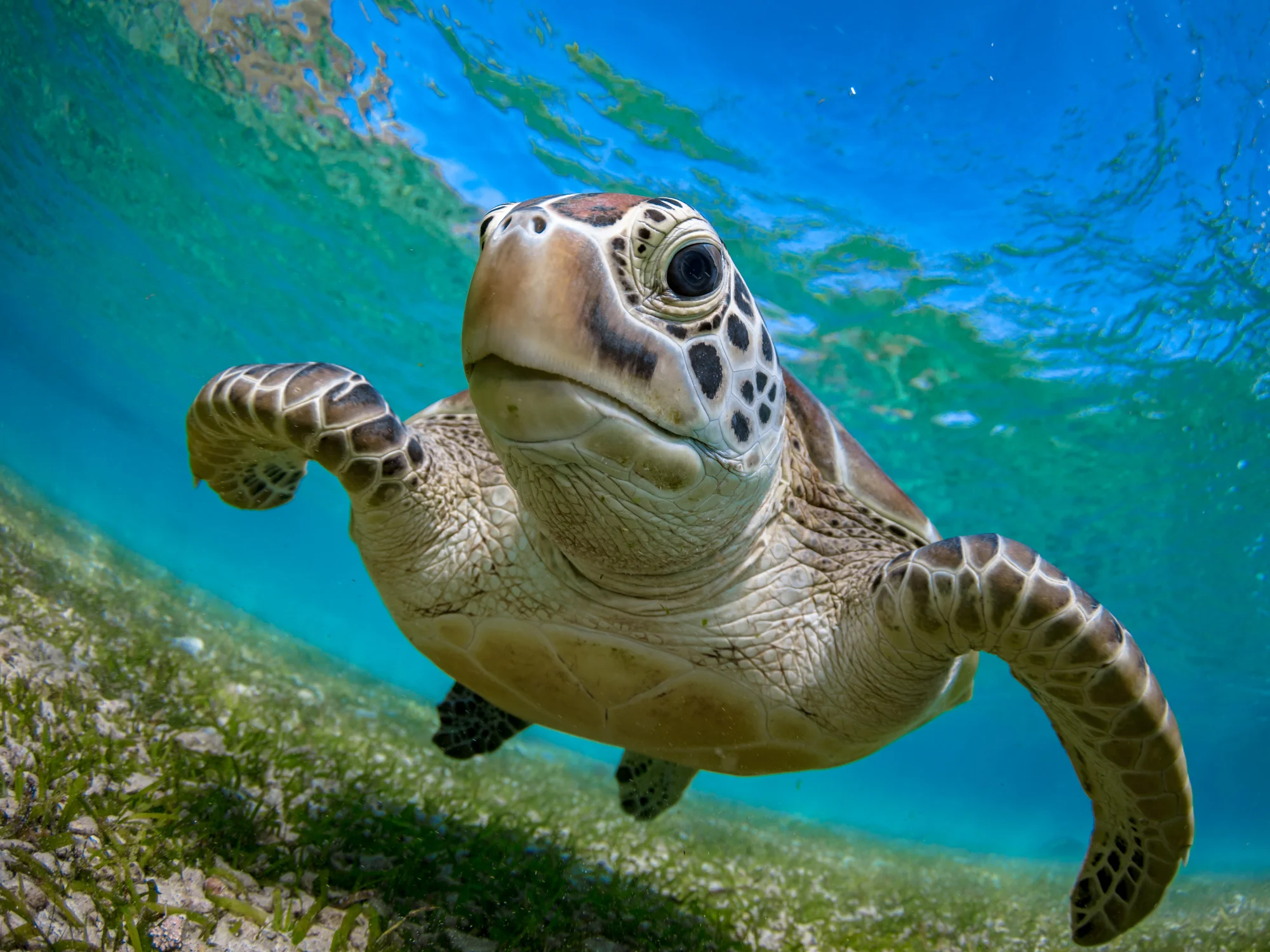
Adult green sea turtle gracefully swimming over a colorful coral reef in tropical waters
Green Sea Turtles: Ancient Ocean Travelers
Green sea turtles are some of the most amazing travelers on our planet! These ancient mariners have been swimming in Earth's oceans for over 150 million years. Despite their name, they're not always green - their name comes from the green fat under their shells, which gets its color from all the seagrass and algae they eat.

Incredible Life Journey
Green sea turtles have one of the most amazing life stories in the animal kingdom. Baby turtles, called hatchlings, start their lives on sandy beaches where their mothers bury eggs in the sand. When they hatch, these tiny turtles (only 2 inches long!) must race to the ocean while avoiding birds, crabs, and other predators.
Once in the water, young turtles spend their first years floating on ocean currents, eating jellyfish, small fish, and floating seaweed. As they grow older and stronger, they become herbivores, eating mainly seagrass and algae.
Super Navigation Skills
Green sea turtles are incredible navigators who can travel thousands of miles across open ocean and still find their way back to the exact beach where they were born! Scientists believe they use Earth's magnetic field like a built-in GPS system. Some turtles migrate over 1,400 miles between their feeding areas and nesting beaches.
Where They Live
Green sea turtles live in warm ocean waters around the world, spending most of their time in shallow coastal areas where seagrass grows.
Specific Locations:
- Caribbean Sea: Around Costa Rica, Mexico, and Caribbean islands
- Pacific Ocean: Hawaii, Galápagos Islands, and coastal Australia
- Atlantic Ocean: Florida, Brazil, and West African coasts
- Indian Ocean: Near the Maldives, Sri Lanka, and eastern Africa
- Mediterranean Sea: Coastal areas of Cyprus, Turkey, and Greece
- Red Sea: Between Africa and the Arabian Peninsula
Important Nesting Sites:
- Tortuguero, Costa Rica: One of the most important nesting beaches
- Raine Island, Australia: Largest green turtle nesting site in the world
- Ascension Island: Atlantic Ocean nesting site
- Cyprus beaches: Important Mediterranean nesting area
Diet and Feeding
Adult green sea turtles are like underwater lawn mowers! They spend most of their day grazing on seagrass beds, which helps keep these underwater meadows healthy. Their strong, sharp-edged jaws are perfect for cutting through tough seagrass and algae.
Young turtles eat a more varied diet including small jellyfish, fish eggs, and floating plants. This diet change from omnivore to herbivore is unique among sea turtles.
Conservation Challenges
Green sea turtles face many threats including plastic pollution, fishing nets, coastal development, and climate change. Rising temperatures can affect whether turtle eggs develop into males or females - warmer sand produces more females!
Many communities and organizations work hard to protect nesting beaches and rescue injured turtles. These gentle giants remind us how important it is to keep our oceans clean and safe for all marine life.