Eastern Box Turtle
Discover the fascinating life of Eastern box turtles, long-lived North American reptiles known for their ability to completely close their shells and their incredible homing abilities
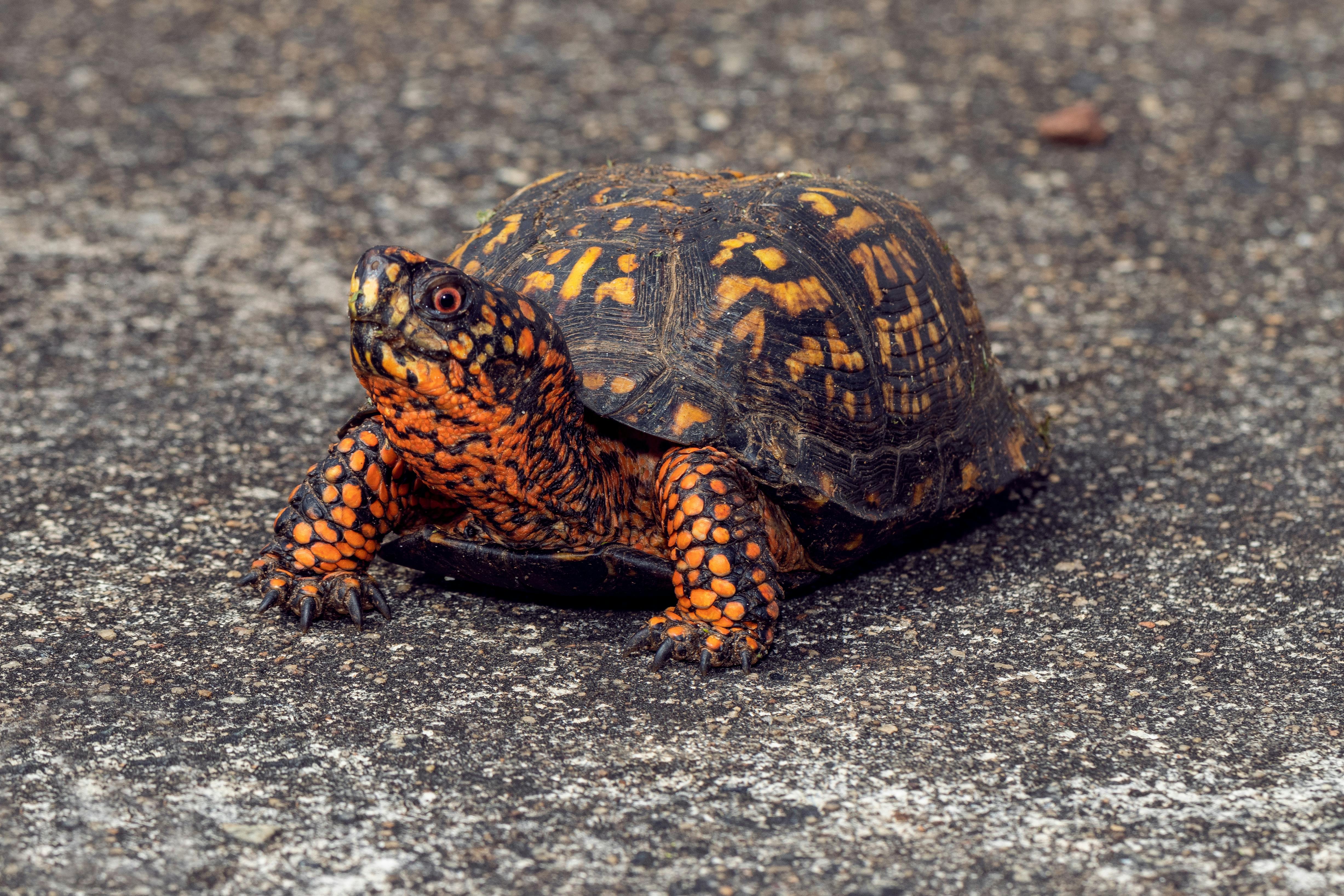
Eastern box turtle showing its distinctive high-domed shell and colorful markings
Eastern box turtles are living treasures of North American forests! These remarkable reptiles can live for over 100 years and possess the amazing ability to completely seal themselves inside their shells like a fortress. With their colorful patterns and gentle demeanor, they've wandered the same woodland areas for generations, becoming beloved symbols of patience and longevity.
Where Eastern Box Turtles Live
Eastern box turtles inhabit the woodlands and forests of eastern North America, preferring areas with loose, moist soil and abundant leaf litter where they can easily burrow and find food.
Geographic Range:
- Maine: Southern regions with suitable forest habitat
- New Hampshire: Southern and coastal areas
- Vermont: Southern valleys and lowlands
- Massachusetts: Throughout most of the state
- Rhode Island: Across the entire state
- Connecticut: Throughout the state
- New York: Eastern and southern regions
- New Jersey: Throughout the state
- Pennsylvania: Across most regions
- Delaware: Throughout the state
- Maryland: Across the entire state
- Virginia: Throughout the state
- West Virginia: Across most regions
- North Carolina: Throughout the state
- South Carolina: Across most areas
- Georgia: Northern and central regions
- Florida: Northern regions only
- Alabama: Eastern regions
- Tennessee: Eastern regions
- Kentucky: Eastern areas
Preferred Habitats:
- Deciduous forests: Oak, maple, and hickory woodlands
- Mixed forests: Areas combining deciduous and coniferous trees
- Forest edges: Borders between forests and fields
- Woodland clearings: Small openings within forested areas
- Stream corridors: Wooded areas along waterways
- Old fields: Abandoned farmland reverting to forest
- Suburban woodlots: Remaining forest patches in developed areas
Diet and Foraging Behavior
Eastern box turtles are opportunistic omnivores with diets that change seasonally based on food availability. Their varied diet reflects their adaptability and long evolutionary history.
Plant Foods (about 60% of diet):
- Fruits and berries: Wild strawberries, blackberries, elderberries, and persimmons
- Mushrooms: Various fungi, including some species toxic to other animals
- Flowers: Violets, dandelions, and other wildflowers
- Leaves and shoots: Young vegetation, especially in spring
Animal Foods (about 40% of diet):
- Insects: Beetles, caterpillars, crickets, and grasshoppers
- Worms: Earthworms and other soil invertebrates
- Snails and slugs: Soft-bodied mollusks
- Small vertebrates: Occasionally small frogs, salamanders, or baby birds
- Carrion: Dead animals they encounter while foraging
Seasonal Feeding Patterns:
- Spring: Focus on emerging insects, worms, and early greens
- Summer: Varied diet including fruits, vegetables, and abundant insects
- Fall: Heavy feeding on fruits and nuts to build fat reserves
- Winter: Minimal feeding during hibernation periods
Unique Shell Adaptations
Eastern box turtles possess one of the most remarkable defensive adaptations in the reptile world - a hinged plastron (bottom shell) that allows them to completely close their shell.
Shell Structure: The shell consists of two main parts connected by a flexible hinge. When threatened, powerful muscles pull the head, legs, and tail inside while the hinged plastron swings up like a drawbridge, creating an impenetrable box.
Individual Patterns: Each box turtle has unique shell patterns, like fingerprints in humans. These colorful designs of yellow, orange, and brown lines and spots help researchers identify individual turtles in long-term studies.
Growth Rings: Annual growth rings on shell scutes can indicate age, though they become less reliable in very old turtles as the rings wear down over decades.
Incredible Homing Abilities
Eastern box turtles possess remarkable navigation skills and typically spend their entire lives within a small home range of just 2-10 acres. They can navigate with incredible precision, returning to favorite feeding spots, water sources, and hibernation sites year after year.
Territory Fidelity: Individual turtles often use the same hibernation spots for decades and can find their way home from distances of several miles. This strong site fidelity means that relocating box turtles often results in their death, as they spend their energy trying to return to their original territory.
Mental Mapping: Research suggests box turtles create detailed mental maps of their territories, remembering the locations of food sources, water, shelter sites, and safe passages through their habitat.
Hibernation and Seasonal Behavior
Eastern box turtles are masters of surviving harsh winters through true hibernation:
Hibernation Preparation: In fall, they eat heavily to build fat reserves and seek out suitable hibernation sites in loose soil, leaf litter, or decaying logs.
Winter Sleep: They dig backwards into soft soil, creating chambers 6-24 inches deep where they remain motionless for 3-5 months. Their heart rate and breathing slow dramatically, and they survive entirely on stored body fat.
Spring Emergence: Box turtles emerge when soil temperatures consistently reach about 60°F, often appearing thin and eager to find food and water.
Activity Patterns: During active months, they're most active during warm, humid conditions, especially after rain showers when earthworms and slugs are abundant.
Reproduction and Longevity
Eastern box turtles have one of the most extended life cycles of any North American reptile:
Sexual Maturity: Box turtles don't reach sexual maturity until 7-10 years old, and some individuals may not breed until they're 15-20 years old.
Breeding Season: Mating occurs from April through October, with peak activity in late spring and early summer.
Nesting: Females dig nests in loose, sandy soil where they lay 3-8 elliptical eggs. The eggs incubate for 70-80 days, with temperature determining the sex of hatchlings.
Remarkable Longevity: Box turtles are among the longest-lived animals in North America. Many individuals live 50-80 years, with confirmed records of turtles over 100 years old. Some researchers believe exceptional individuals might live 150+ years.
Conservation Challenges
Eastern box turtles face numerous modern threats despite their impressive longevity:
Habitat Loss: Forest fragmentation and development destroy crucial habitat and create barriers to movement.
Road Mortality: Slow-moving turtles are vulnerable to vehicle strikes when crossing roads.
Collection Pressure: Illegal collection for the pet trade continues to impact wild populations.
Climate Change: Shifting precipitation patterns and extreme weather events affect hibernation success and food availability.
Box turtles reproduce slowly and take many years to mature, making populations vulnerable to any increases in adult mortality. Their incredible longevity means that individual turtles may witness decades of environmental changes in their small territories.
These ancient wanderers remind us that some creatures measure time in centuries rather than years, and that protecting their woodland homes preserves living links to America's natural heritage!