Green Iguana
Discover the fascinating world of green iguanas, large tropical lizards known for their impressive size, herbivorous diet, and remarkable adaptations
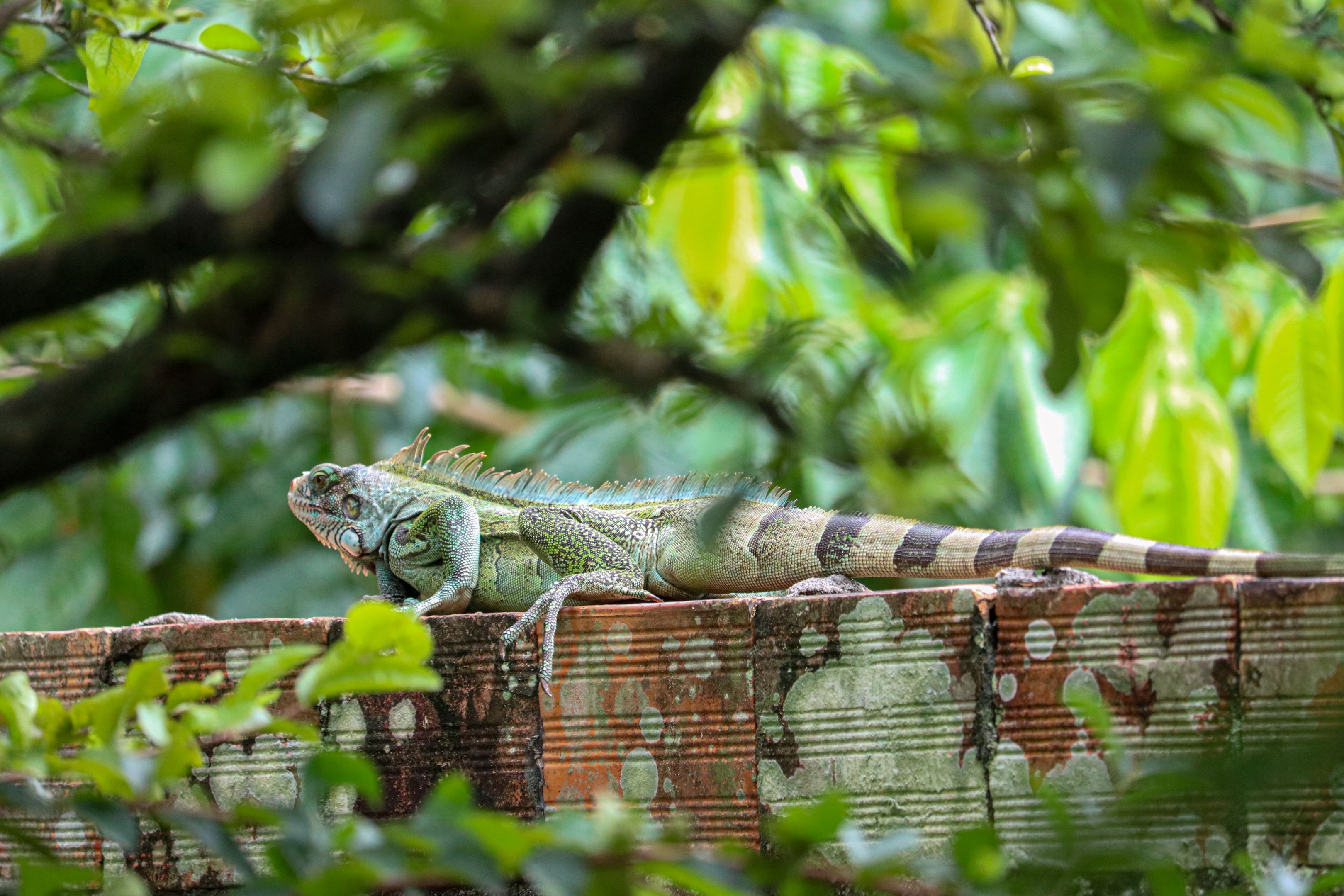
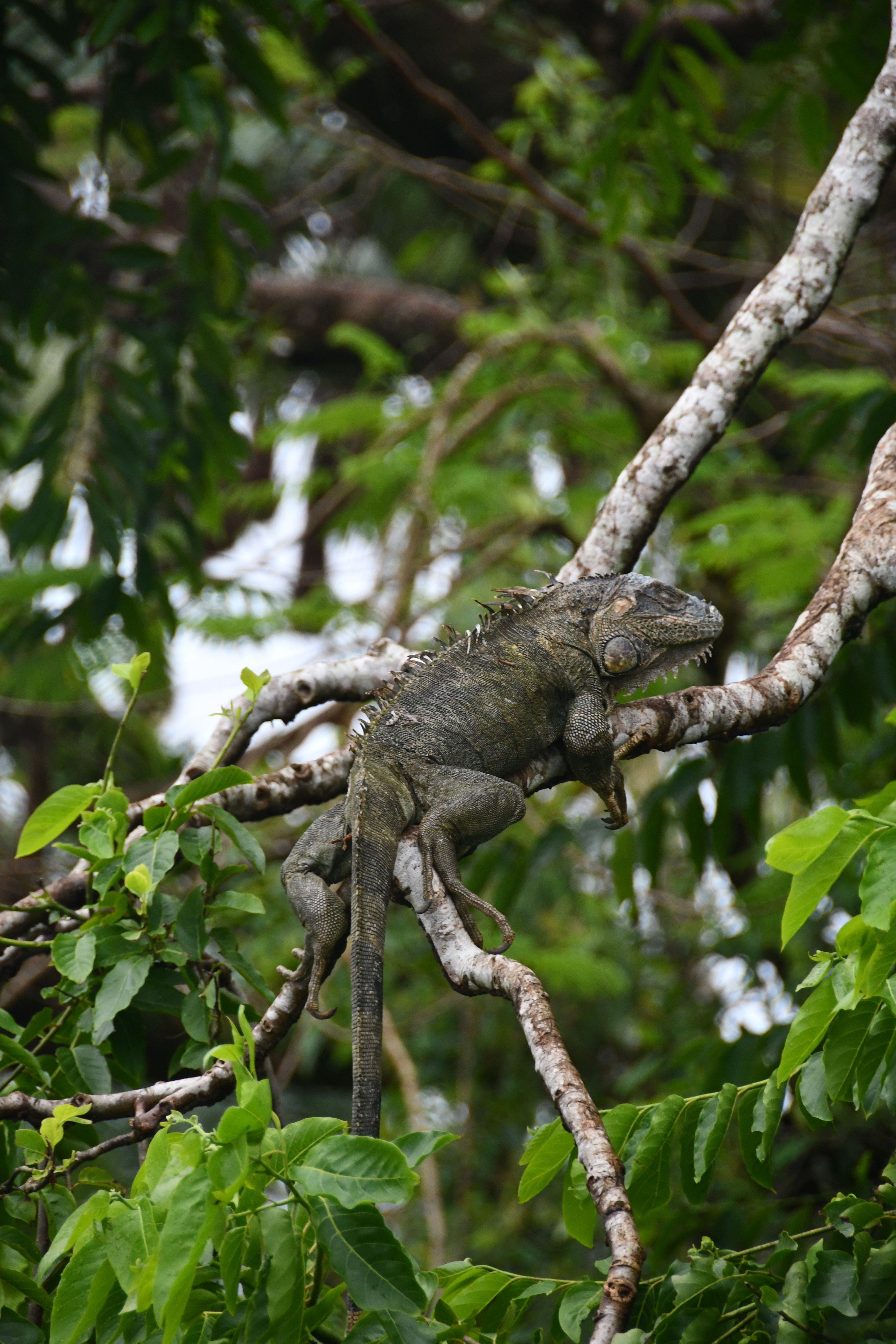
Adult green iguana displaying its impressive dewlap and spinal crest
Green iguanas are among the most impressive lizards in the world! These magnificent reptiles can grow as large as small crocodiles and are perfectly adapted for life in the tropical treetops. Despite their fearsome appearance with sharp claws and spiny crests, green iguanas are gentle herbivores that spend their days peacefully munching on leaves and basking in the sun.
Where Green Iguanas Live
Green iguanas are native to the tropical regions of Central and South America, where they inhabit lush rainforests and coastal areas with warm temperatures year-round.
Geographic Range:
- Mexico: Southern regions including Yucatan Peninsula and Chiapas
- Central America: Throughout Belize, Guatemala, Honduras, El Salvador, Nicaragua, Costa Rica, and Panama
- South America: Northern countries including Colombia, Venezuela, Guyana, Suriname, French Guiana, and northern Brazil
- Caribbean: Many islands including Puerto Rico, Dominican Republic, and Lesser Antilles
- Introduced populations: Southern Florida, Hawaii, and parts of Texas
Preferred Habitats:
- Tropical rainforests: Dense canopy areas near rivers and streams
- Gallery forests: Tree corridors along waterways
- Coastal mangroves: Salt-tolerant forest areas near the ocean
- Riverbank vegetation: Trees and shrubs along freshwater sources
- Secondary forests: Recovering forest areas with diverse plant life
- Urban parks: City areas with large trees and warm climates
Diet and Feeding Behavior
Green iguanas are strictly herbivorous, making them unusual among large lizards. Their plant-based diet requires special adaptations including a long digestive system and bacterial gut flora to break down tough plant material.
Primary Foods:
- Leaves: Hibiscus, mulberry, fig, and other broad-leafed plants
- Flowers: Bright colorful blooms that provide nutrients and water
- Fruits: Figs, mangoes, and other tropical fruits when available
- Young shoots: Tender new growth from trees and shrubs
Seasonal Variations:
- Dry season: Focus on available fruits and flowers
- Wet season: Abundant fresh leaves and shoots
- Breeding season: Increased consumption to support egg production
Young iguanas occasionally eat insects, but adults are completely vegetarian. They prefer to feed in the early morning when plants have the highest moisture content.
Impressive Physical Adaptations
Green iguanas possess remarkable features that make them perfectly suited for arboreal life:
Powerful Tail: Makes up half their body length and serves as a swimming aid, weapon, and balance tool for climbing.
Sharp Claws: Curved claws on each toe provide excellent grip on bark and branches.
Third Eye: A photosensitive organ on top of their head detects shadows and changes in light, helping them spot aerial predators.
Dewlap: The large throat fan helps with communication, temperature regulation, and species recognition.
Spinal Crest: Row of spines along the back makes them appear larger to predators and rivals.
Temperature Regulation and Behavior
As cold-blooded reptiles, green iguanas are masters of thermoregulation. They start each day by basking in sunny spots to warm their bodies for activity. During hot afternoons, they seek shade or dive into water to cool down.
Green iguanas are excellent swimmers and can hold their breath underwater for up to 30 minutes. They often sleep in trees overhanging water, allowing them to escape predators by dropping into the river below.
These lizards are surprisingly social, often gathering in large groups to bask in prime sunny locations. During breeding season, males become territorial and display vibrant colors to attract females and warn off rivals.
Reproduction and Life Cycle
Green iguanas reach sexual maturity at 3-4 years old. During breeding season (typically December through April), females develop orange coloration and males display bright orange, red, and blue hues.
After mating, females travel considerable distances to find suitable nesting sites in sandy areas. They dig burrows 3-6 feet deep where they lay 20-70 eggs. The eggs incubate for 65-115 days depending on temperature.
Baby iguanas are only 7-8 inches long at hatching but grow rapidly, reaching adult size in 3-4 years. Young iguanas face many predators including birds, snakes, and mammals, so they stay hidden in dense vegetation for their first year.
Ecological Importance
Green iguanas play crucial roles in tropical ecosystems as seed dispersers. They travel long distances between feeding and resting areas, spreading seeds from the fruits they eat throughout the forest. This helps maintain plant diversity and forest regeneration.
Their droppings also provide important fertilizer for forest plants, and their presence indicates healthy tropical forest ecosystems.
Green iguanas demonstrate how reptiles can thrive as large herbivores in tropical environments, filling an ecological niche similar to that of large mammals in other ecosystems!