Chromatography Art
Separate ink colors using coffee filters and water to create stunning rainbow art patterns!
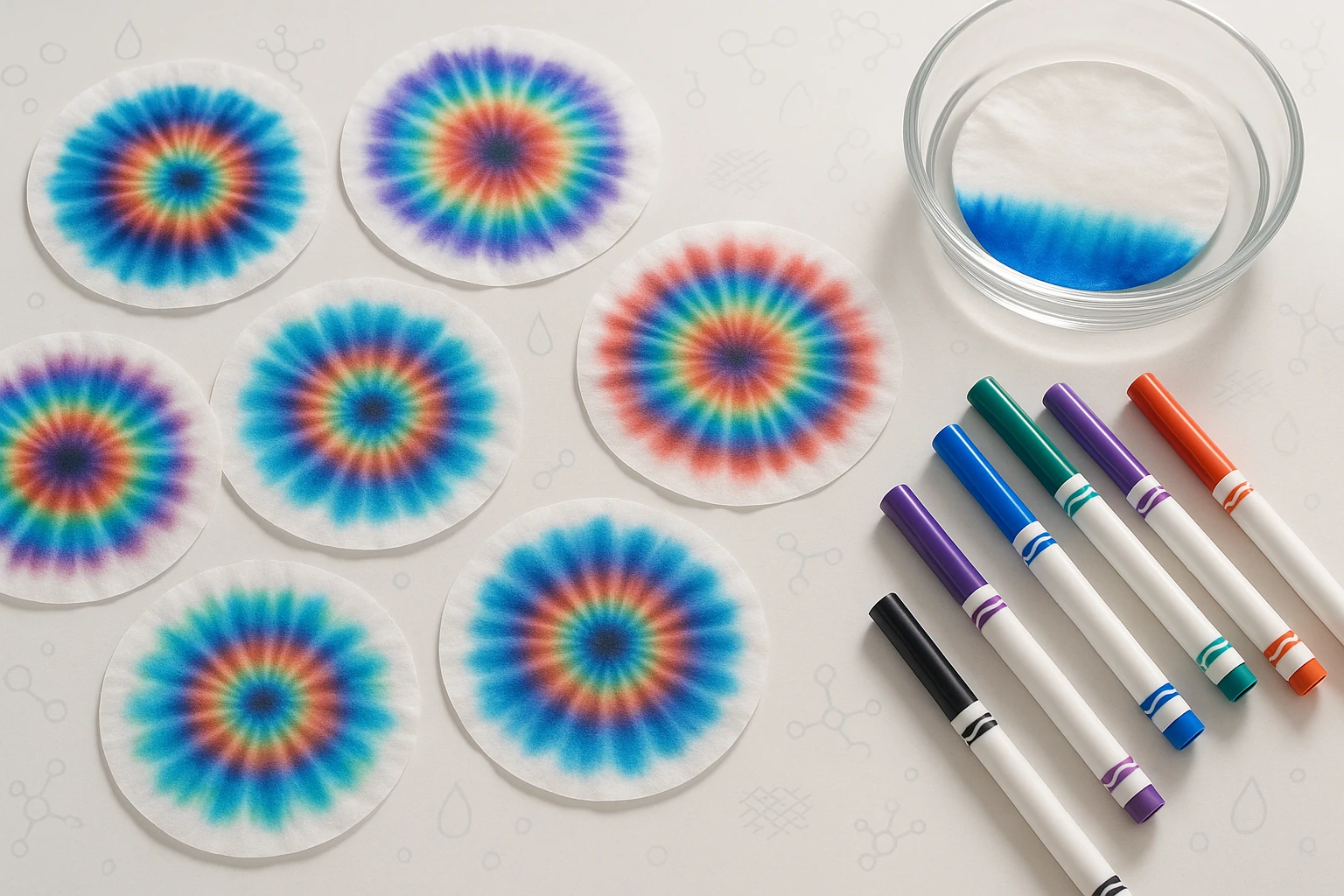
Multiple coffee filters arranged in a circle showing beautiful radiating color patterns where black marker ink has separated into rainbow bands of different colors, creating stunning circular art pieces
EXPERIMENT PHOTO BY Duskbloom Littles
Discover the hidden rainbow inside ordinary black ink while creating stunning artwork! This amazing chromatography experiment reveals that many colors we see are actually mixtures of different pigments. Using simple coffee filters and water, you'll separate these mixed colors and watch them spread into beautiful patterns that look like tie-dye masterpieces!
Chromatography is the scientific method used to separate mixtures, and it works because different colored pigments travel through paper at different speeds. Smaller pigment molecules move faster and farther, while larger molecules move more slowly. As water carries the dissolved ink up through the paper fibers, each color finds its own path, creating spectacular rainbow patterns that reveal the secret recipe inside everyday ink!
Parent Supervision Note: This experiment benefits from adult guidance for setup and cleanup management.
EXPERIMENT STEPS
What You'll Need:
- Round coffee filters (flat-bottomed work best)
- Various colored washable markers (black, brown, purple, green work great)
- Shallow dishes or plates
- Water
- Scissors
- Ruler or measuring tape
- Paper towels for cleanup
- Timer or stopwatch
Step-by-Step Instructions:
- Cut coffee filter - Make a small hole in center and cut line from edge to hole
- Create color dot - Use marker to make thick dot about 1 inch from center hole
- Add water to dish - Pour about 1/4 inch of water in shallow dish
- Insert filter - Thread filter so center hole sits over edge of dish, dot above water
- Watch the magic - Water travels up and separates ink colors as it spreads
- Time the process - Most separation happens in 10-15 minutes
- Remove and dry - Carefully lift filter and place on paper towels to dry
- Create collection - Try different colored markers and compare results
Chromatography demonstrates molecular separation, chemical analysis, and pigment chemistry - the same scientific principles used in forensic investigations, pharmaceutical testing, and quality control in manufacturing!