Dancing Raisins
Watch raisins dance up and down in fizzy soda using the power of gas bubbles!
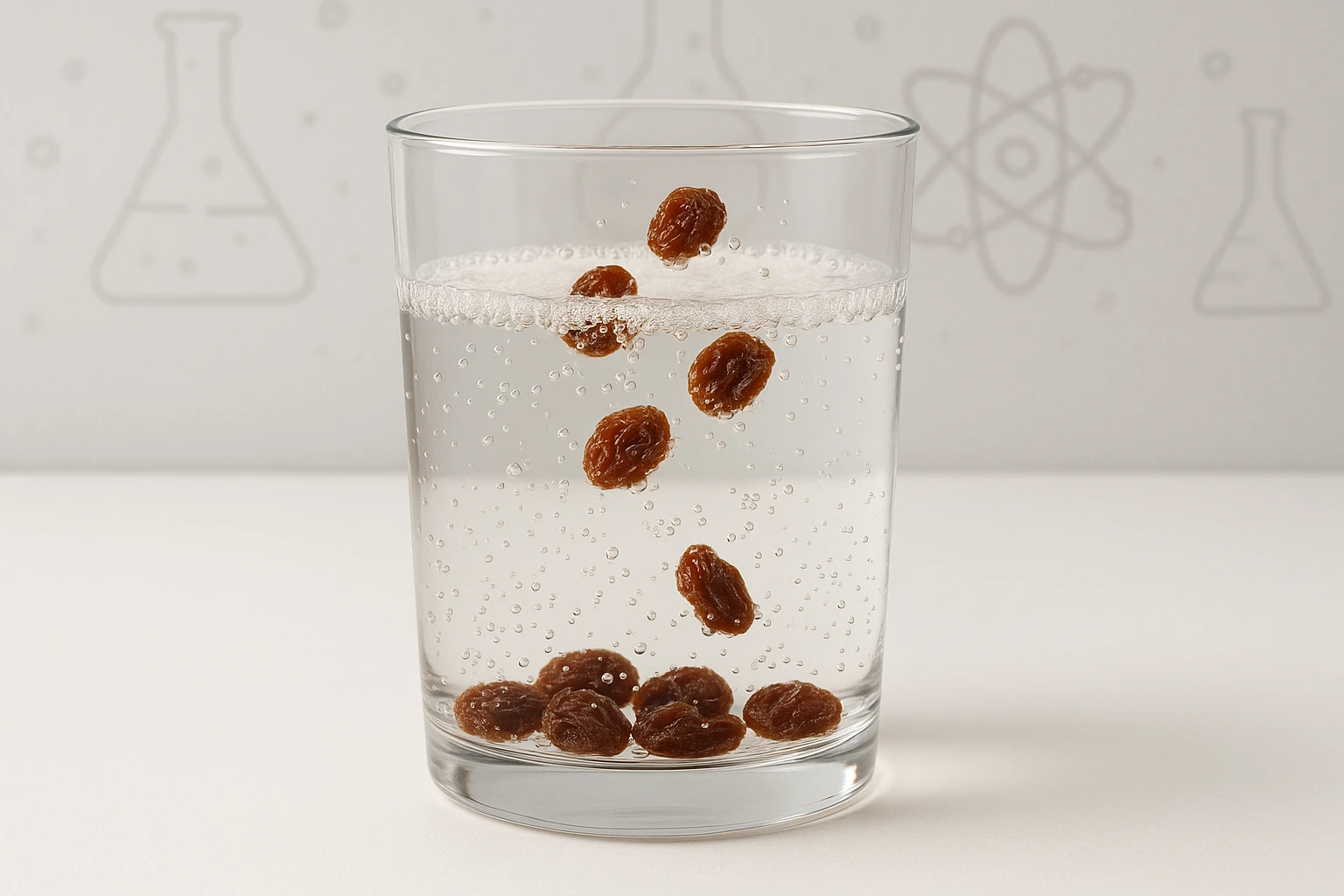
A clear glass filled with clear carbonated soda showing several raisins floating at different levels, with visible bubbles attached to them, demonstrating the dancing effect
EXPERIMENT PHOTO BY Duskbloom Littles
Get ready to watch raisins come alive and dance in your kitchen! This amazing experiment uses the power of tiny gas bubbles to make raisins float up and sink down like they're dancing at a party. The secret ingredient is carbonated soda - those fizzy bubbles that tickle your tongue are about to create magic with ordinary raisins!
When you drop raisins into fizzy soda, something incredible happens. The bumpy, wrinkled surface of each raisin becomes a perfect landing spot for tiny carbon dioxide bubbles. These microscopic bubbles stick to the raisin like invisible balloons, making it light enough to float to the surface. But when the raisin reaches the top, the bubbles pop and escape into the air!
Parent Supervision Note: This experiment requires adult oversight for safe handling of materials and cleanup. Monitor children to ensure they don't consume the experimental materials.
EXPERIMENT STEPS
What You'll Need:
- Clear carbonated soda (Sprite, 7-Up, or club soda work best)
- 8-10 raisins
- Clear tall glass
- Stopwatch or timer (optional)
- Notebook to record observations
Step-by-Step Instructions:
- Pour the soda slowly into your clear glass, filling it about 3/4 full
- Wait 30 seconds for the initial fizzing to calm down
- Drop 5-6 raisins into the soda one at a time
- Watch carefully as bubbles stick to the raisins
- Observe the dancing - raisins should start floating up and sinking down
- Time the cycle - how long does it take for one complete up-and-down dance?
- Add more raisins to see if more dancers make it more exciting!
The dancing continues until the soda loses its carbonation, creating a perfect opportunity to discuss gas pressure and buoyancy in everyday items!