Oil and Water Emulsion
Discover why oil and water don't mix, then create creamy mayonnaise using emulsification!
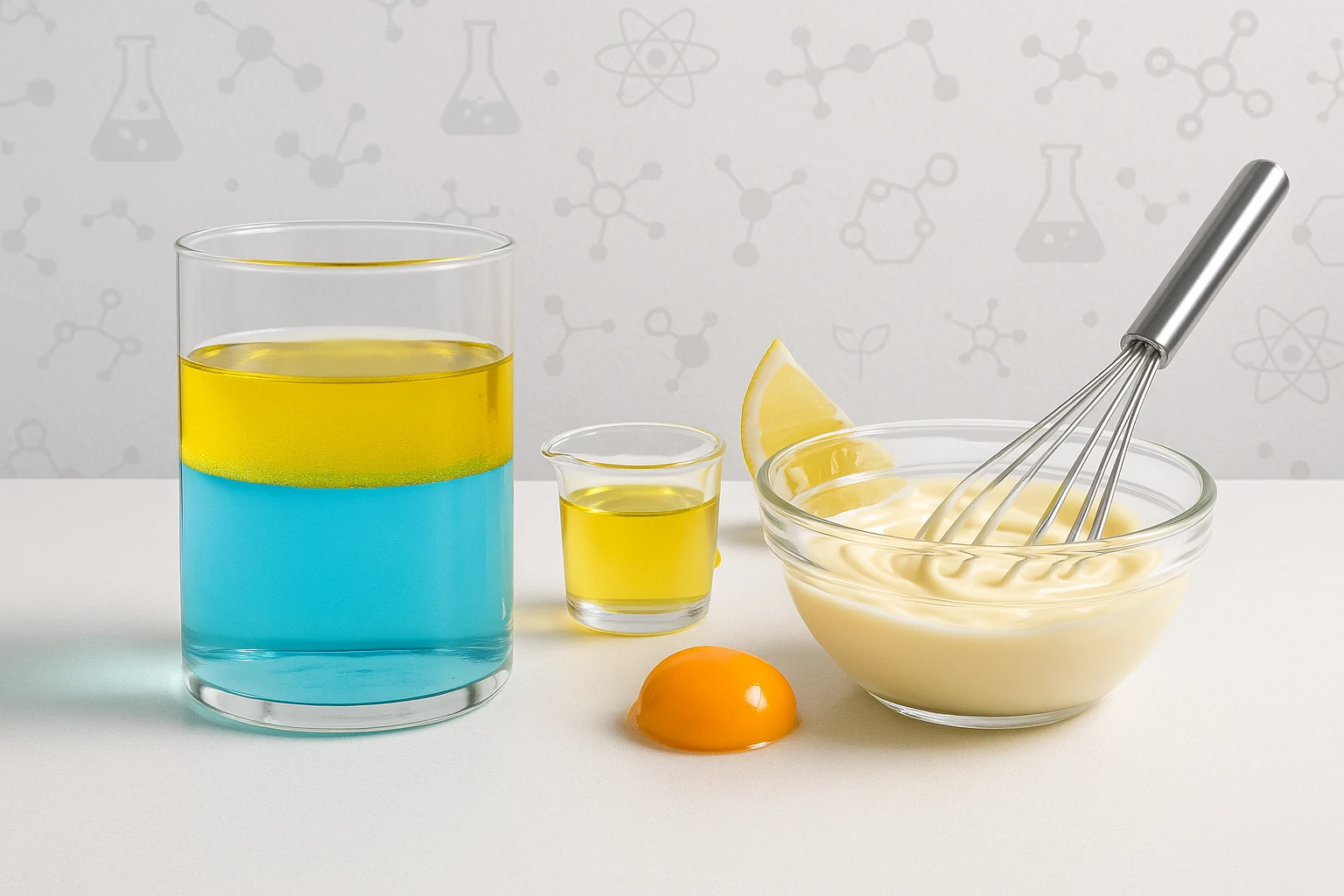
A clear glass container showing oil and water in separate layers, alongside another container showing creamy white mayonnaise being mixed with a whisk, demonstrating the transformation from separated liquids to smooth emulsion
EXPERIMENT PHOTO BY Educational Lab
Ever wonder why oil floats on water and why they never seem to mix, no matter how hard you stir? This fascinating experiment explores the science of emulsification - the special process that lets us turn oil and water into creamy, delicious mayonnaise! You'll discover why some molecules are friends and others are enemies, and learn the secret ingredient that makes them work together.
The reason oil and water don't mix comes down to their molecular structure. Water molecules love to stick to other water molecules, and oil molecules prefer hanging out with other oil molecules. They're like two different groups of friends who don't really get along at parties! But with a special helper called an emulsifier (like egg yolk), we can force them to mix and create something completely new.
Parent Supervision Note: This experiment requires adult supervision due to raw egg handling and food safety considerations.
EXPERIMENT STEPS
What You'll Need:
- 1/4 cup vegetable oil
- 1/4 cup water
- Food coloring
- 1 fresh egg yolk
- 1 teaspoon vinegar or lemon juice
- Small whisk or fork
- Clear containers for mixing
- Measuring cups
Step-by-Step Instructions:
- Mix oil and colored water in a clear container and observe how they separate
- Stir vigorously and watch how they quickly separate again
- In a clean bowl, whisk the egg yolk until it's smooth
- Add vinegar to the egg yolk and mix well
- Very slowly add oil while whisking constantly - just a few drops at first
- Keep whisking and adding oil gradually until mixture becomes thick and creamy
- Compare your mayonnaise to the original separated oil and water - amazing difference!
The emulsification process demonstrates molecular polarity and surface chemistry - the same science used in making soap, lotion, and many other everyday products that combine oil and water!