Natural Dye Making
Extract beautiful colors from flowers, berries, and vegetables to create your own natural dyes!
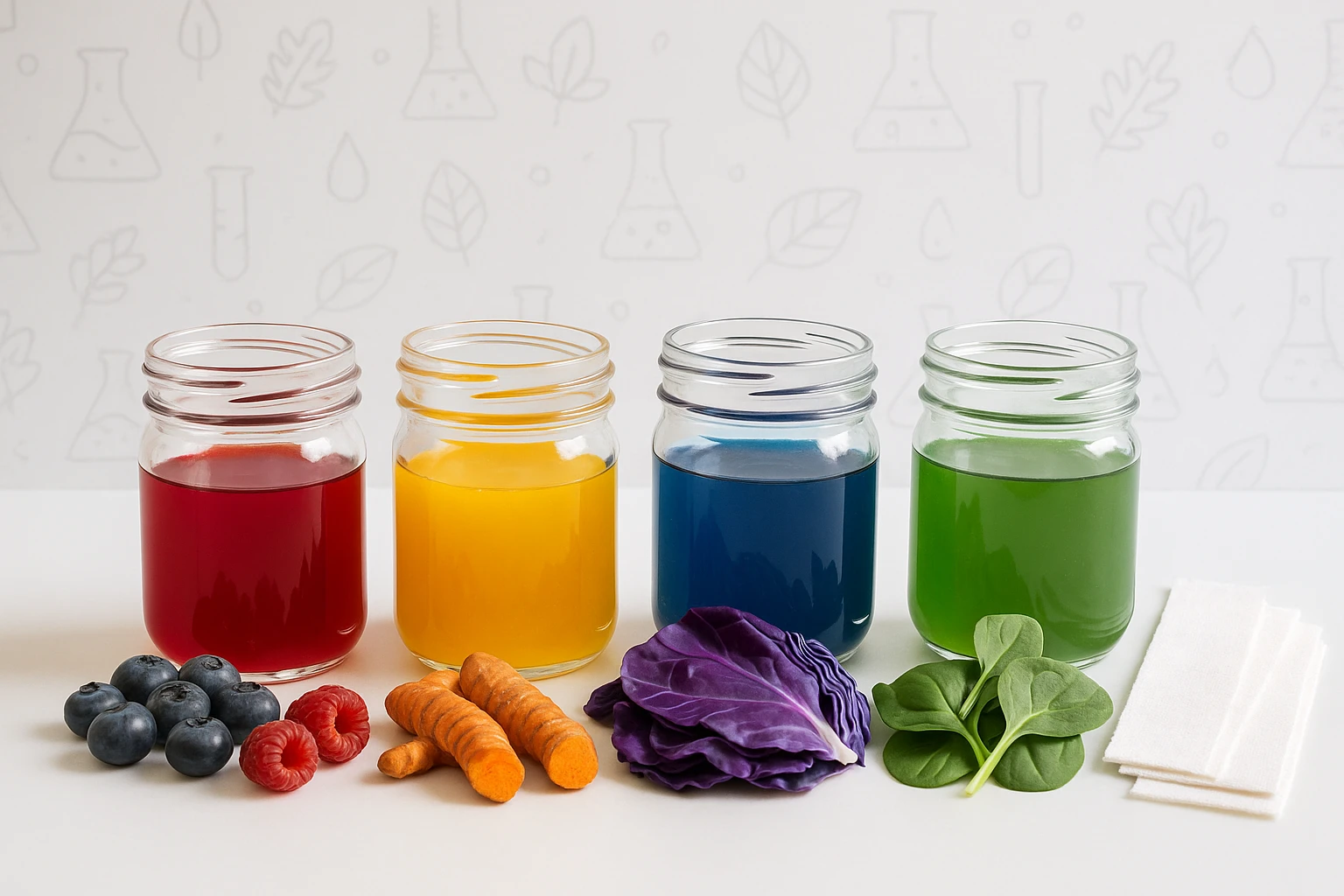
Several small glass containers filled with different colored natural dyes (red from berries, yellow from turmeric, blue from red cabbage, green from spinach) alongside the original plant materials and white fabric strips ready for dyeing
EXPERIMENT PHOTO BY Duskbloom Littles
Discover the rainbow hidden inside everyday fruits, vegetables, and flowers! This colorful experiment teaches you to extract natural pigments and create beautiful dyes just like people did thousands of years ago. You'll learn that plants contain amazing chemicals called pigments that give them their colors, and these same pigments can color fabric, paper, and other materials!
Before synthetic dyes were invented, people used plant-based colors for everything from clothing to artwork. Different plants contain different pigments - anthocyanins make berries red and purple, chlorophyll makes leaves green, and carotenoids create yellow and orange colors. By extracting these pigments, you're using the same chemistry that makes autumn leaves change color!
Parent Supervision Note: This experiment requires adult assistance for all heating steps and handling of hot materials.
EXPERIMENT STEPS
What You'll Need:
- Various colorful plants (red berries, turmeric, red cabbage, onion skins, spinach)
- White cotton fabric strips or coffee filters
- Small saucepans
- Strainer
- Glass jars for storing dyes
- Salt (for mordant)
- Adult helper for heating
- Wooden spoons for stirring
- Labels for different colors
Step-by-Step Instructions:
- Prepare plant materials - Chop vegetables and crush berries to release pigments
- Ask adult to simmer each plant material in separate pans with water for 30 minutes
- Strain out plant pieces - Keep colored liquid, discard solid pieces
- Let dyes cool completely before handling
- Prepare fabric - Soak strips in salt water for 10 minutes (helps colors stick)
- Dip fabric in dyes - Leave for 30 minutes to several hours for deeper colors
- Rinse and dry - Rinse in cool water until water runs clear, then air dry
- Compare colors - Test how different plants create different shades
Natural dye making demonstrates plant chemistry, pigment extraction, and traditional technology - showing how humans have used plant compounds for art, decoration, and cultural expression throughout history!