Plant Growth in Different Lights
Discover how colored light affects plant growth by growing seeds under different light conditions!
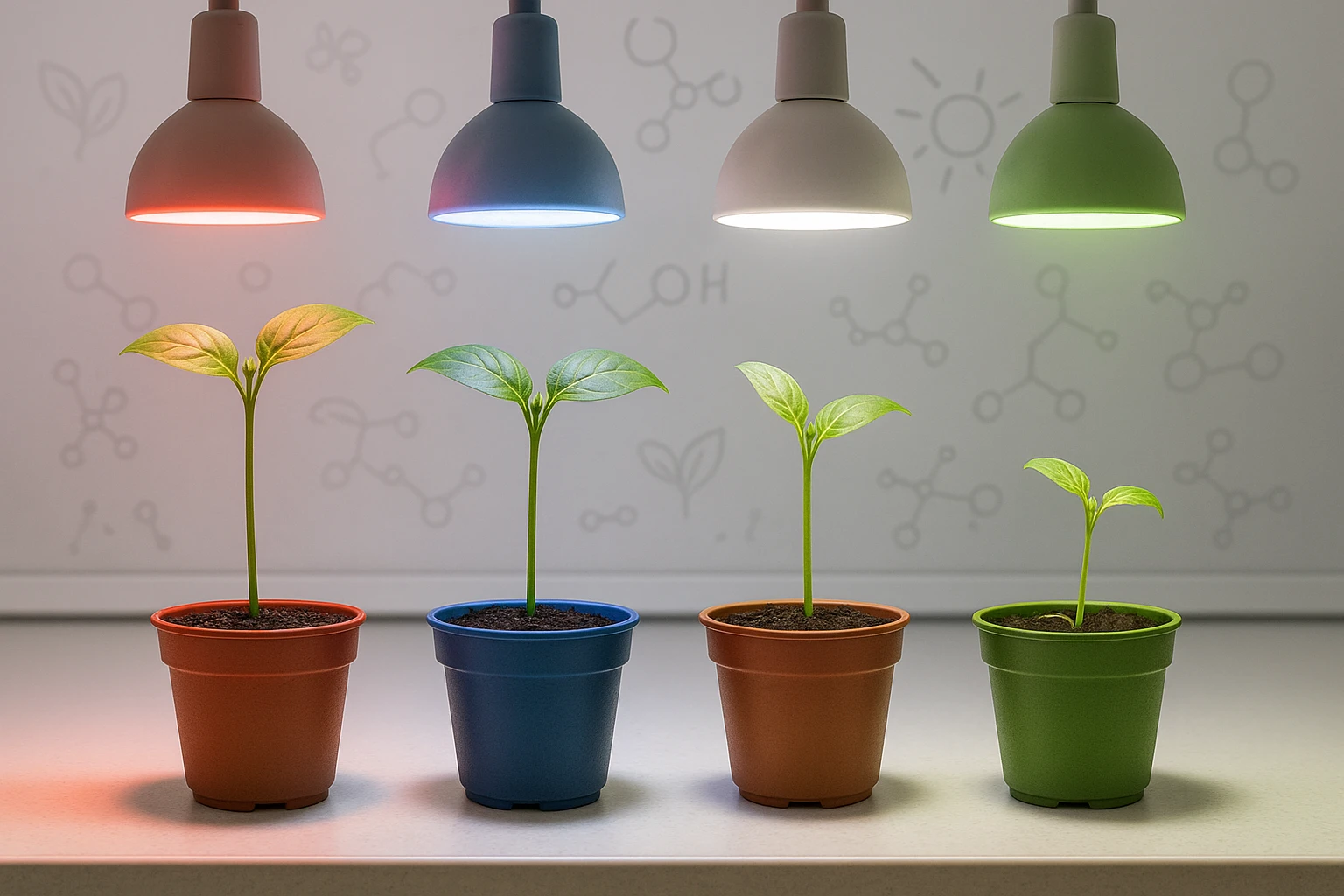
Four small potted plants growing under different colored LED lights (red, blue, white, and green) showing varying growth patterns, with healthy green seedlings at different stages of development
EXPERIMENT PHOTO BY Duskbloom Littles
Transform into a plant scientist and discover the amazing secret of how different colored lights affect plant growth! This incredible experiment reveals that plants are picky eaters when it comes to light - they prefer some colors over others for making their food through photosynthesis. You'll grow identical seeds under different colored lights and watch how each color creates different growing results!
Plants use light like we use food, but they can't eat all colors equally well! Chlorophyll, the green substance in leaves, is very good at absorbing red and blue light to make plant food, but it reflects green light away (which is why leaves look green to us!). By testing different colored lights, you'll see which colors help plants grow tall and strong, and which ones leave them struggling to survive.
Parent Supervision Note: This experiment requires adult oversight for electrical setup and daily monitoring.
EXPERIMENT STEPS
What You'll Need:
- 16 bean seeds (4 for each light condition)
- 4 identical small pots with drainage holes
- Potting soil
- 4 different colored LED lights (red, blue, white, green)
- 4 cardboard boxes or containers
- Aluminum foil
- Measuring ruler
- Notebook for daily observations
- Camera for progress photos
Step-by-Step Instructions:
- Plant 4 seeds in each pot with same amount of soil and water
- Label each pot with the light color it will receive
- Line boxes with foil to reflect light and create individual light chambers
- Place one pot in each box under its designated colored light
- Set up lighting schedule - 12 hours on, 12 hours off daily
- Water equally - same small amount for each pot every 2 days
- Measure and record plant height daily for 2-3 weeks
- Take photos to document growth differences and leaf color changes
The light experiment demonstrates photosynthesis, light absorption, and plant biology - the same principles used in greenhouse farming, space agriculture, and understanding how plants evolved to use sunlight efficiently!