Rock and Mineral Testing
Become a geologist and identify rocks and minerals using scientific tests for hardness, streak, and luster!
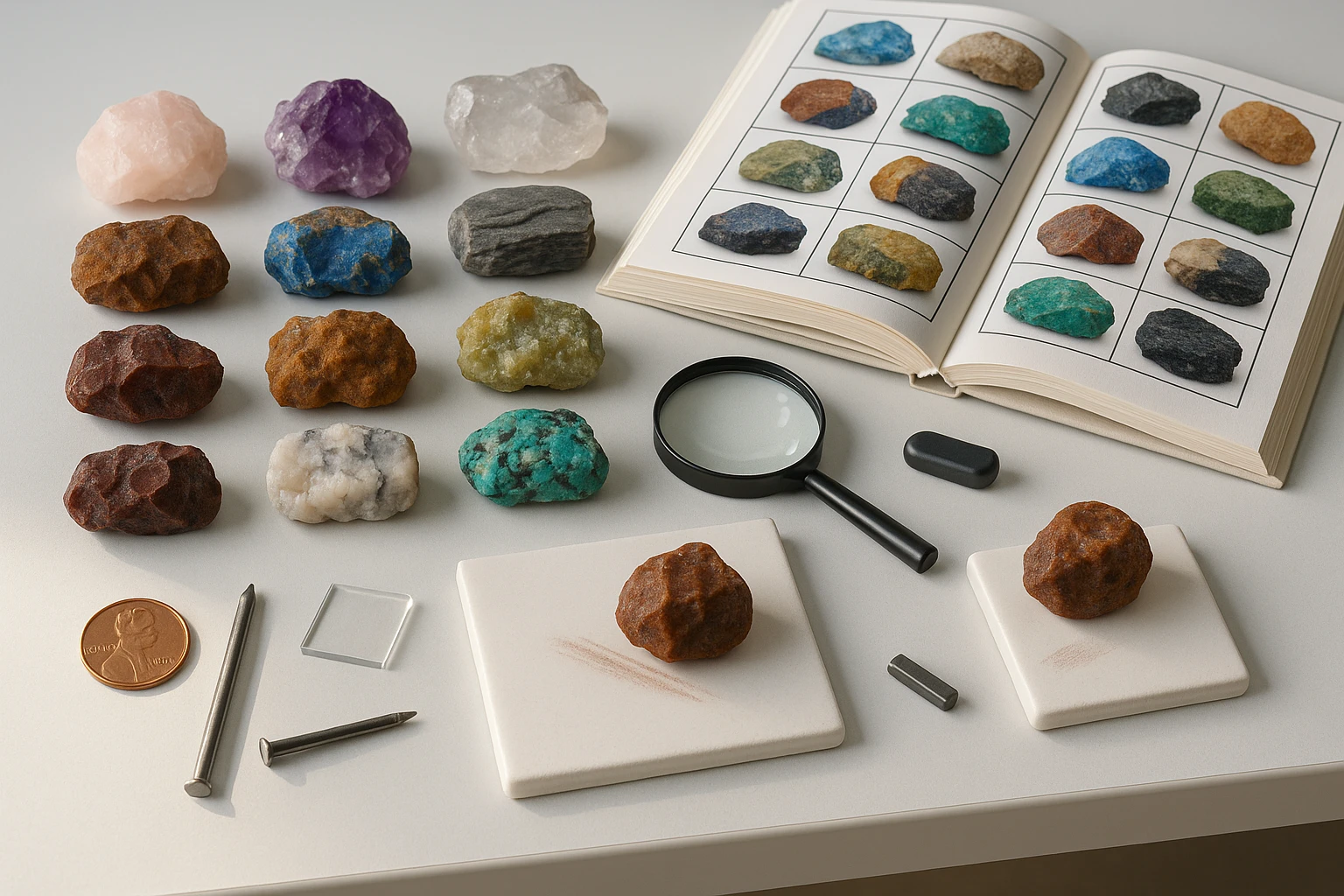
A collection of different colored rocks and minerals arranged on a table with testing tools - a penny, nail, magnifying glass, white ceramic tile for streak testing, and a field guide showing the scientific approach to mineral identification
EXPERIMENT PHOTO BY Duskbloom Littles
Transform into a rock detective and unlock the secrets hidden in Earth's minerals! This exciting geology experiment teaches you to identify rocks and minerals using the same scientific tests that professional geologists use. You'll discover that every mineral has unique properties like fingerprints - once you know how to test for hardness, streak, and luster, you can identify almost any mineral you find!
Geologists use systematic physical property tests because minerals are made of specific arrangements of atoms that create predictable characteristics. The Mohs hardness scale measures how easily a mineral can be scratched, streak tests reveal the true color of mineral powder, and luster describes how light reflects off the mineral surface. These properties never change, making them perfect for identification!
Parent Supervision Note: This experiment requires adult oversight for safe handling of testing materials and rock specimens.
EXPERIMENT STEPS
What You'll Need:
- Collection of 6-8 different rock/mineral specimens
- Hardness testing kit (fingernail, penny, steel nail, glass)
- White ceramic tile or rough porcelain (unglazed back of bathroom tile)
- Magnifying glass
- Mineral identification chart
- Notebook for recording results
- Ruler for measuring
- Small magnet
Step-by-Step Instructions:
- Examine each specimen with magnifying glass - note color, crystal shape, transparency
- Test hardness - Try scratching with fingernail (2.5), penny (3.5), nail (5.5)
- Perform streak test - Rub mineral on ceramic tile to see powder color
- Observe luster - Is surface shiny like metal, glassy, or dull?
- Check magnetism - Does specimen attract to magnet?
- Measure and weigh - Record size and estimate heaviness
- Record all observations in data table for each specimen
- Compare to identification chart - Use properties to identify each mineral
Mineral identification demonstrates earth science, systematic observation, and classification skills - the same methods used by geologists to understand Earth's composition, locate valuable resources, and study our planet's geological history!