Seed Germination Race
Race different seeds under various conditions to discover what plants need to sprout and grow!
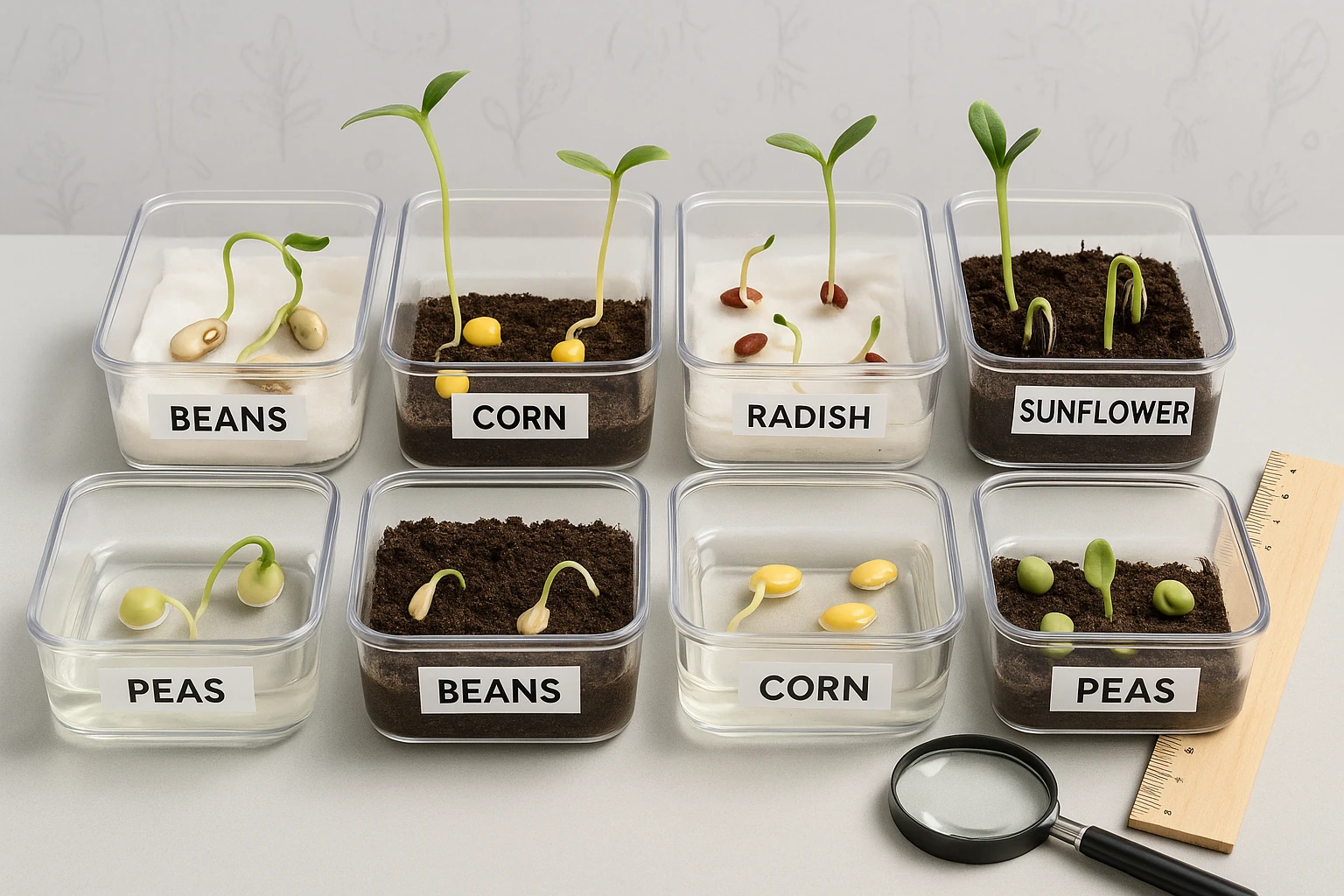
Multiple clear containers arranged in rows showing various seeds (beans, corn, radish, sunflower) at different stages of germination, with some sprouting in water, others in soil, demonstrating different growing conditions
EXPERIMENT PHOTO BY Duskbloom Littles
Start your engines for the most exciting race in nature - a seed germination race! Watch different types of seeds compete to see who can sprout first under various growing conditions. This amazing experiment reveals what seeds need to wake up from their long sleep and begin growing into plants. You'll discover that different seeds have different strategies for starting life!
Seeds are like tiny sleeping plants waiting for the perfect conditions to wake up and grow. Each seed contains everything needed to start a new plant - a baby plant called an embryo, stored food, and a protective coat. When seeds get the right combination of water, warmth, and sometimes light, they "wake up" and begin germination - the amazing process of sprouting into life!
Parent Supervision Note: This experiment benefits from adult guidance in setup and daily monitoring.
EXPERIMENT STEPS
What You'll Need:
- 5 different types of seeds (beans, corn, radish, sunflower, peas work well)
- Clear containers or jars
- Paper towels
- Potting soil
- Labels and marker
- Measuring ruler
- Magnifying glass
- Daily observation journal
- Camera for progress photos
Step-by-Step Instructions:
- Set up germination chambers - Line containers with damp paper towels
- Label each container with seed type and growing conditions
- Place 5 seeds of each type in their designated containers
- Create different conditions - some with soil, some just with water, some in dark
- Maintain moisture - keep paper towels damp but not soaking wet
- Check daily - measure and record any sprouting or growth changes
- Document the race - note which seeds sprout first and grow fastest
- Compare results - analyze which conditions produced the best germination
The germination race demonstrates plant biology, environmental factors, and comparative science - revealing how different plants have adapted various strategies for successful reproduction and survival in nature!