
Pendulum Patterns
Create mesmerizing sand patterns using swinging pendulums and discover the science of periodic motion!
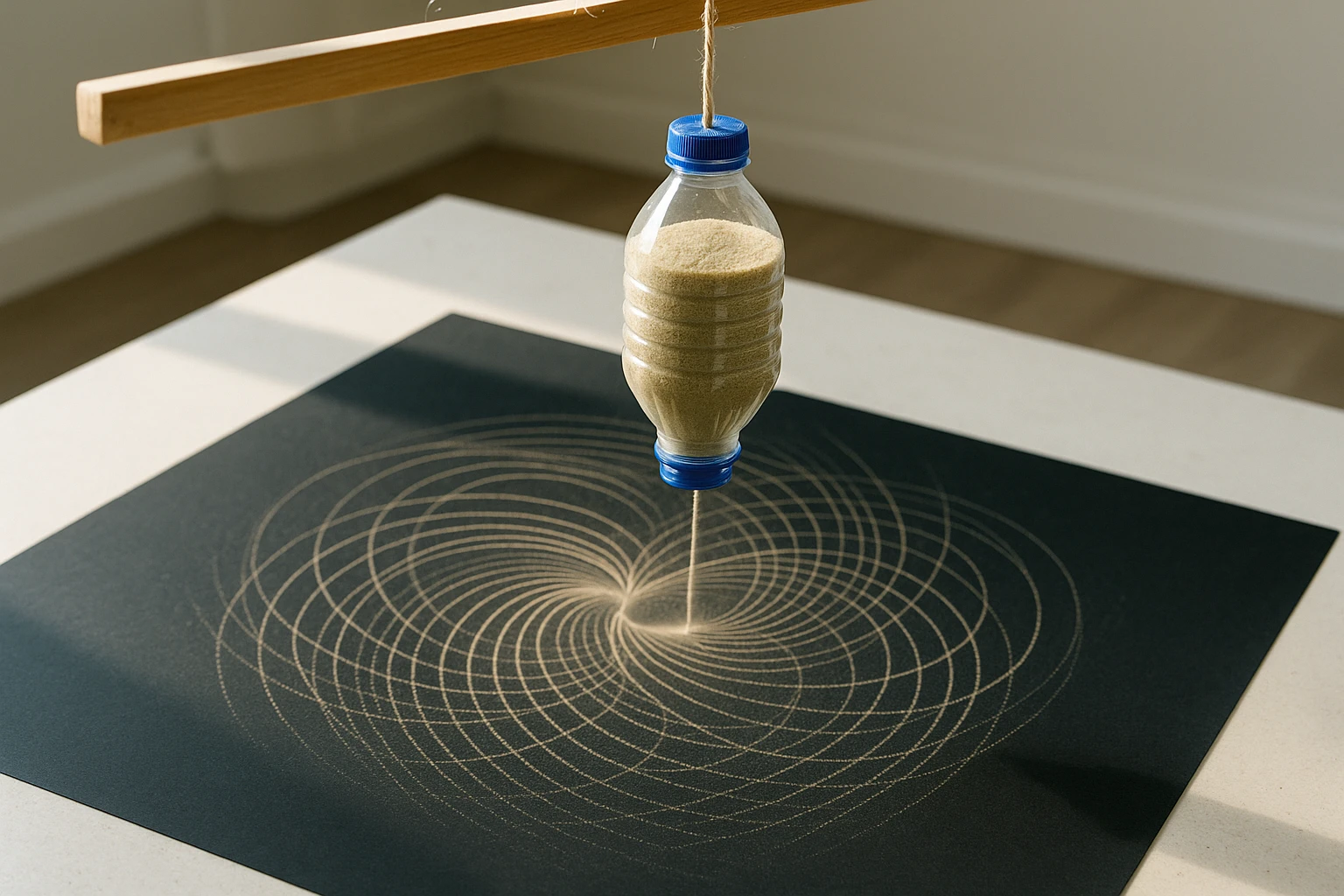
A homemade pendulum made from string and a plastic bottle with holes, suspended above a dark surface covered with beautiful geometric sand patterns created by the swinging motion, showing intricate curved lines and spirals
EXPERIMENT PHOTO BY Duskbloom Littles
Discover the hypnotic world of pendulum physics while creating artwork that looks like it came from a computer! A pendulum is simply a weight that swings back and forth under the power of gravity, but when you add sand flowing through it, something magical happens. Your swinging pendulum creates stunning geometric patterns that reveal the hidden mathematics of motion!
The amazing patterns happen because your pendulum follows predictable mathematical paths as it swings. Gravity pulls it down while momentum carries it forward, creating smooth curved motions. As the pendulum gradually slows down and changes direction, the flowing sand traces these invisible paths, turning physics into art! Each swing gets slightly smaller until the pendulum finally comes to rest.
Parent Supervision Note: This experiment requires adult assistance with hole-making and setup.
EXPERIMENT STEPS
What You'll Need:
- 1 plastic water bottle with cap
- Strong string or thin rope (3-4 feet long)
- Fine sand or salt (about 2 cups)
- Small nail or pushpin (adult use only)
- Dark colored paper or cardboard (large sheet)
- Tape
- Sturdy support (doorway, tree branch, or swing set)
Step-by-Step Instructions:
- Ask adult to poke small hole in bottom center of bottle cap
- Thread string through hole and tie large knot inside cap to secure
- Fill bottle 3/4 full with fine sand
- Screw cap on tightly and test that sand flows through hole in steady stream
- Hang pendulum from sturdy support about 3 feet above your paper
- Place dark paper directly under the pendulum
- Cover hole with finger and give pendulum a gentle push
- Release finger to start sand flow and watch patterns emerge!
The pendulum demonstrates gravitational force, periodic motion, and energy conservation - fundamental physics principles used in clocks, seismographs, and many mechanical devices throughout history!