
Static Electricity Hair Raising
Make your hair stand up and objects dance using the invisible power of static electricity!
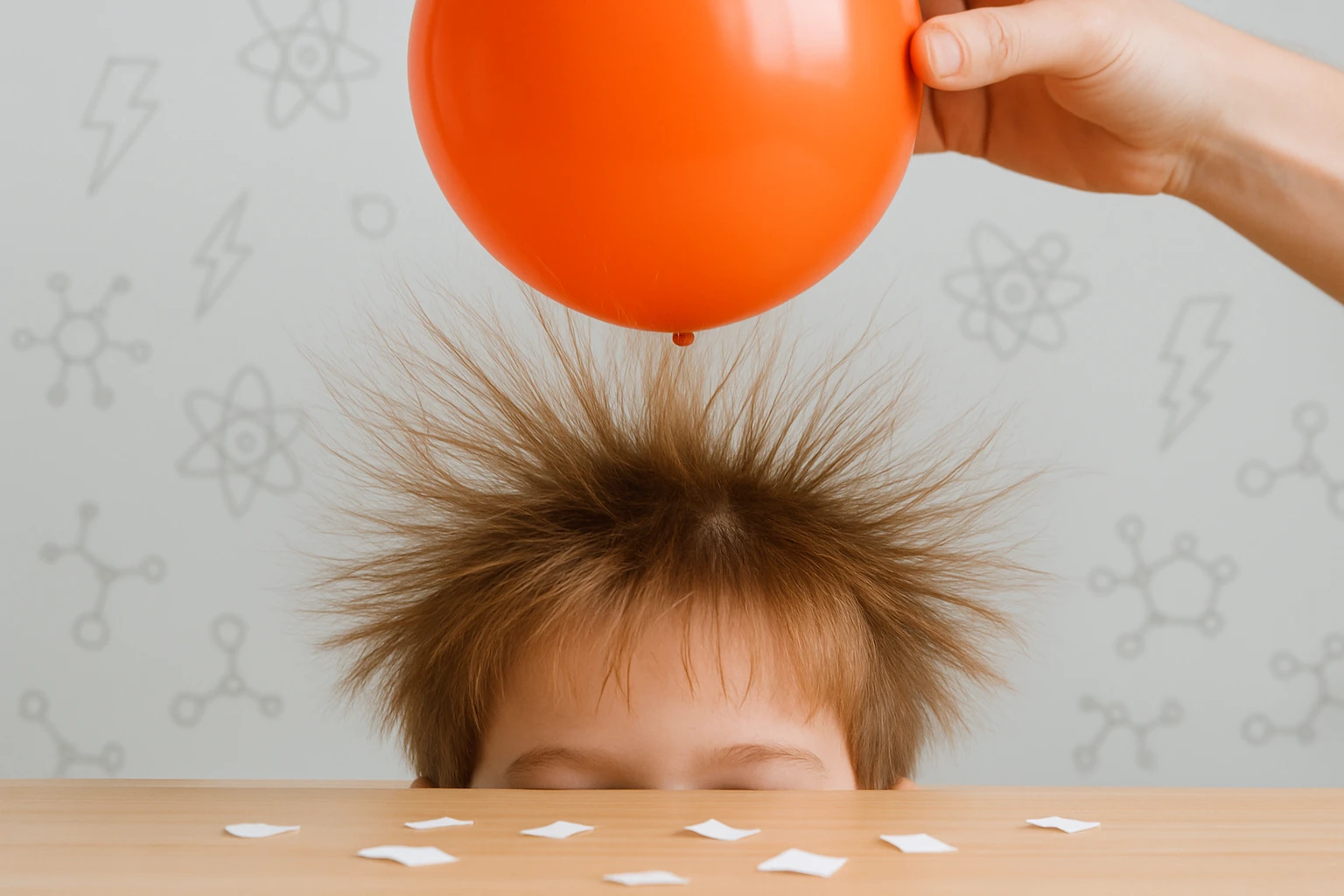
A child with hair standing straight up after rubbing a balloon on their head, with the balloon held above showing the static electricity effect, with small pieces of paper scattered around demonstrating static attraction
EXPERIMENT PHOTO BY Duskbloom Littles
Get ready to become a human lightning rod and discover the amazing power of static electricity! This hair-raising experiment shows how invisible electrical charges can make objects move without touching them. You'll create the same type of electricity that causes lightning bolts, but in a safe and fun way that makes your hair defy gravity!
Static electricity happens when electrons (tiny particles with negative charge) jump from one object to another. When you rub a balloon on your hair, electrons move from your hair to the balloon. This makes the balloon negatively charged and your hair positively charged. Since opposite charges attract each other, your positively charged hair reaches toward the negatively charged balloon!
Parent Supervision Note: This experiment requires supervision to ensure safe static electricity exploration.
EXPERIMENT STEPS
What You'll Need:
- Latex balloons (2-3 balloons work best)
- Clean, dry hair (works better when hair is freshly washed)
- Small pieces of paper or tissue
- Aluminum soda cans
- Pepper and salt mixture
- Plastic comb
- Wool socks or cloth
Step-by-Step Instructions:
- Rub balloon vigorously on your hair for 30-60 seconds
- Slowly lift balloon away from your head - watch your hair follow!
- Test paper attraction - hold charged balloon near small paper pieces
- Try can rolling - place balloon near empty can and watch it roll toward balloon
- Static pepper trick - mix pepper and salt, then use balloon to separate them
- Comb experiment - rub comb on wool, then attract paper or hair
- Discharge safely - touch a metal object to release the built-up charge
The activities demonstrate electrical charge, electron transfer, and electrostatic forces - the same principles that power copy machines, laser printers, and explain why lightning occurs in nature!