The Printing Press
Discover how Johannes Gutenberg's printing press spread knowledge to everyone in the world!
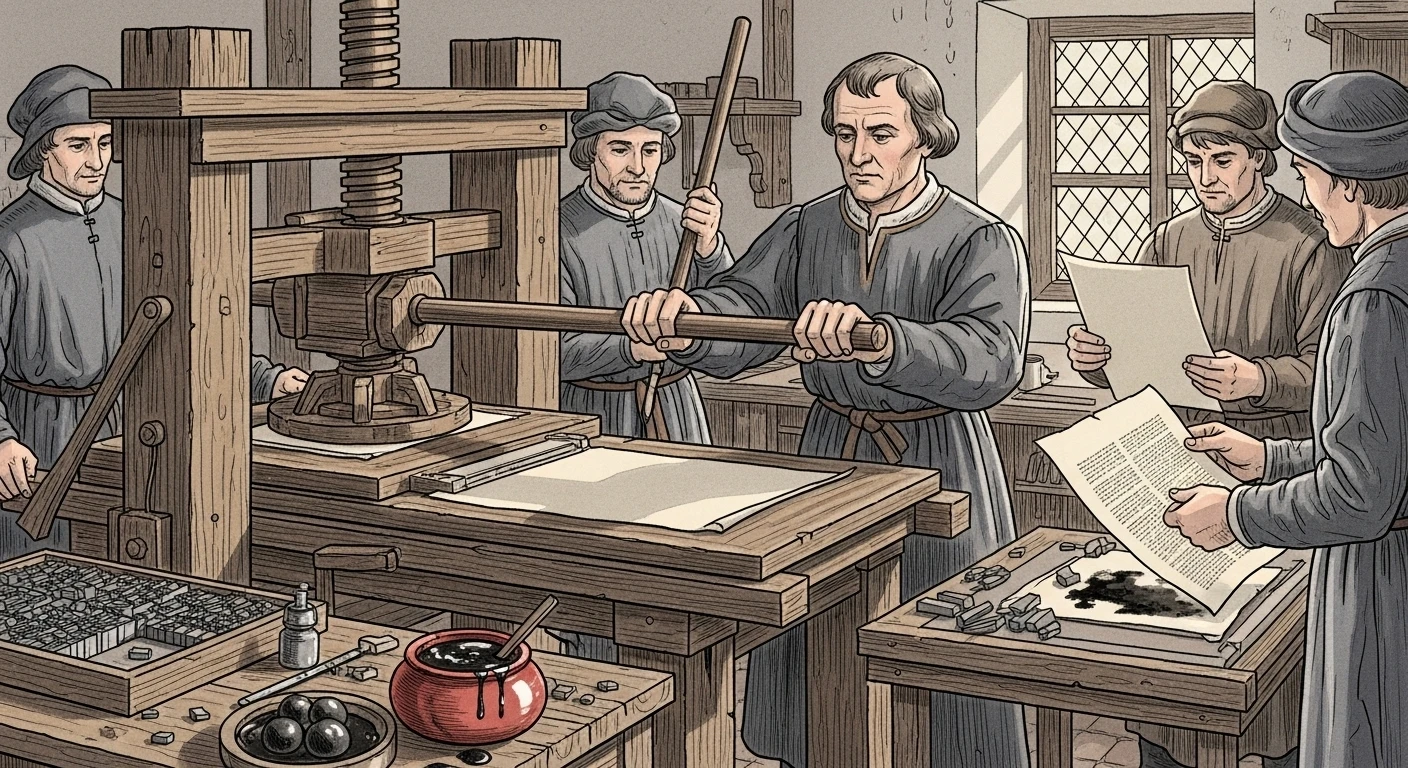
Johannes Gutenberg working at his wooden printing press with metal type pieces and fresh ink
ILLUSTRATION BY Duskbloom Littles
Before 1440, every single book had to be copied by hand, one letter at a time! This made books incredibly expensive - only kings and wealthy people could afford them. Johannes Gutenberg changed everything when he invented the printing press in Germany, making it possible to create hundreds of books quickly and cheaply.
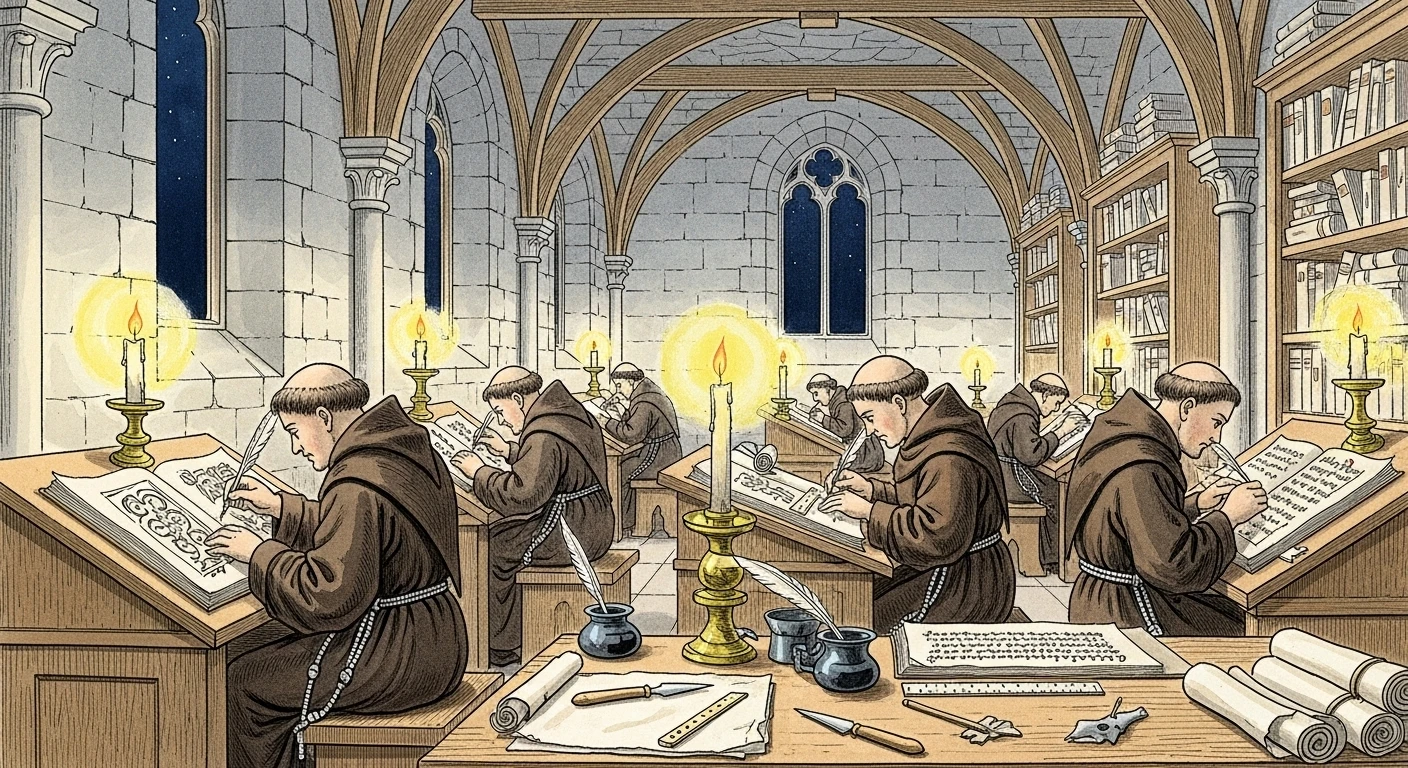 Medieval monks hand-copying books one letter at a time in monastery scriptoriums before the printing press
Gutenberg's brilliant idea was to create individual metal letters that could be arranged to spell words, covered with ink, and pressed onto paper. When he finished printing one page, he could rearrange the letters to make a completely different page! His first major project was printing 180 copies of the Bible.
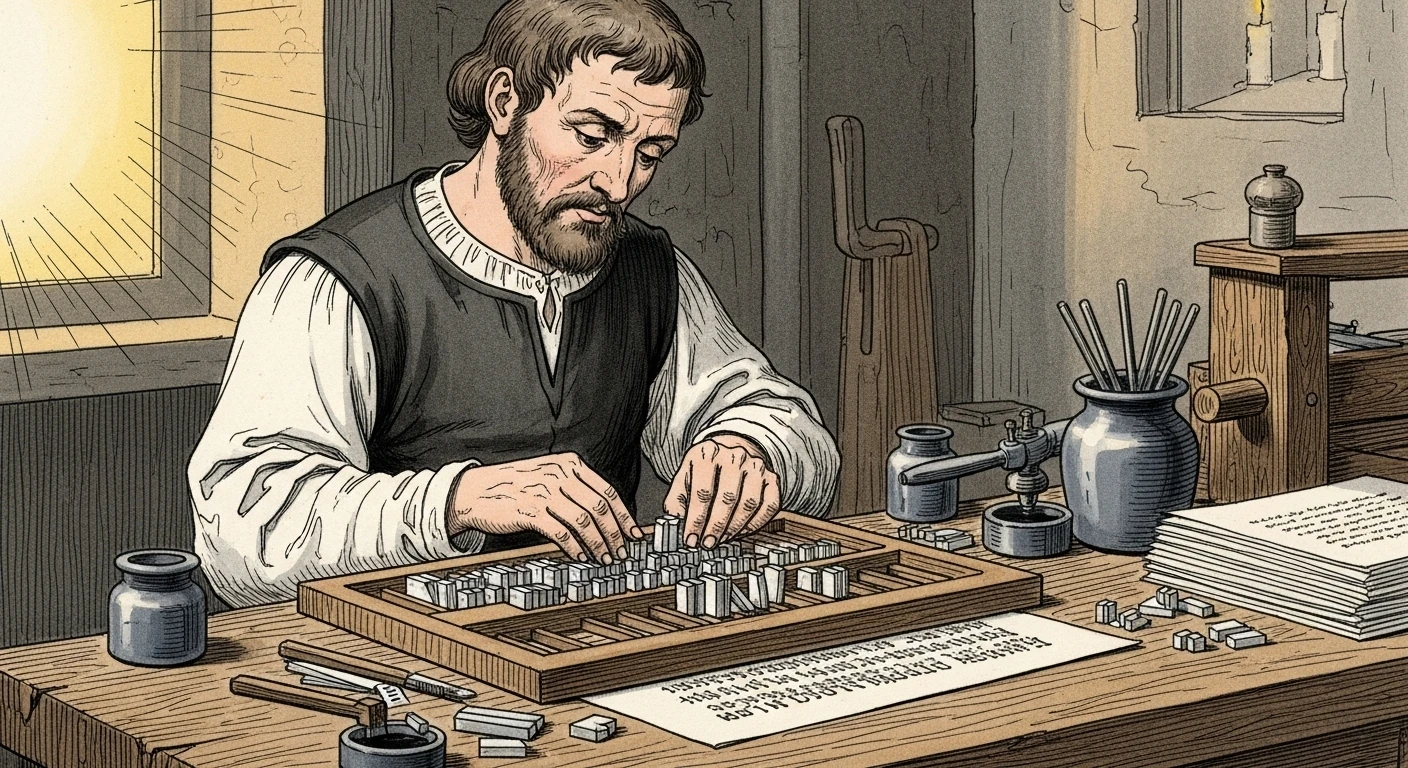 Johannes Gutenberg carefully arranging individual metal letters to create pages for his revolutionary printing press
Before the printing press, it took months for monks to hand-copy a single book. Gutenberg's invention solved this massive problem and started the "Information Revolution" - suddenly, knowledge could spread everywhere! Books about science, medicine, and exploration helped spark the Renaissance and Scientific Revolution.
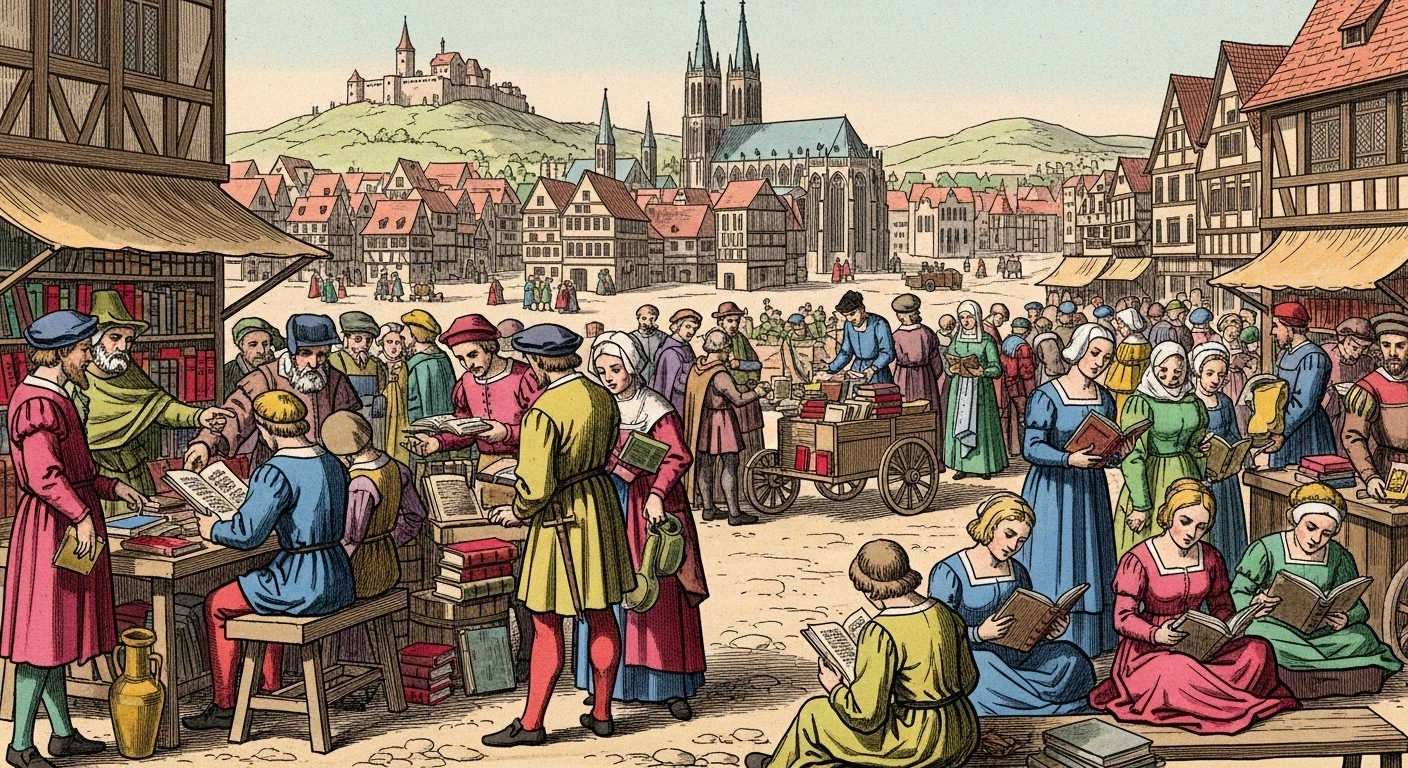 Printed books spreading rapidly across Europe, bringing knowledge to common people for the first time
Gutenberg's printing press proved that one invention can democratize knowledge and change the course of human history!