
The Steam Engine
Learn how James Watt's steam engine powered the Industrial Revolution and changed the world!
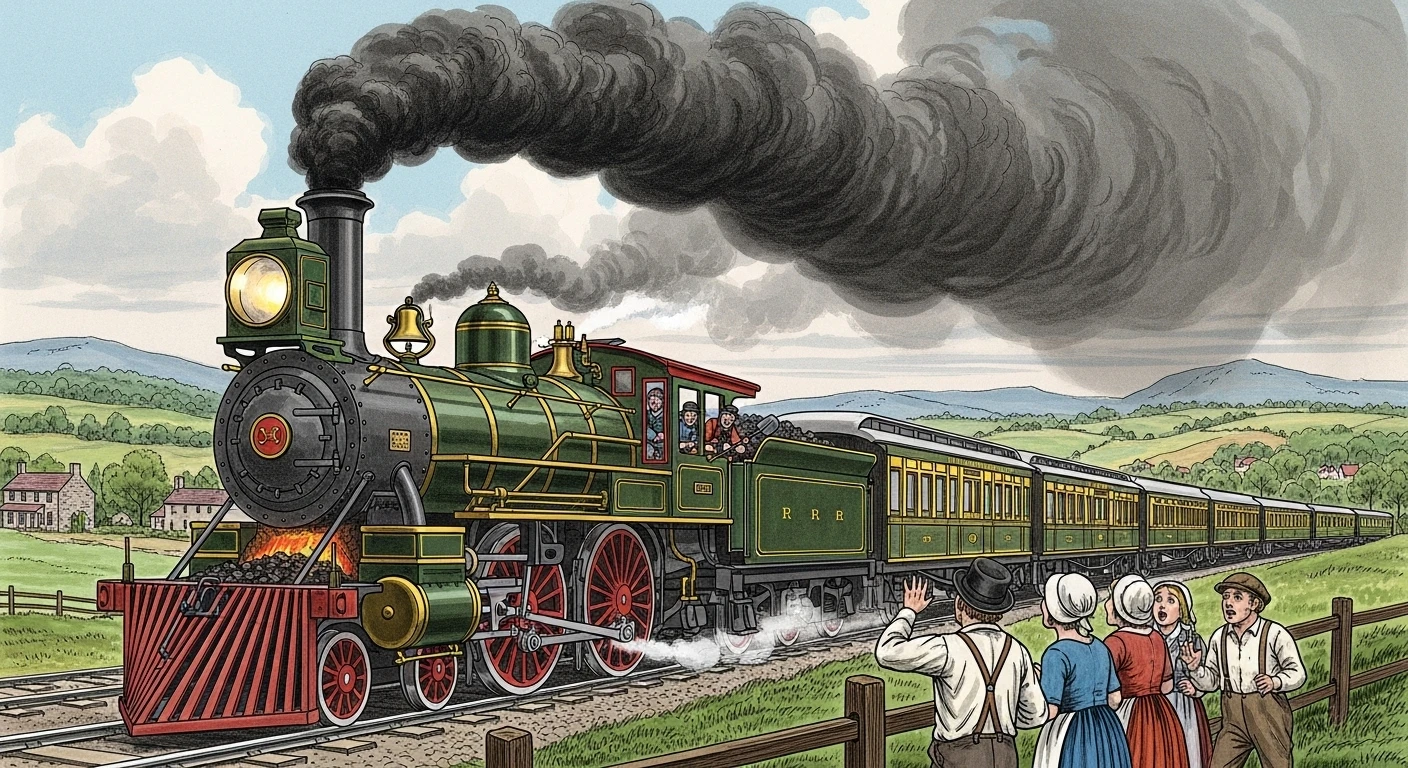
A powerful steam locomotive pulling passenger cars across the countryside with black smoke billowing from its chimney
ILLUSTRATION BY Duskbloom Littles
Before steam engines, people had to rely on muscle power, wind, or water to do heavy work! James Watt revolutionized the world in 1769 when he dramatically improved the steam engine, creating a powerful machine that could work day and night without getting tired.
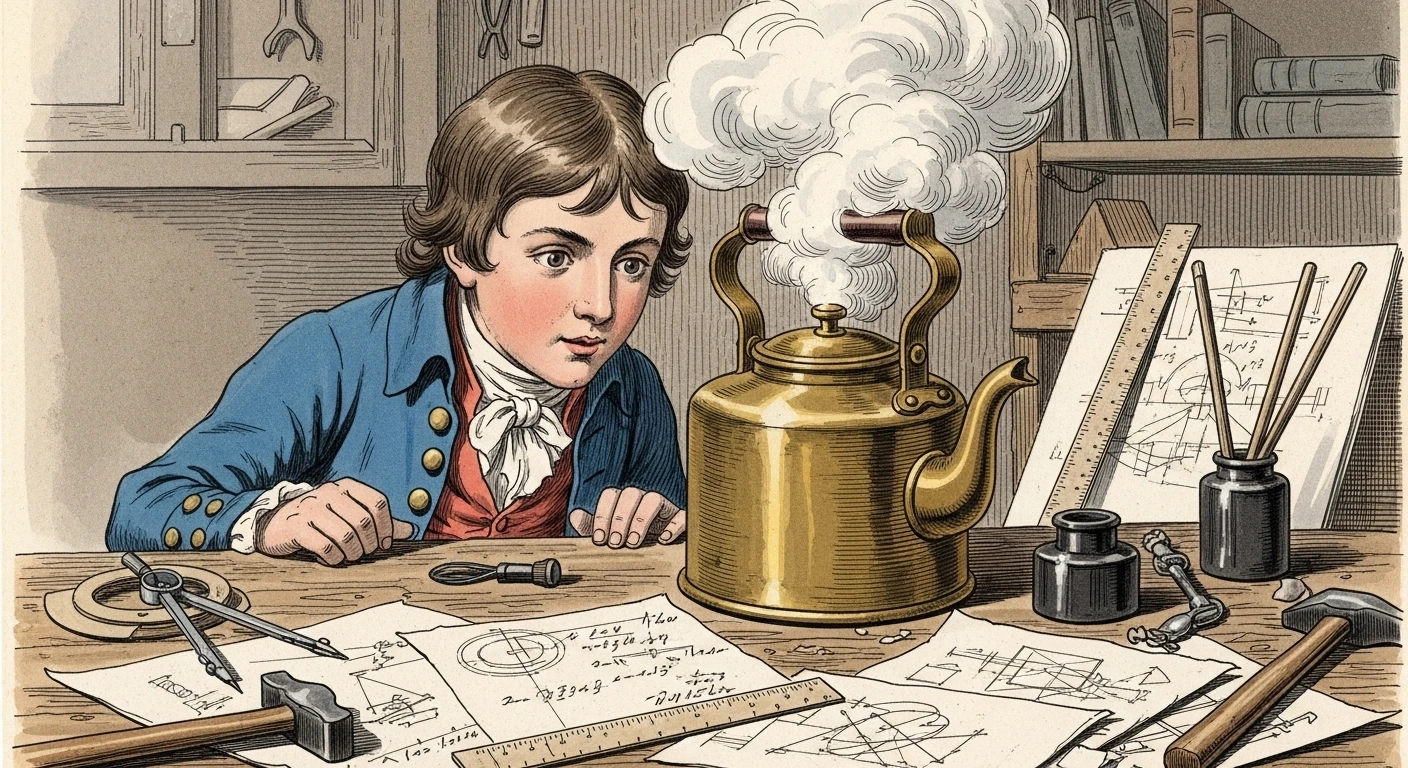 James Watt observing steam rising from a tea kettle, getting the inspiration for his improved steam engine
Watt discovered that steam - water heated until it turns into gas - could push pistons with incredible force. His engine burned coal to heat water, creating steam that moved machine parts up and down. This was like giving factories and transportation superhuman strength!
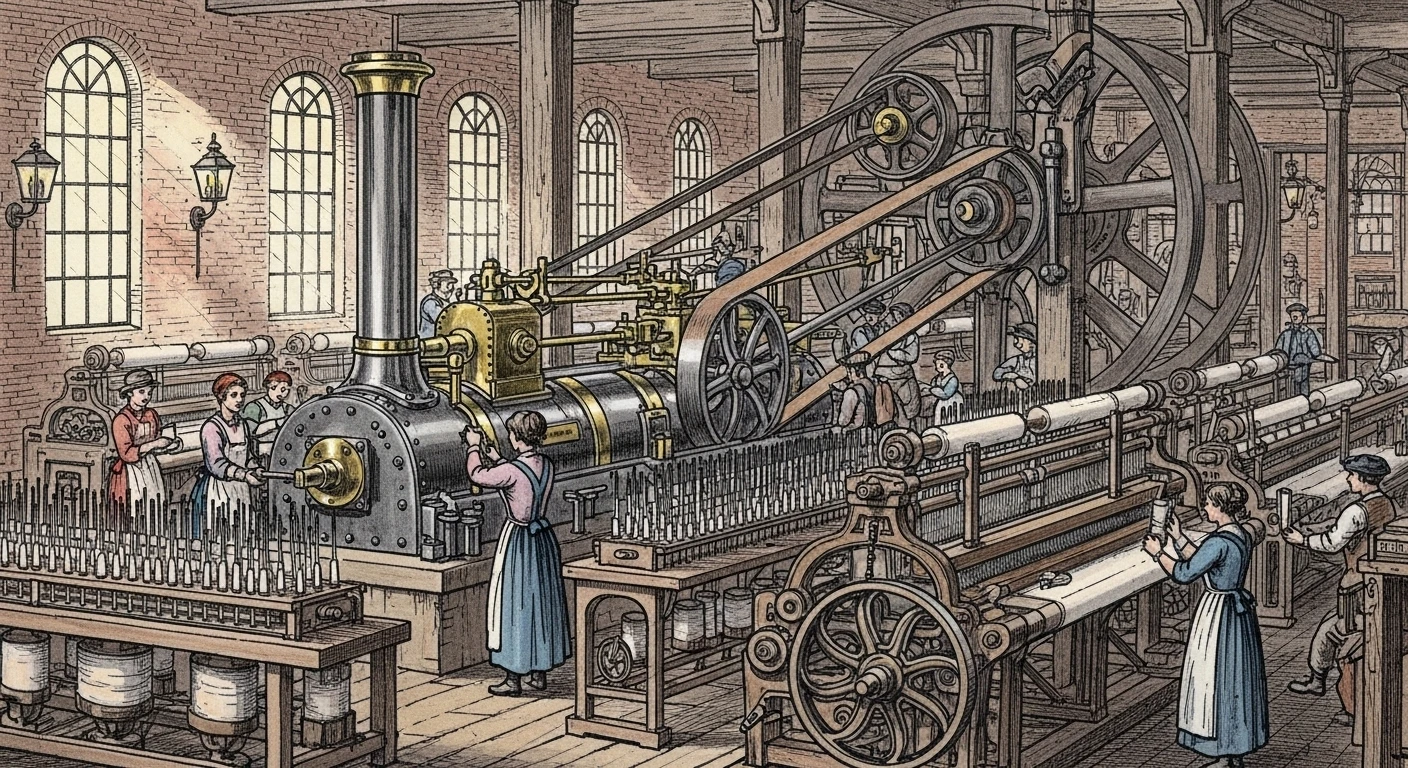 Watt's steam engine powering spinning machines and looms in the first Industrial Revolution factories
Before steam power, most people lived on farms and made things by hand. Watt's invention solved the problem of limited human energy and started the Industrial Revolution! Steam engines powered the first factories, trains, and steamships, allowing people to mass-produce goods and travel farther than ever before.
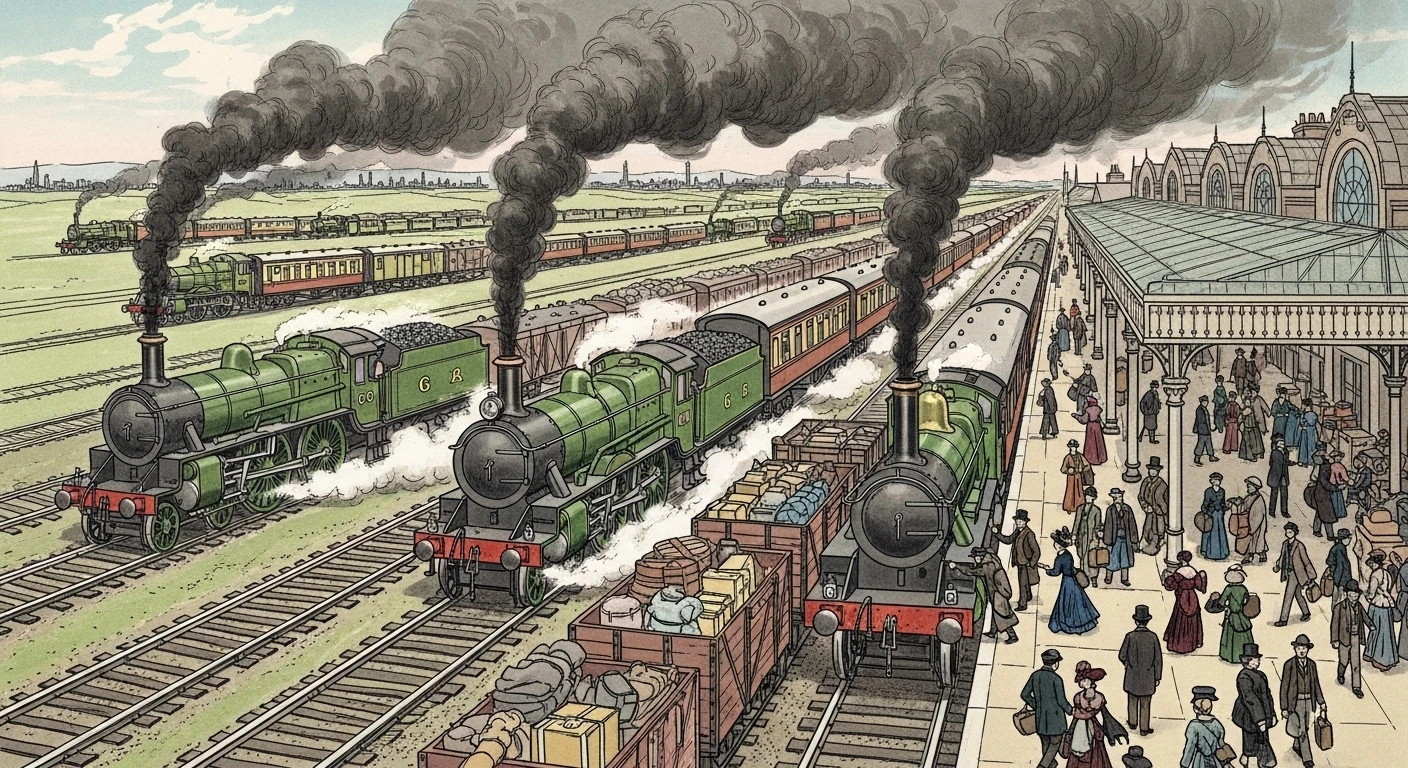 Steam locomotives carrying people and goods across vast distances, connecting cities and changing travel forever
James Watt's steam engine gave humanity mechanical muscle and launched the modern industrial world we live in today!