Avalanches
Learn how massive amounts of snow can suddenly slide down mountains at incredible speeds

Large avalanche cascading down mountain slope with snow cloud and debris
Avalanches are like massive rivers of snow that race down mountains at incredible speeds! These powerful snow slides happen when layers of snow on steep slopes become unstable and suddenly break loose, carrying thousands of tons of snow, ice, and debris downhill at speeds up to 80 mph.
How Avalanches Start
Snow layers build up on mountains throughout winter, but they don't always stick together well. When weak layers form between stronger snow layers, the snowpack becomes unstable like a house of cards. Temperature changes, new snowfall, wind, or even a single skier can trigger the weak layer to collapse, starting an avalanche.
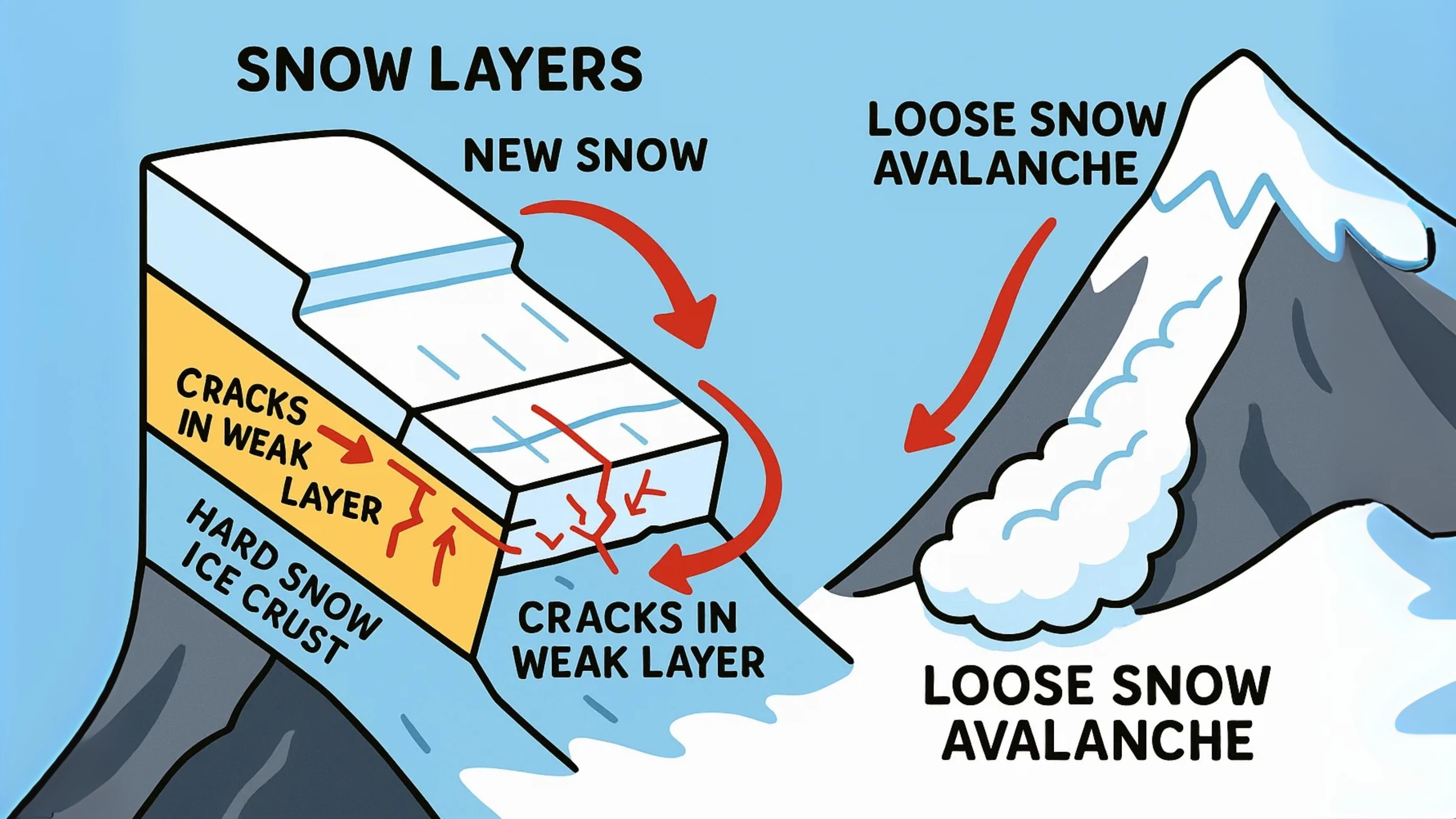 Diagram showing different avalanche types and snow layer conditions that create instability
Slab avalanches are the most dangerous - a large plate of hard snow breaks away and shatters into blocks as it slides downhill. Powder avalanches create huge clouds of snow dust that can bury everything in their path. Wet avalanches happen when warming temperatures make snow heavy and unstable.
Avalanche Safety and Rescue
Avalanche safety starts with understanding snow conditions and avoiding dangerous areas. Avalanche forecasters study weather, snowpack, and mountain conditions to predict avalanche danger levels from low to extreme. Backcountry travelers carry special safety gear including avalanche transceivers, probes, and shovels.
Search and rescue dogs are heroes of avalanche rescue! These specially trained dogs can smell people buried under 15 feet of snow and help rescuers find victims quickly. Rescue teams use avalanche transceivers - special radio devices that help locate buried people.
Avalanches show us the incredible power of snow and the importance of respecting mountain environments - understanding these snow slides helps keep mountain adventurers safe while enjoying winter's beautiful but dangerous landscapes!