Canyons
Explore spectacular rock formations carved by millions of years of water erosion through solid stone

Grand Canyon showing colorful rock layers and the Colorado River far below
Canyons are like Earth's natural sculpture galleries carved by the incredible power of flowing water! These spectacular rock formations show us how even the softest water can cut through the hardest stone when given enough time. Canyons are proof that small changes over millions of years can create some of the most breathtaking landscapes on our planet.
How Water Carves Stone
River erosion is the main force that creates canyons. As rivers flow over rock for millions of years, they gradually wear away the stone grain by grain, creating deeper and deeper channels. The Colorado River carved the Grand Canyon over 6 million years, cutting through rock layers that tell the story of Earth's history.
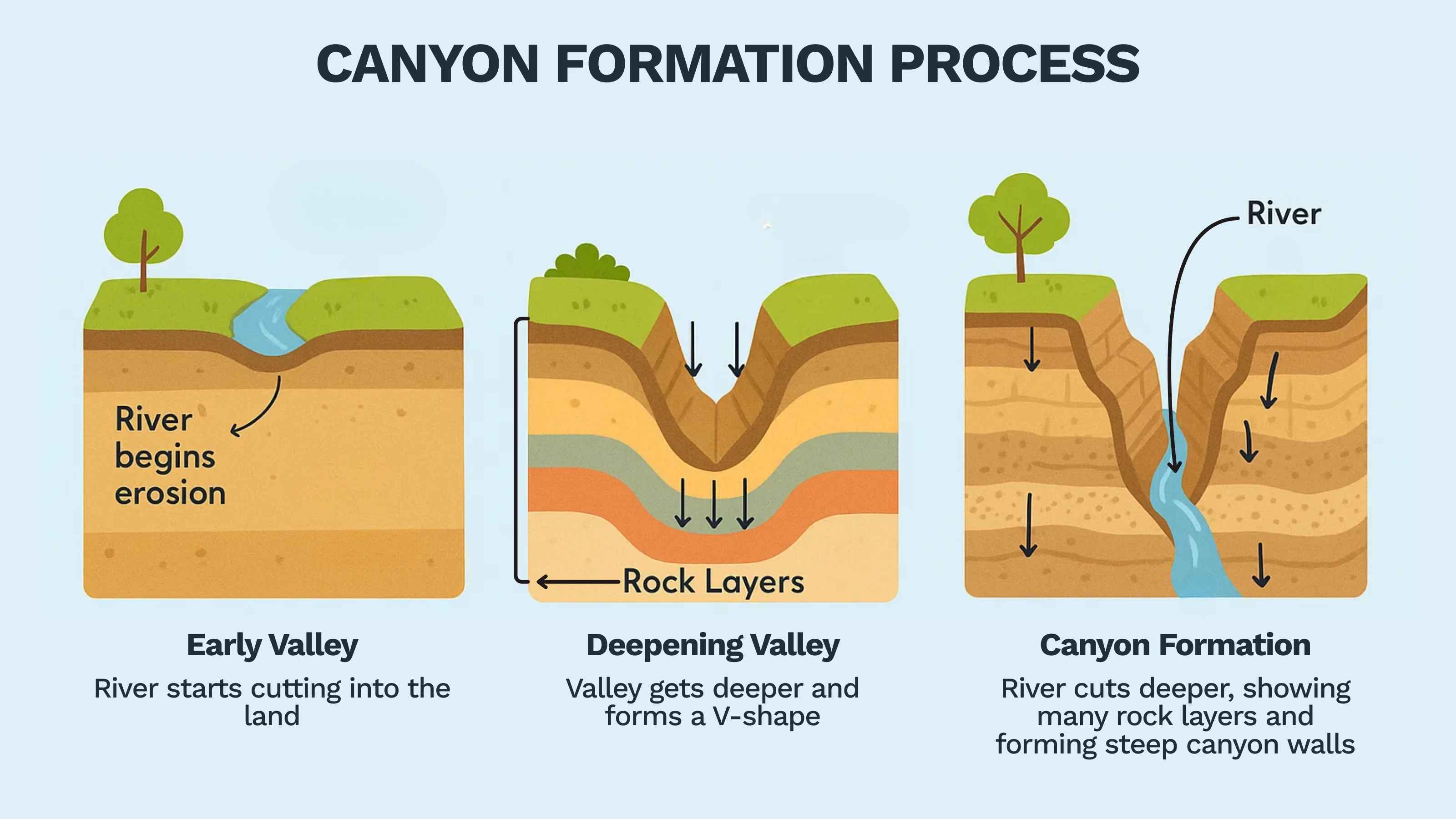 Diagram showing how rivers cut through rock layers over millions of years to create canyons
Softer rock layers erode faster than harder ones, creating the stepped appearance of many canyon walls. Flash floods can carve slot canyons very quickly during rare desert storms. Glacial meltwater created some canyons during ice ages when massive amounts of water suddenly rushed across the landscape.

Amazing Canyon Features
Slot canyons are incredibly narrow passages with walls that almost touch overhead, creating magical light shows as sunbeams filter down through the openings. Box canyons have steep walls on three sides with only one way in or out. Submarine canyons exist underwater on ocean floors, carved by underwater currents.
Rock layers in canyon walls are like pages in Earth's history book - each layer represents millions of years and different ancient environments. Fossils found in canyon walls show us what life was like when those rocks formed. Natural arches and hoodoos (tall rock pillars) form when erosion creates spectacular sculptures.
Canyons teach us about the incredible power of persistence - they show us how steady, patient forces can create some of Earth's most magnificent natural wonders and reveal the amazing story of our planet's geological history!