Caves
Journey into underground worlds filled with spectacular rock formations and hidden chambers

Beautiful underground cave with stalactites hanging from ceiling and stalagmites rising from floor
Caves are Earth's hidden underground palaces! These mysterious chambers and tunnels form beneath our feet over thousands of years, creating spectacular rooms decorated with incredible rock formations. Caves provide windows into Earth's geological history and shelter for unique animals that live in permanent darkness.
How Caves Form
Limestone caves are the most common type, formed when slightly acidic groundwater slowly dissolves limestone rock over thousands of years. Rainwater becomes acidic when it mixes with carbon dioxide in soil, then flows through cracks in rock, gradually widening them into tunnels and chambers.
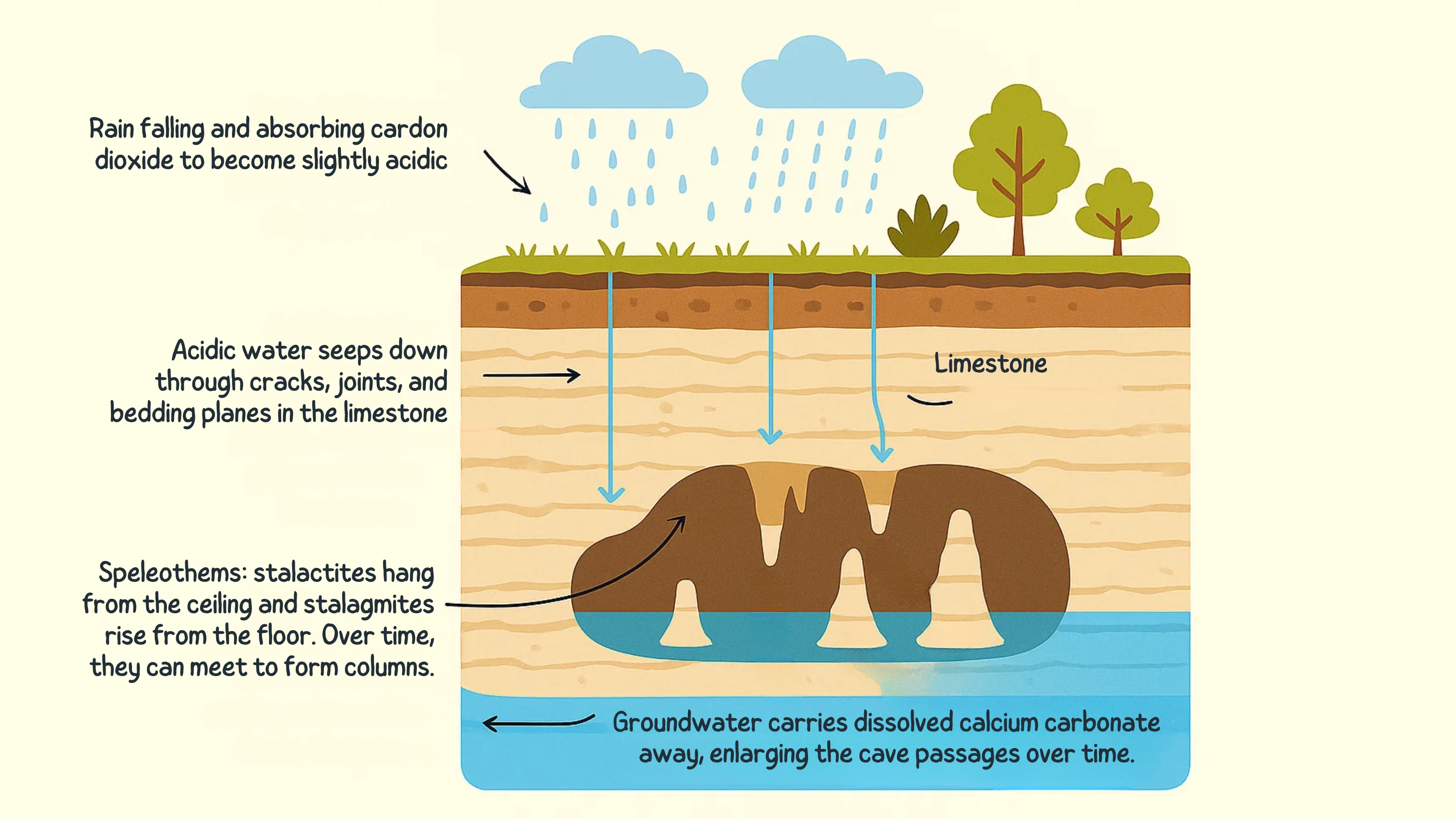 Diagram showing how caves form through limestone dissolution and different types of cave formations
Lava tubes form when the outside of a lava flow cools and hardens while hot lava continues flowing inside, leaving behind hollow tunnels. Sea caves are carved by ocean waves pounding against coastal cliffs. Ice caves form in glaciers or in areas where ice stays frozen year-round.
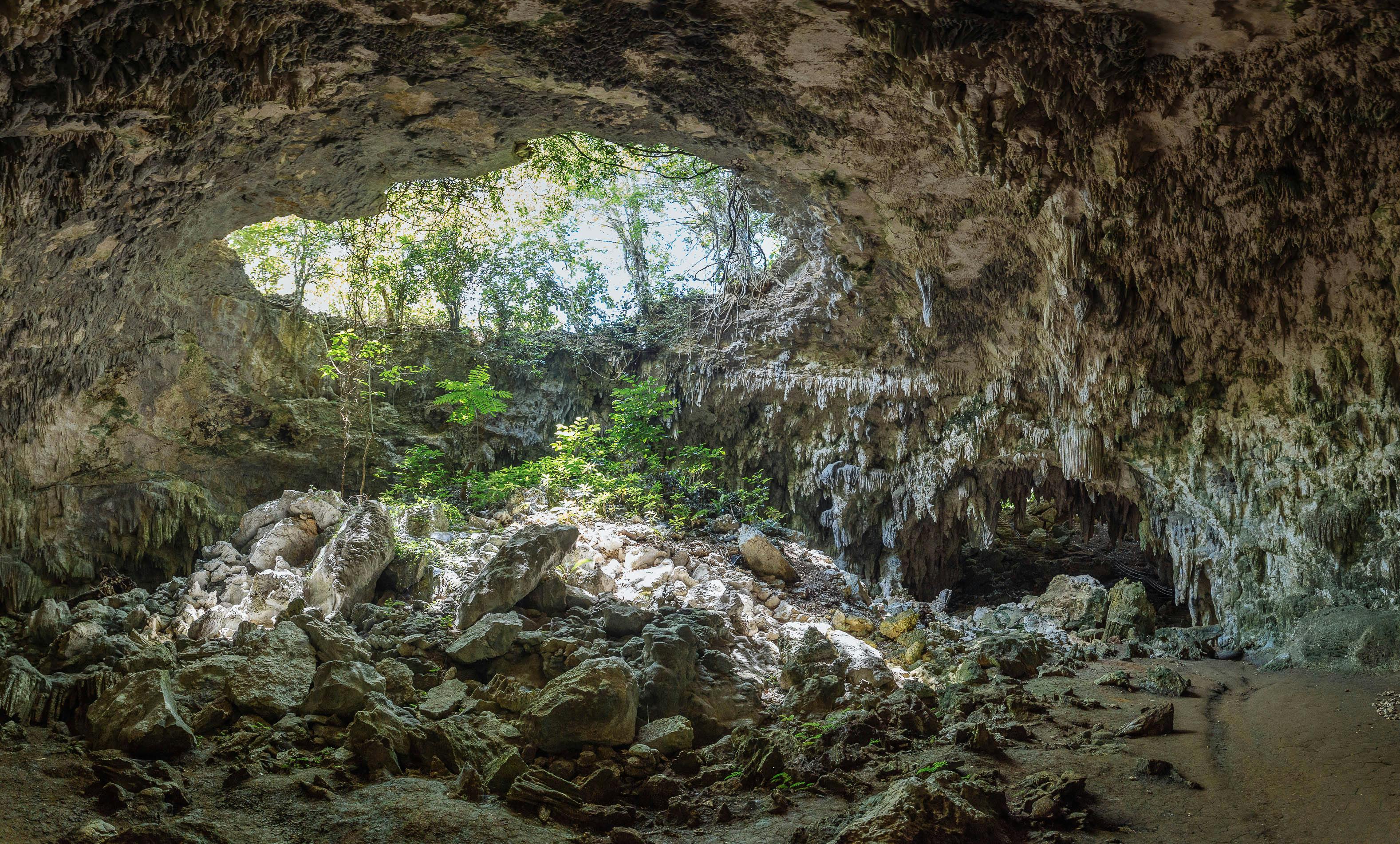
Amazing Cave Formations
Stalactites hang like icicles from cave ceilings, formed by mineral-rich water dripping slowly over thousands of years. Stalagmites grow up from cave floors where the dripping water lands. When stalactites and stalagmites meet, they form columns that can be massive and beautiful.
Flowstone creates smooth, flowing curtains and waterfalls of rock. Cave pearls are round formations that grow in cave pools where water moves small particles around and around. Soda straws are thin, hollow stalactites that look like drinking straws hanging from the ceiling.
Caves remind us that there are still mysterious worlds to explore beneath our feet - these underground chambers show us the patient power of water and time while providing homes for unique creatures and preserving Earth's geological secrets!