Geysers
Discover Earth's natural hot water fountains that shoot boiling water and steam high into the air
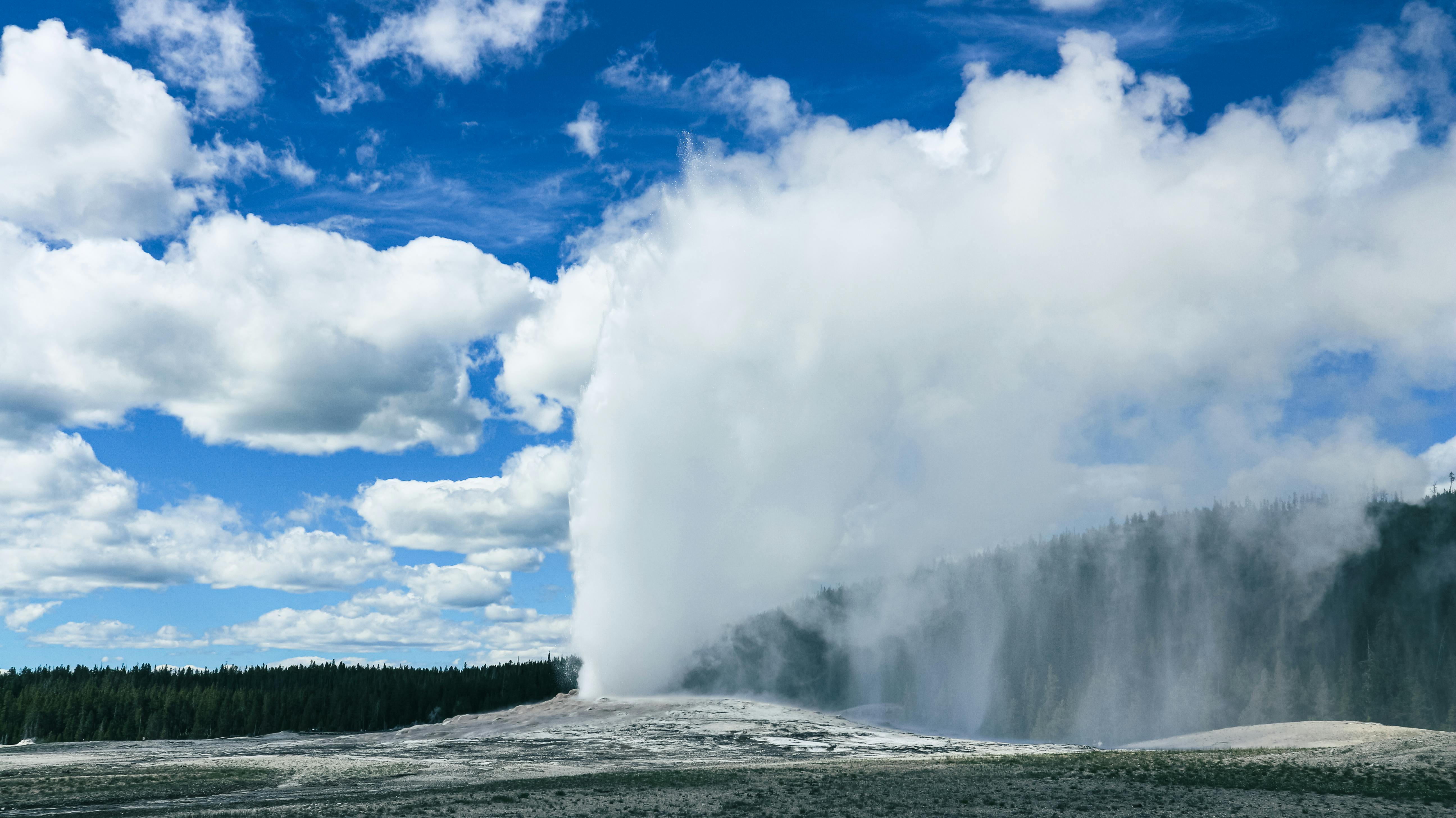
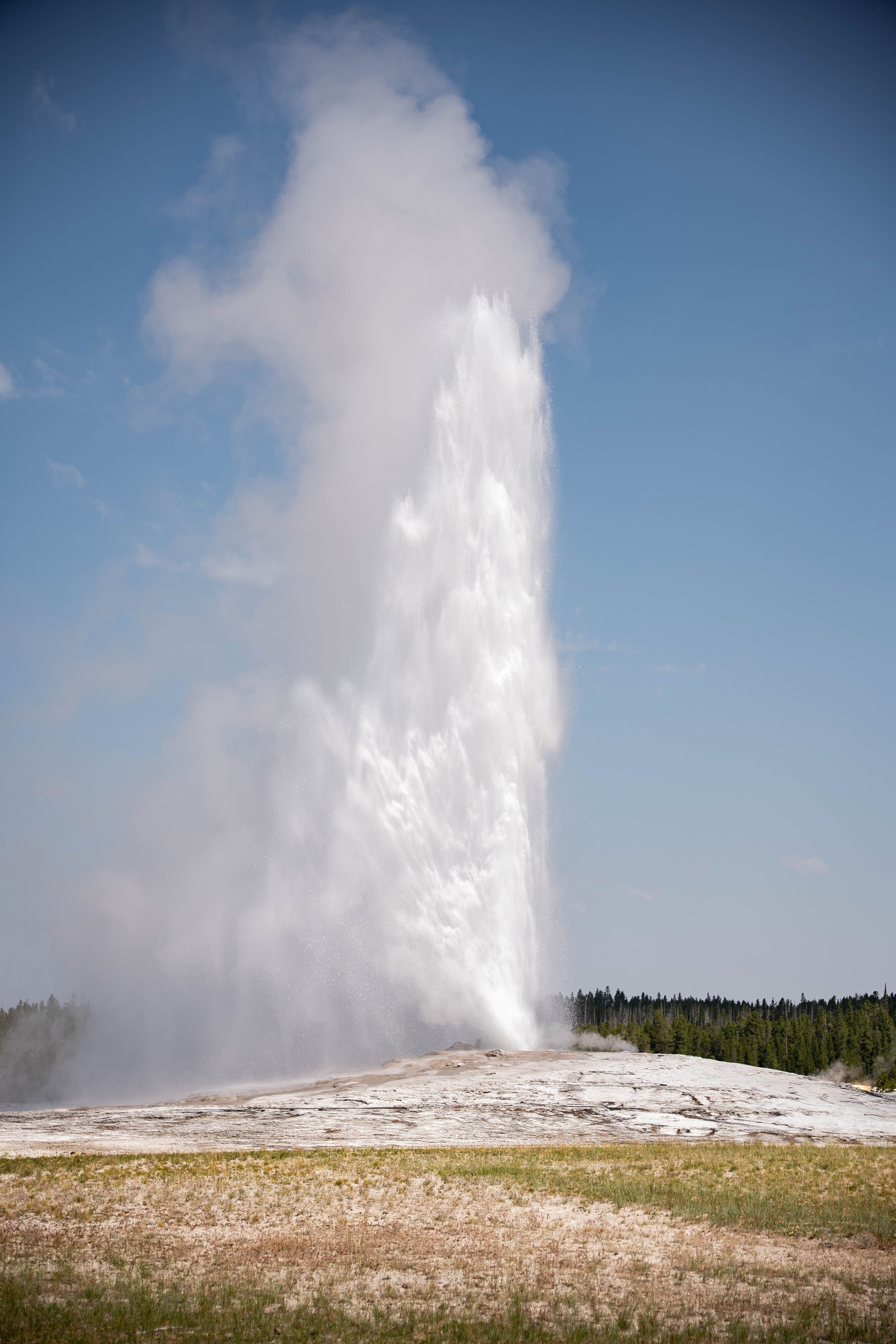
The famous Old Faithful geyser blasts hot water and steam into the air, like Earth is blowing a giant whistle!
Geysers are like Earth's natural water rockets! These amazing geothermal features happen when underground water gets heated by hot rocks deep below the surface, then erupts dramatically into the air as boiling water and steam. Only about 1,000 geysers exist worldwide, making them some of our planet's rarest natural wonders.
How Geysers Work
Underground plumbing systems make geysers possible! Water seeps down through cracks in rock until it reaches areas heated by magma chambers deep underground. The water gets superheated to over 400°F but can't boil because of the pressure from water above it. When pressure conditions are just right, the water violently erupts to the surface.
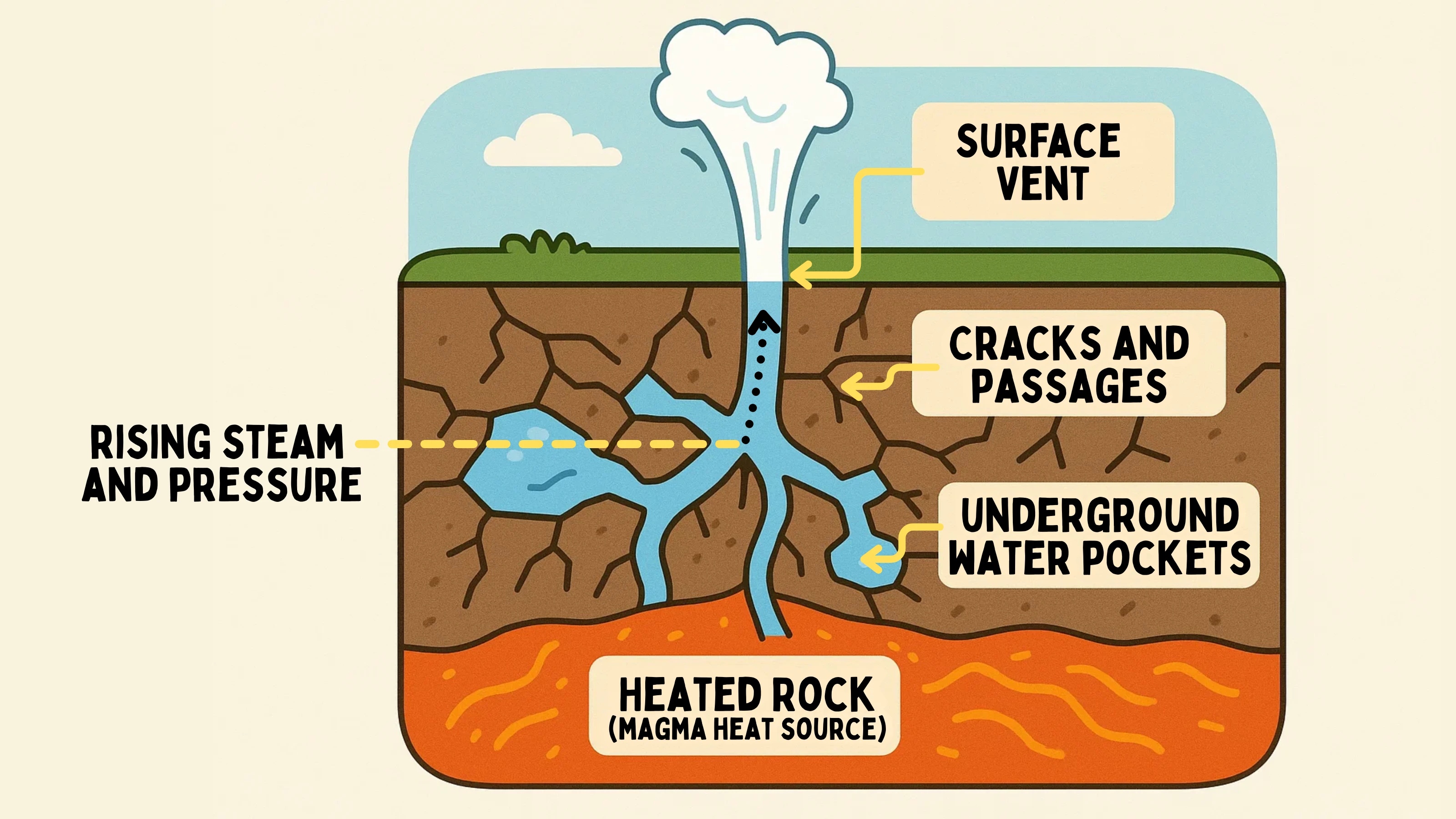 Cross-section diagram showing underground plumbing system that creates geyser eruptions
Narrow underground chambers act like pressure cookers, allowing water to heat far above normal boiling temperature. When some water finally does boil and turns to steam, it creates pressure that forces the superheated water above it to erupt explosively through the surface opening.
Famous Geysers Around the World
Old Faithful in Yellowstone National Park is the world's most famous geyser, erupting about every 90 minutes and shooting water 130-185 feet high. Strokkur in Iceland erupts every 6-10 minutes. El Tatio in Chile has over 80 geysers in one field, making it the largest geyser field in the Southern Hemisphere.
Geyser eruptions can be predictable like Old Faithful, or completely irregular with years between eruptions. Mineral-rich water creates beautiful colored deposits around geyser openings - oranges, yellows, and greens from different minerals dissolved in the hot water. Thermophile bacteria create rainbow colors in the hot pools.
Geysers remind us that our planet is alive with geothermal energy - these incredible water fountains show us the power of Earth's internal heat and create some of the most spectacular and unpredictable natural shows on our planet!