Landslides
Discover how gravity pulls rocks, soil, and debris down slopes when hillsides become unstable

Landslide in progress showing rocks, soil, and trees sliding down hillside
Landslides happen when gravity wins the battle against slopes! These dramatic geological events occur when rocks, soil, and debris on hillsides become too heavy or unstable and suddenly slide, tumble, or flow downhill. Landslides can move as slowly as inches per year or as fast as 100 mph!
What Causes Landslides
Heavy rainfall is the most common trigger for landslides because water makes soil heavy and slippery. Earthquakes can shake loose materials on slopes. Human activities like cutting into hillsides for roads or removing vegetation can make slopes unstable. Volcanic eruptions and wildfires can also trigger landslides.
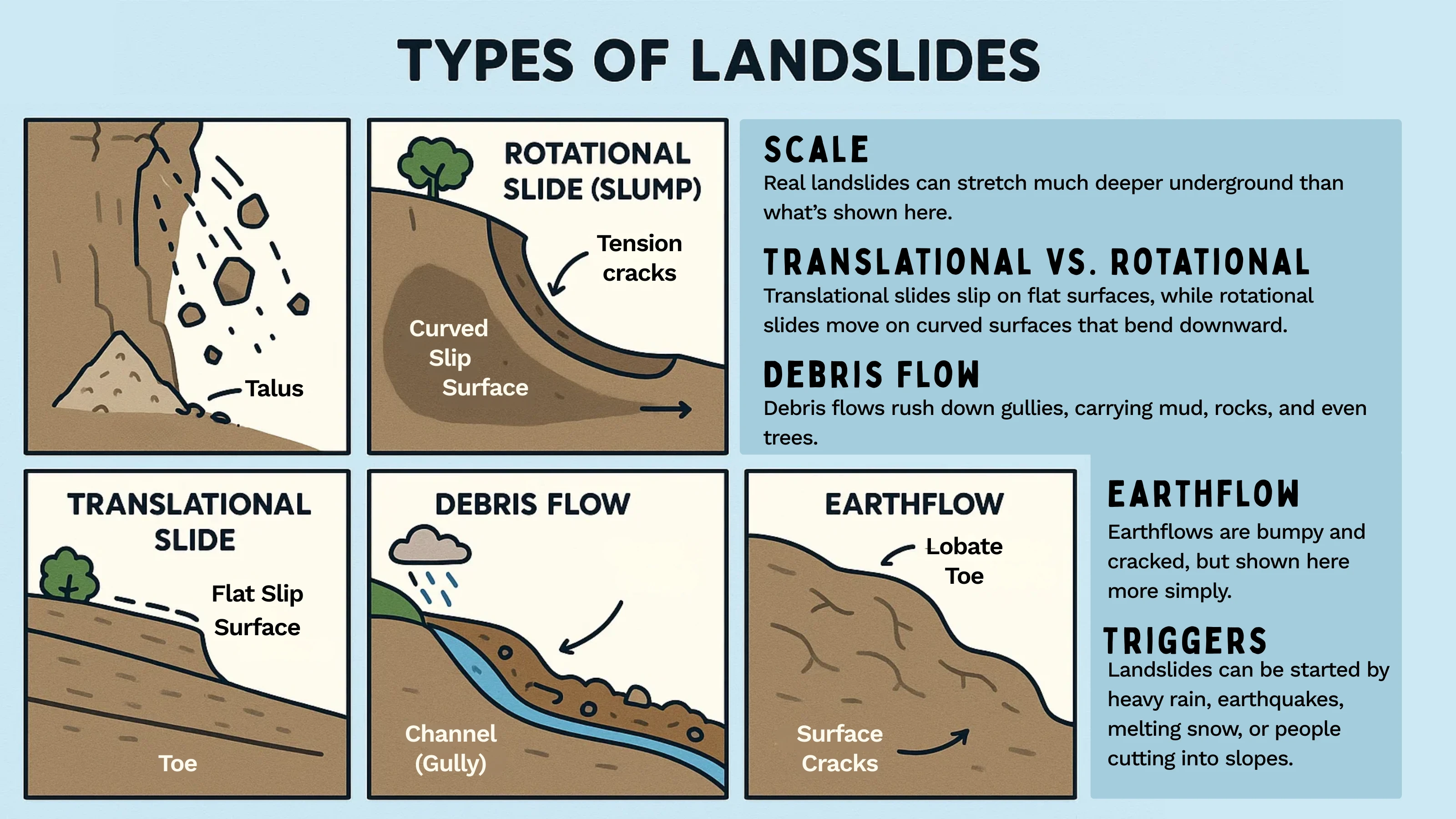 Diagram showing different types of landslides from rockfalls to debris flows and rotational slides
Steep slopes are most prone to landslides, especially where different types of rock or soil meet. Clay soils become very slippery when wet. Loose rock on cliff faces can fall without warning. Old landslide areas are more likely to slide again because the slope is already weakened.

Types of Landslides
Rockfalls happen when individual rocks or small groups of rocks fall from cliffs. Debris flows are fast-moving mixtures of water, rock, and soil that flow like concrete down channels. Rotational slides occur when curved sections of slope rotate and slide downward like giant puzzle pieces.
Mudslides are debris flows with lots of fine soil and water that can bury entire communities. Slow-moving landslides creep downhill so gradually that trees grow curved as they're slowly tilted. Submarine landslides occur underwater and can trigger tsunamis.
Landslides remind us that landscapes are constantly changing due to gravity, water, and time - understanding these powerful geological processes helps us build safer communities and appreciate the dynamic nature of our planet!