Alpine Ecosystems
Explore life on mountain peaks where tough plants and animals survive thin air, freezing cold, and intense sunlight

High mountain alpine meadow with colorful wildflowers and snow-capped peaks in background
Alpine ecosystems exist on the world's highest mountains, above the tree line where it's too cold and windy for trees to grow. Life here is incredibly tough - animals and plants must survive freezing temperatures, intense UV radiation, thin air with less oxygen, and powerful winds that can knock you over!
Life Above the Clouds
Alpine zones begin where trees can no longer survive, usually around 10,000-12,000 feet above sea level. The air here has only half the oxygen found at sea level! Alpine plants grow in cushions and mats close to the ground to avoid freezing winds and conserve heat from sun-warmed rocks.
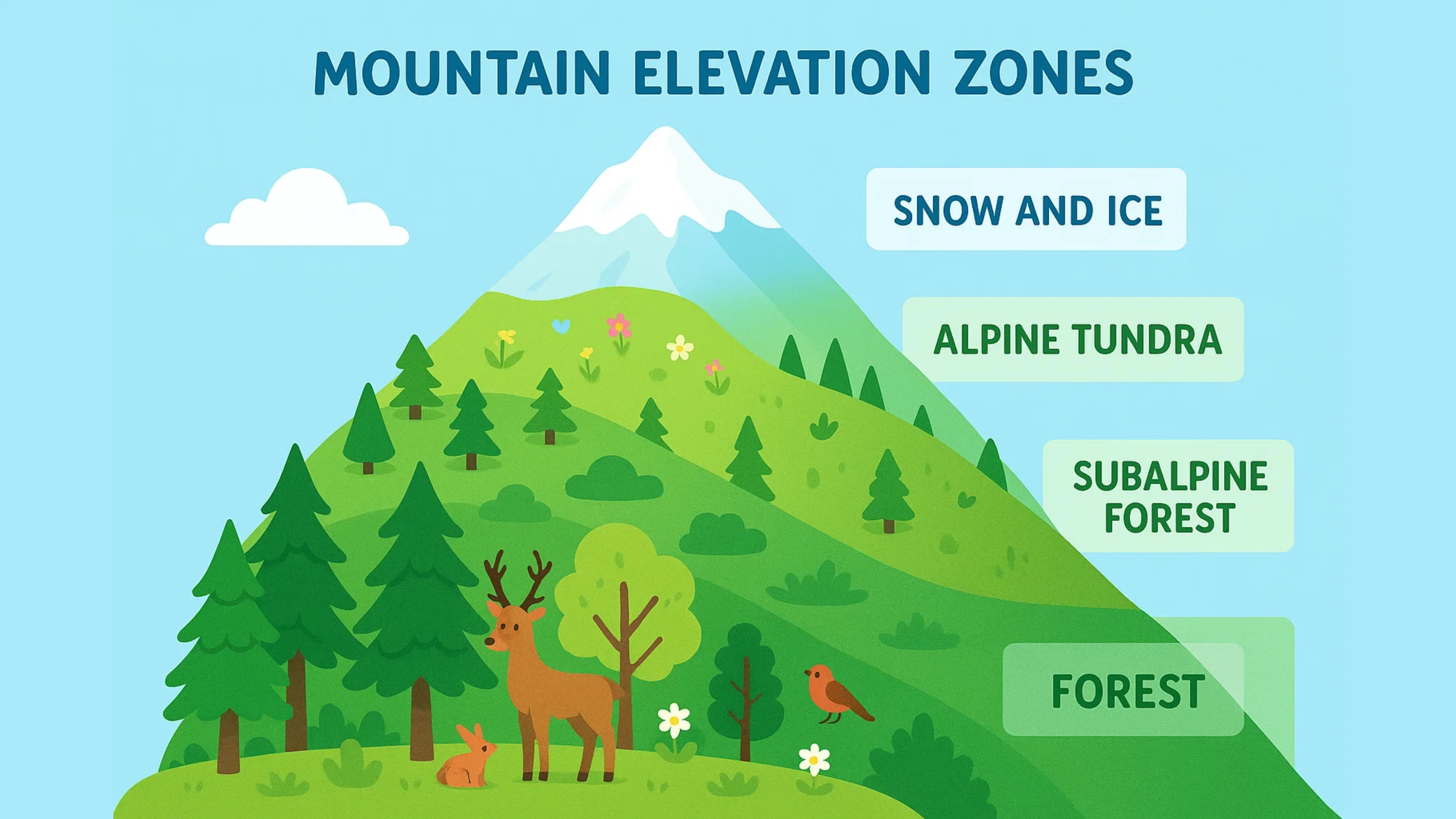 Mountain elevation zones showing how ecosystems change from forest to alpine tundra
Alpine wildflowers create spectacular displays during the brief summer growing season. Mountain avens, alpine forget-me-nots, and moss campion bloom in brilliant colors that seem impossible in such harsh conditions. These hardy plants may take 20 years to bloom for the first time!
Amazing Mountain Animals
Mountain goats are incredible climbers with specially designed hooves that grip tiny ledges on cliff faces. Pikas are small, round-eared relatives of rabbits that collect "haypiles" of dried plants to survive winter. Marmots are large ground squirrels that hibernate for up to 8 months each year.
Snow leopards are the ultimate alpine predators, with huge paws that work like snowshoes and long tails for balance on rocky terrain. Golden eagles soar on mountain thermals hunting for prey. Bighorn sheep have curved horns and amazing balance for navigating steep, rocky slopes.
Alpine ecosystems teach us that life can survive in the most extreme conditions on Earth - these mountain communities show us incredible examples of adaptation and remind us that even the highest peaks are home to amazing wildlife!