Cave Ecosystems
Journey into underground worlds where specialized animals live in complete darkness and unique environments
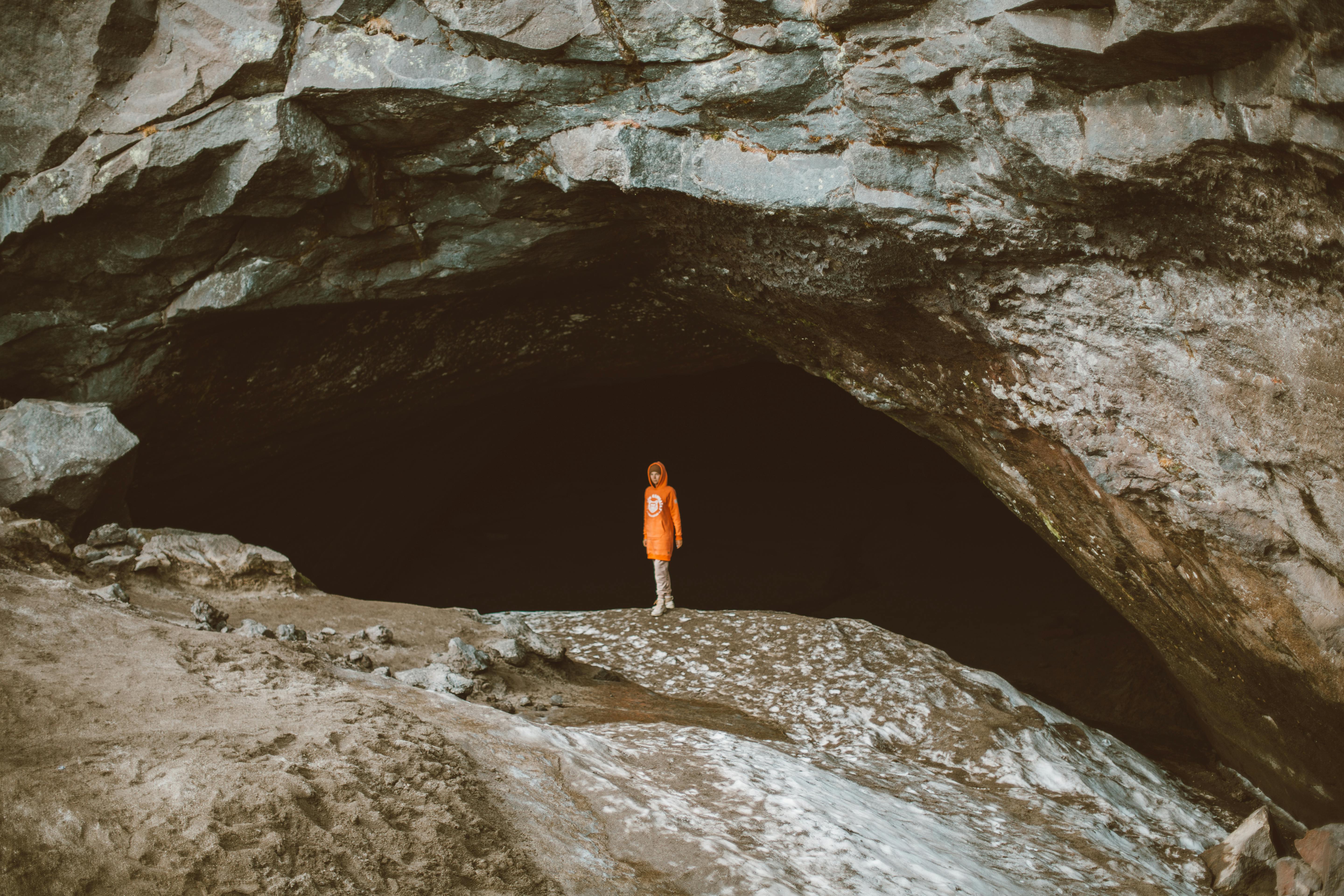
Person standing at the mouth of a cave, where daylight fades and the adventure into darkness begins.
Cave ecosystems are hidden underground worlds where life exists in permanent darkness! These mysterious environments are home to specially adapted animals that have evolved unique features like blindness, enhanced senses, and pale coloration. Caves provide stable temperatures and humidity that create refuges for many rare species.
Underground Zones
Caves have different zones just like the ocean! The entrance zone gets some sunlight and has plants and normal animals. The twilight zone is dimly lit and home to animals that move between surface and cave. The dark zone is in permanent darkness where true cave animals live.
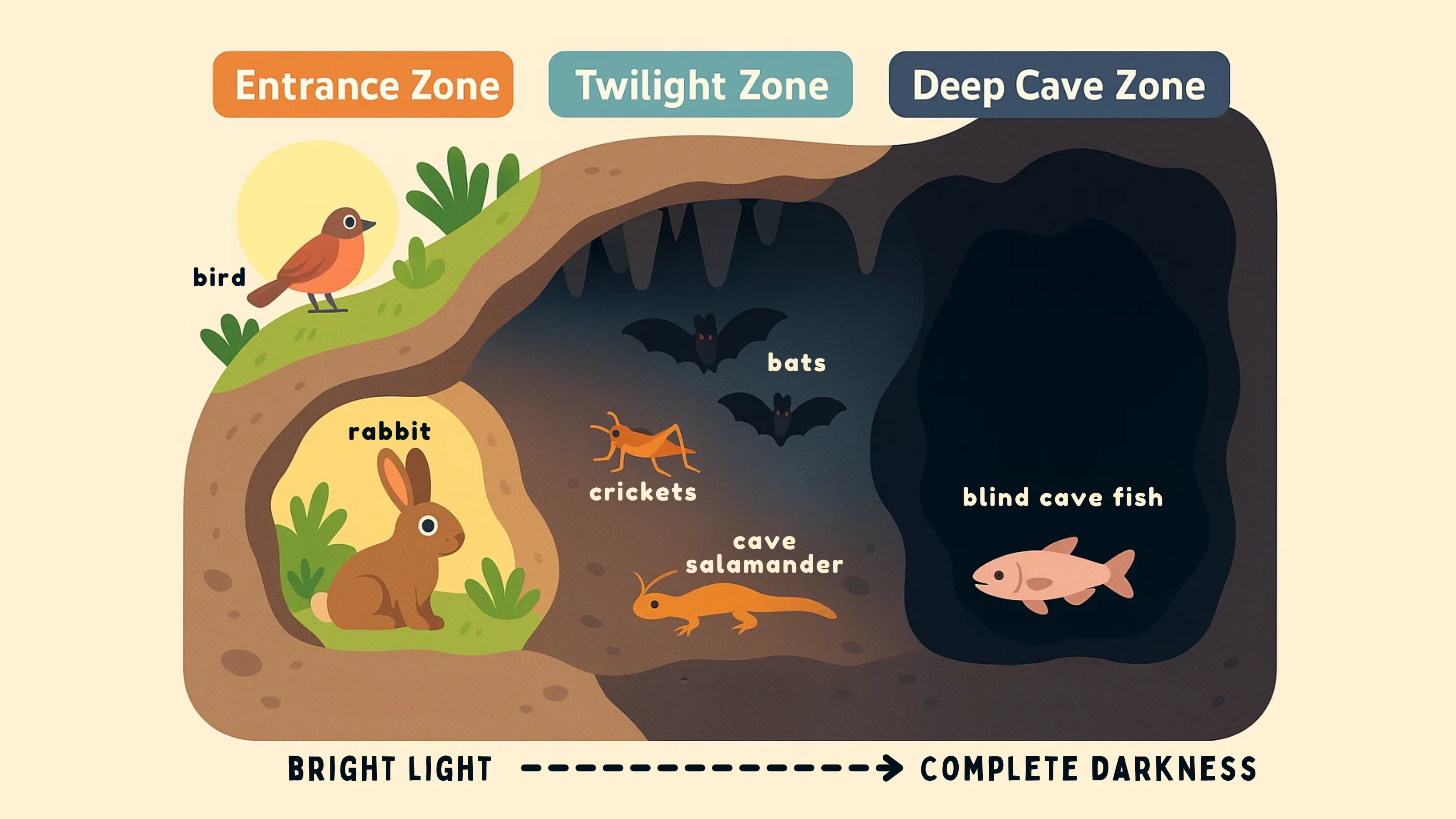 Cave zone diagram showing entrance, twilight, and deep cave environments with different animal adaptations
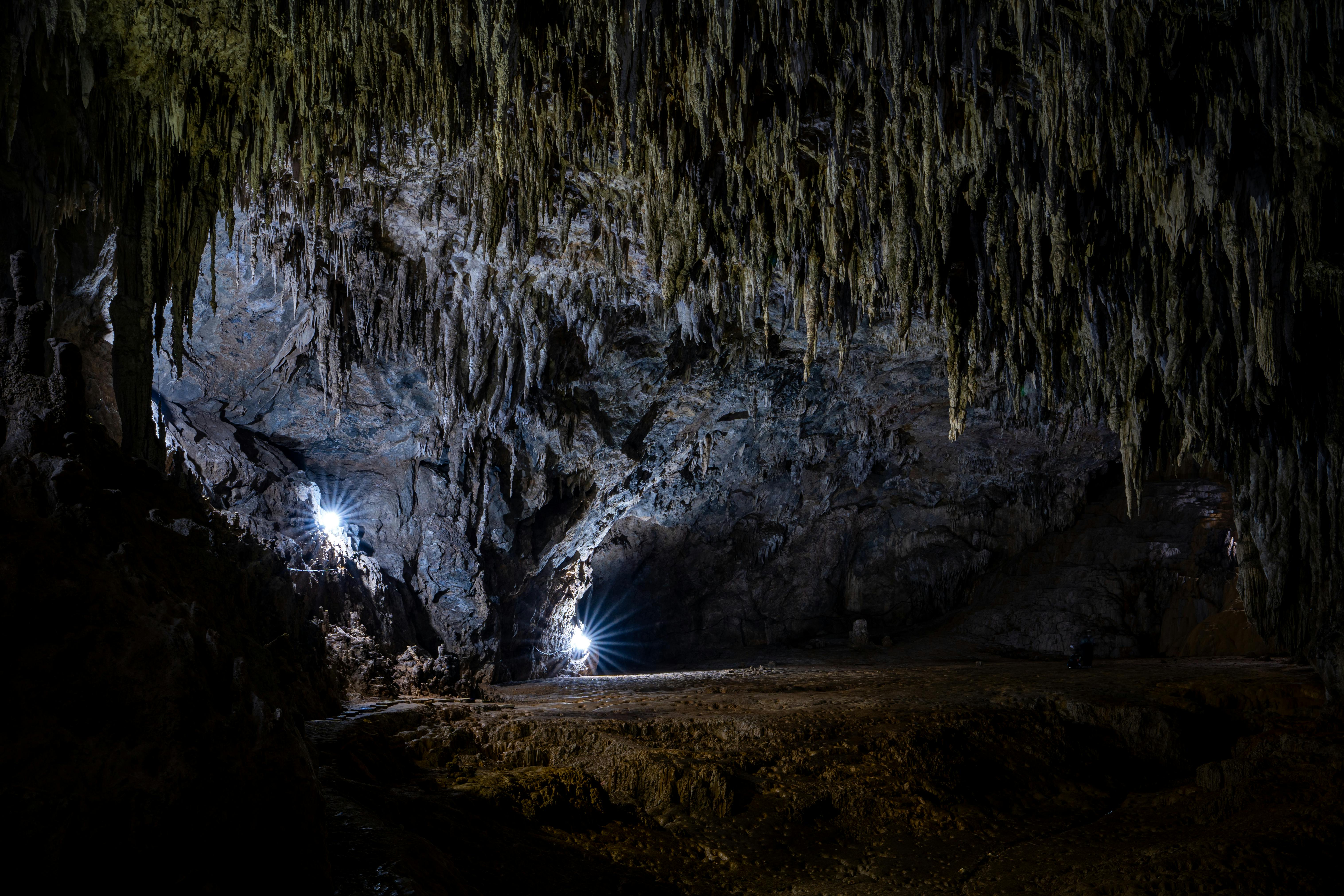
Cave formations like stalactites and stalagmites take thousands of years to form from dripping mineral-rich water. Underground streams and cave pools provide water for cave animals. Some caves have their own weather systems with winds and temperature changes!
Amazing Cave Animals
Cave animals have incredible adaptations for life without sunlight! Blind cave fish have no eyes but have enhanced lateral line systems to detect water movement. Cave salamanders are pale and have enhanced senses of touch and smell. Cave spiders can detect the tiniest vibrations to catch prey.
Bats use caves as roosts, bringing nutrients from the outside world into cave ecosystems. Cave crickets have extremely long antennae to navigate in darkness. Olms are cave salamanders that can live over 100 years and survive without food for 10 years!
Cave ecosystems remind us that life can adapt to the most extreme conditions - these underground worlds are like natural laboratories showing us how evolution works in isolation and darkness!