Coral Reefs
Explore underwater cities built by tiny animals that create homes for thousands of colorful sea creatures
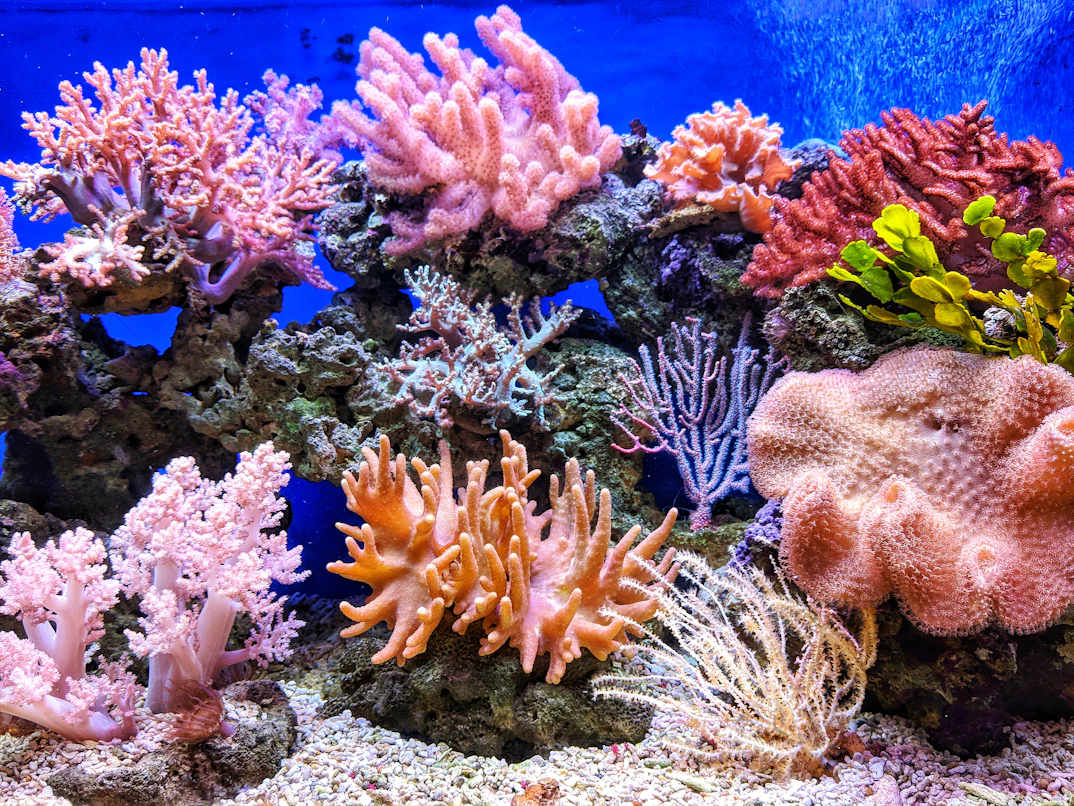
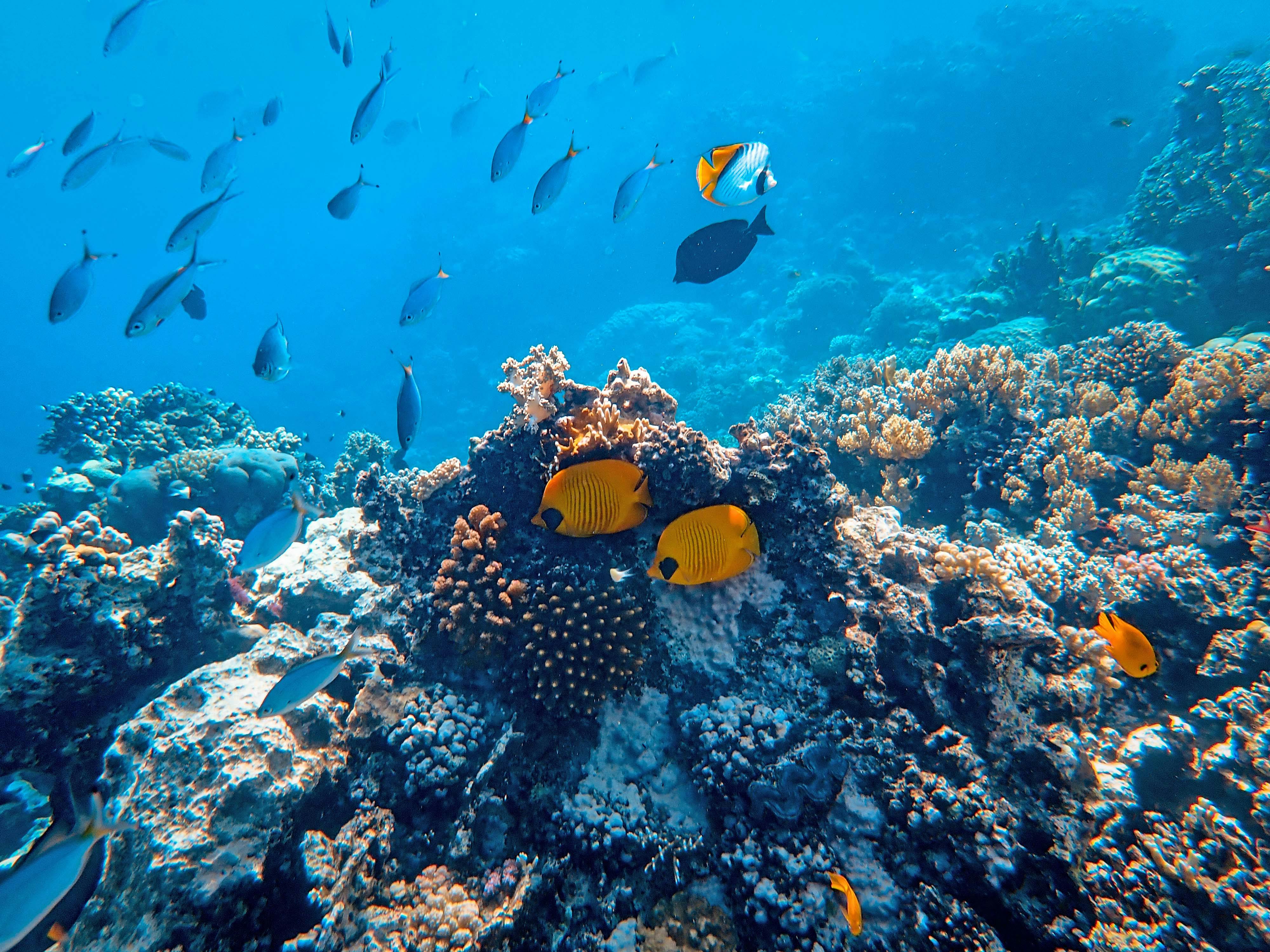
Vibrant coral reef with colorful fish swimming among branching and brain corals
Coral reefs are like underwater cities built by tiny animals called coral polyps! These amazing structures are home to more different species than almost any other place on Earth. Even though coral reefs cover less than 1% of the ocean floor, they provide homes for about 25% of all marine fish species.
How Coral Reefs Are Built
Coral polyps are small animals related to jellyfish that live in colonies. Each tiny polyp builds a hard, limestone skeleton around itself for protection. When millions of polyps live together, their skeletons create the rocky structures we call coral reefs. This process takes thousands of years!
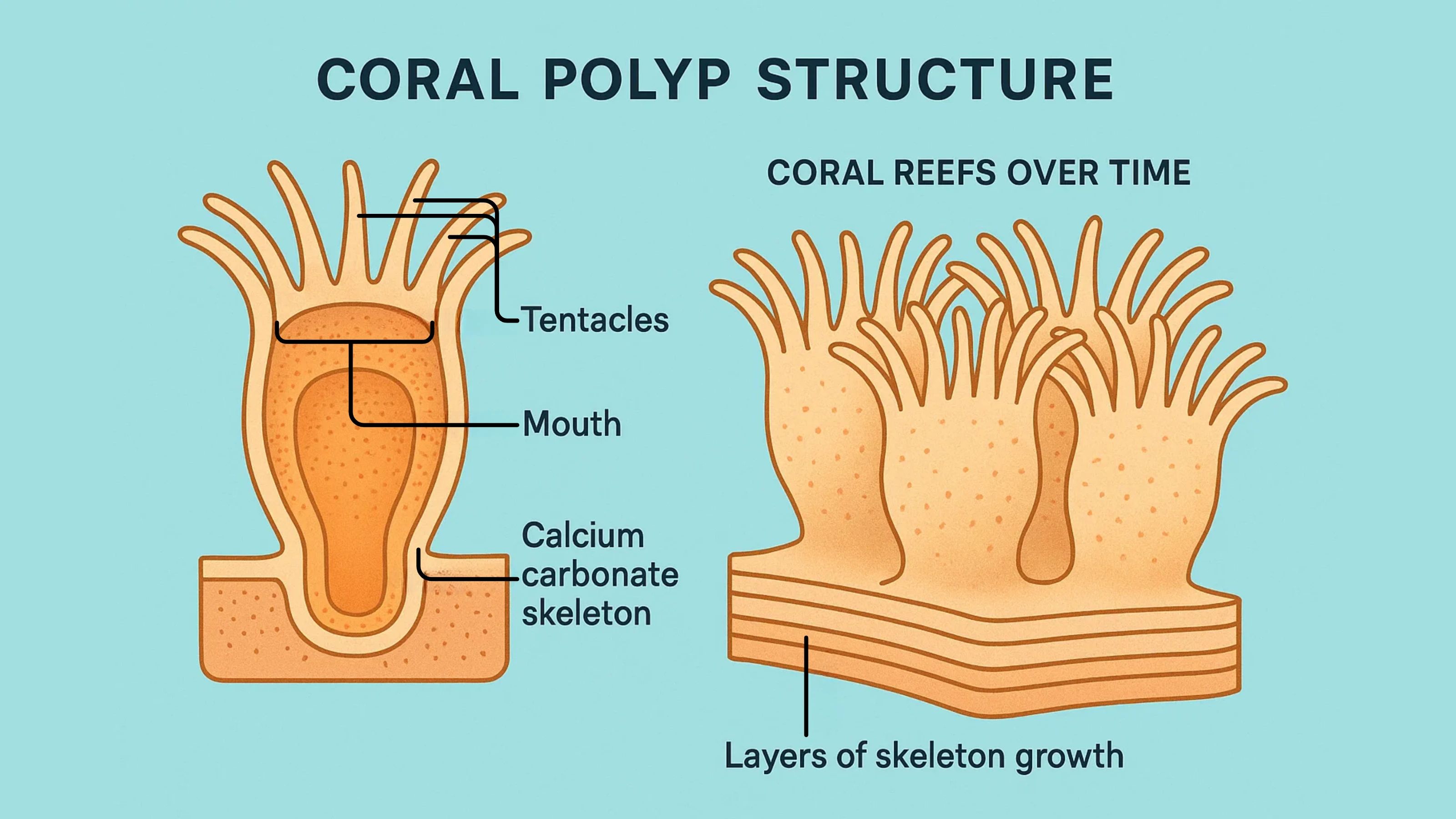 Cross-section diagram showing coral polyp structure and how reefs are built over time
Corals have a special partnership with tiny algae called zooxanthellae that live inside them. The algae use sunlight to make food and share it with the coral, while the coral gives the algae a safe place to live. This is why coral reefs only grow in clear, shallow, tropical waters where there's lots of sunlight.
Amazing Reef Life
Coral reefs are bustling underwater neighborhoods! Clownfish live safely among the stinging tentacles of sea anemones. Parrotfish crunch on coral with their beak-like mouths and help create sandy beaches with their waste. Sea turtles cruise through reef waters munching on sea grass and algae.
Sharks patrol the reefs as top predators, keeping fish populations healthy. Octopuses hide in coral crevices and change colors to match their surroundings. Cleaning stations are special spots where small fish remove parasites from larger fish - it's like underwater car washes!
Coral reefs are among Earth's most precious treasures - these underwater rainforests show us the incredible beauty and complexity of marine life while reminding us how important it is to protect our oceans!