Deep Ocean
Explore the mysterious underwater world where strange creatures live in complete darkness under crushing pressure

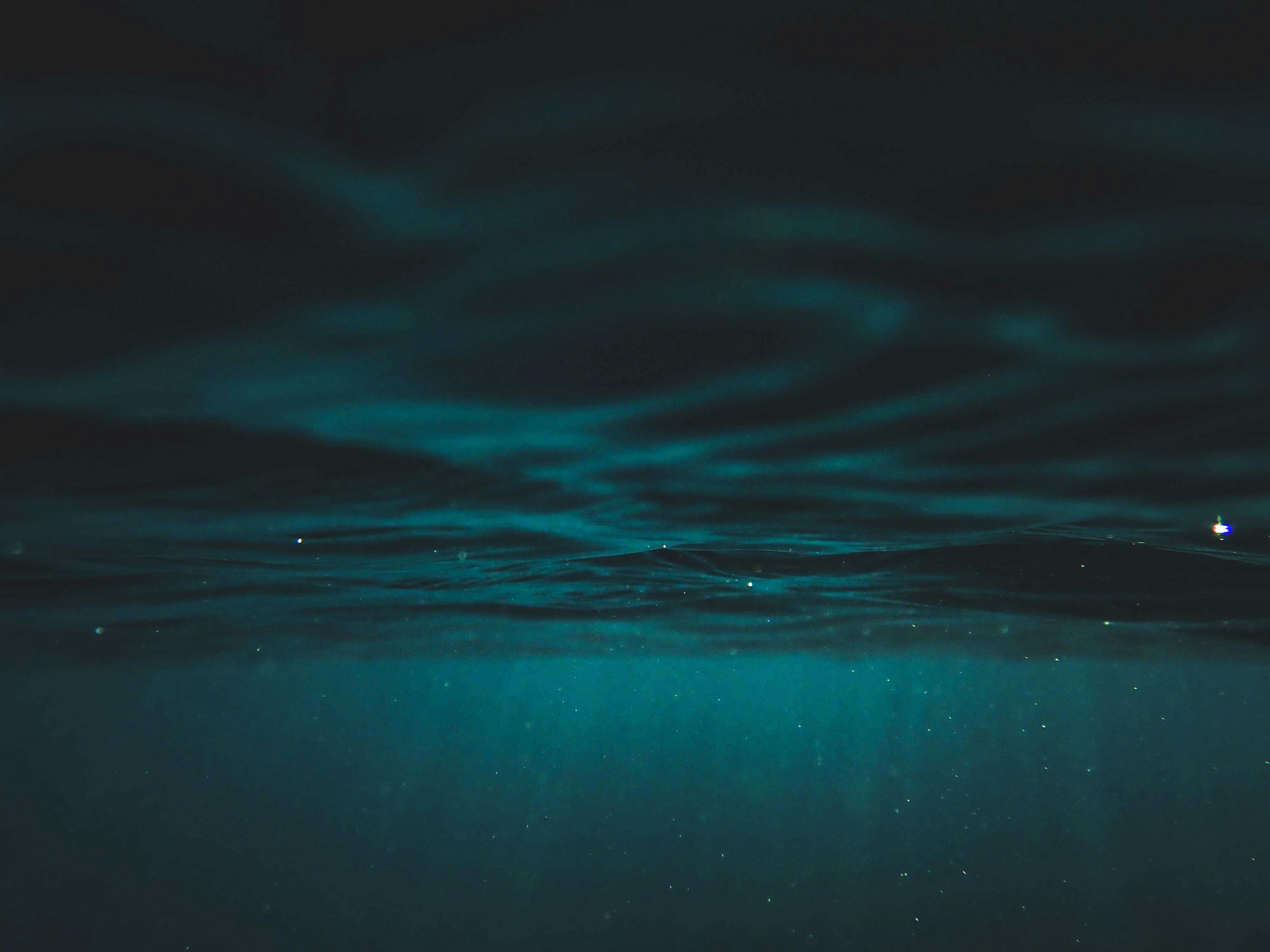
Deep ocean scene with bioluminescent creatures glowing in the dark depths
PHOTOGRAPH BY Jim G (from Silicon Valley, CA, USA), Wikimedia Commons
The deep ocean is Earth's largest ecosystem and one of its most mysterious! This vast underwater world begins where sunlight can no longer reach - about 650 feet below the surface. Here, in permanent darkness, incredible creatures have evolved amazing adaptations to survive crushing pressure, freezing cold, and no sunlight at all.
The Ocean's Dark Zones
Below the sunlit surface waters lie four mysterious zones: The twilight zone (650–3,300 feet deep) where only faint blue light penetrates. The midnight zone (3,300–13,000 feet deep) in complete darkness. The abyssal zone (13,000–20,000 feet deep) where pressure is over 300 times greater than at sea level. And the hadal zone (20,000–36,000+ feet deep), found in deep ocean trenches, home to some of the most extreme and unusual life on Earth.
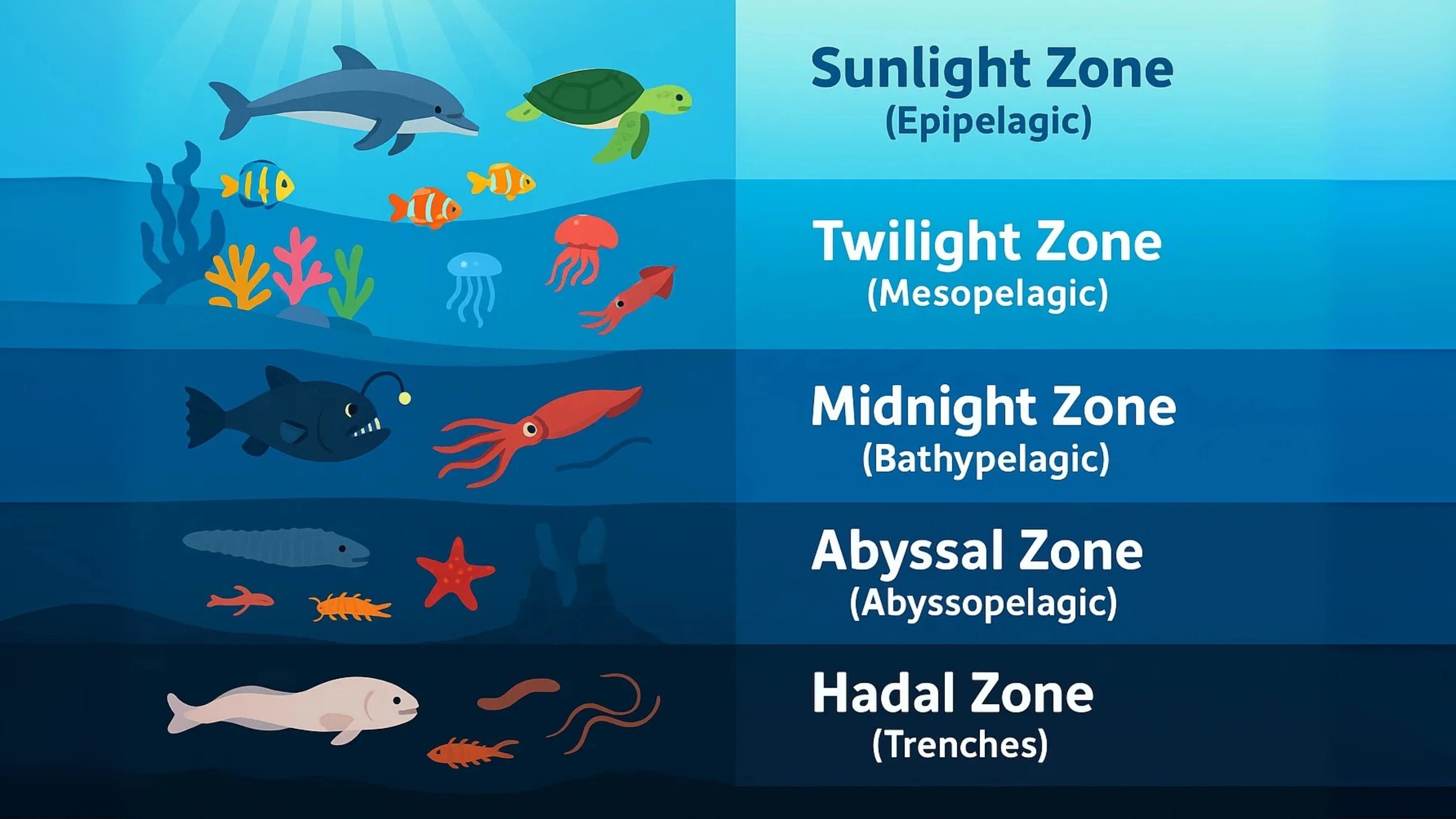 Ocean zone diagram showing sunlight zone, twilight zone, midnight zone, and abyssal depths
Hydrothermal vents on the deep ocean floor spew hot, mineral-rich water and support entire ecosystems without any sunlight. Tube worms up to 8 feet long cluster around these underwater hot springs, getting energy from bacteria that can "eat" chemicals instead of needing sunlight.
Amazing Deep Sea Creatures
Deep sea animals look like creatures from science fiction! Anglerfish have glowing lures to attract prey in the darkness. Giant squid can grow longer than school buses and battle sperm whales in the depths. Vampire squid can turn themselves inside out when threatened.
Bioluminescence - the ability to make light - is common in deep sea creatures. Lanternfish create their own light shows, glowing jellyfish pulse like underwater fireworks, and deep sea dragonfish have light organs like Christmas decorations. Dumbo octopuses use ear-like fins to gracefully fly through the water.
The deep ocean reminds us how much we still don't know about our own planet - these mysterious depths hold secrets about life, climate, and possibly even how life began on Earth billions of years ago!