Desert Ecosystems
Discover how amazing plants and animals thrive in Earth's driest places with incredible water-saving adaptations

Sonoran Desert landscape with saguaro cacti
Desert ecosystems are nature's ultimate survival schools! These incredibly dry places receive less than 10 inches of rain per year, yet they're home to thousands of specially adapted plants and animals that have mastered the art of living with very little water. Deserts cover about one-third of Earth's land surface.
Masters of Water Conservation
Desert plants are water-saving champions! Cacti store water in their thick stems and have waxy coatings to prevent water loss. Desert trees like palo verde have green bark that does photosynthesis when the tree drops its leaves during dry periods. Succulent plants store water in thick, fleshy leaves.
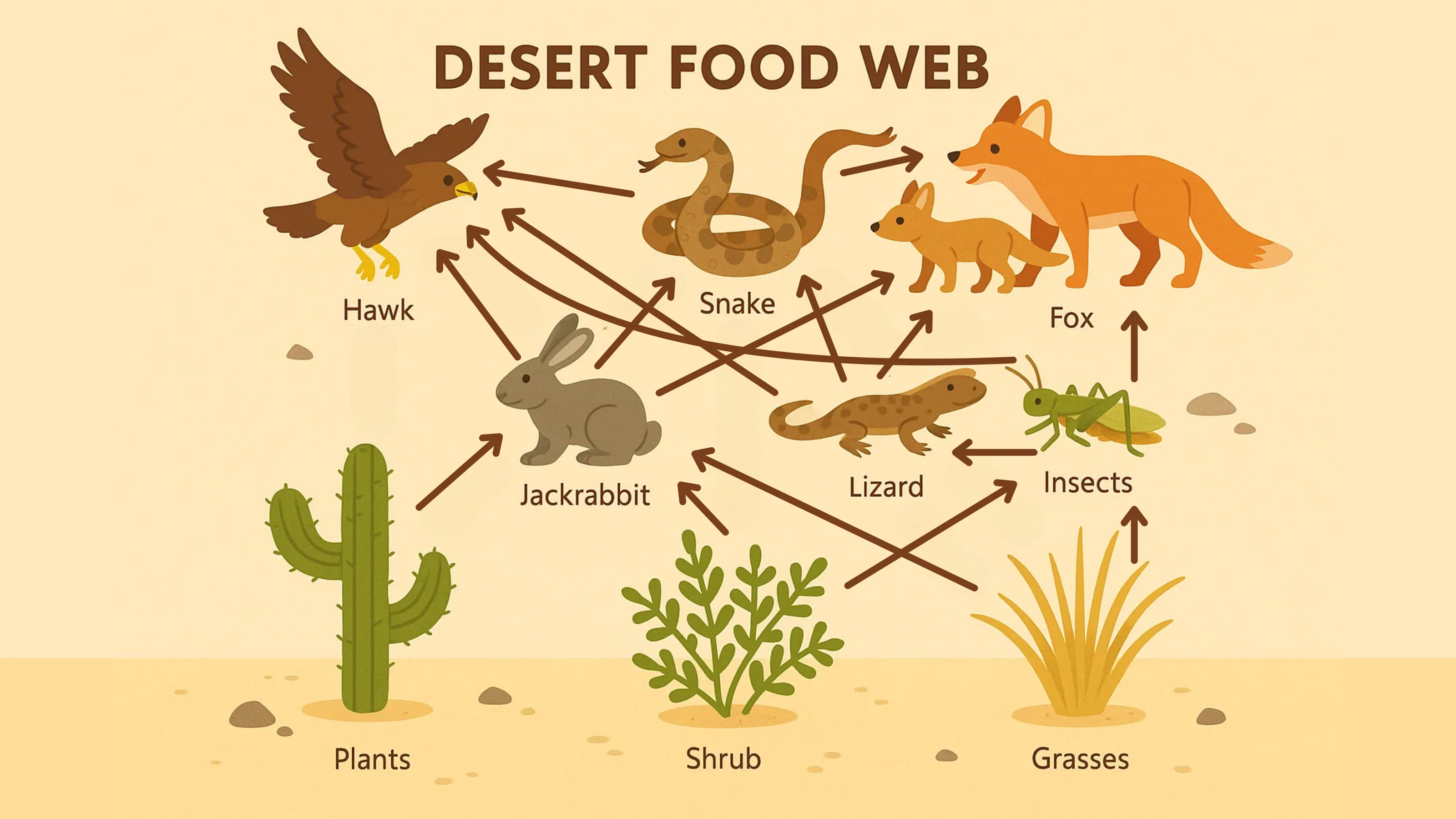 Desert food web showing relationships between desert plants, herbivores, and predators
CAM photosynthesis is a special way desert plants make food - they open their pores only at night when it's cooler and more humid, then close them during the hot day to prevent water loss. This amazing adaptation allows plants to survive in places where other plants would quickly die.

Amazing Desert Animals
Desert animals have incredible water-saving tricks! Kangaroo rats get all the water they need from the seeds they eat and never need to drink. Fennec foxes have enormous ears that release body heat and help them stay cool. Camels can drink 40 gallons at once and store it for weeks.
Desert tortoises store water in their bladders and can survive a year without drinking. Roadrunners reabsorb water from their waste before eliminating it. Gila monsters store fat in their tails that can be converted to water when needed. Many desert animals are nocturnal, active only during cool nights.
Desert ecosystems prove that life finds a way to succeed anywhere on Earth - these remarkable communities show us the incredible power of adaptation and teach us valuable lessons about conservation and surviving with limited resources!