Island Ecosystems
Explore isolated island worlds where unique animals and plants evolved in amazing ways found nowhere else on Earth

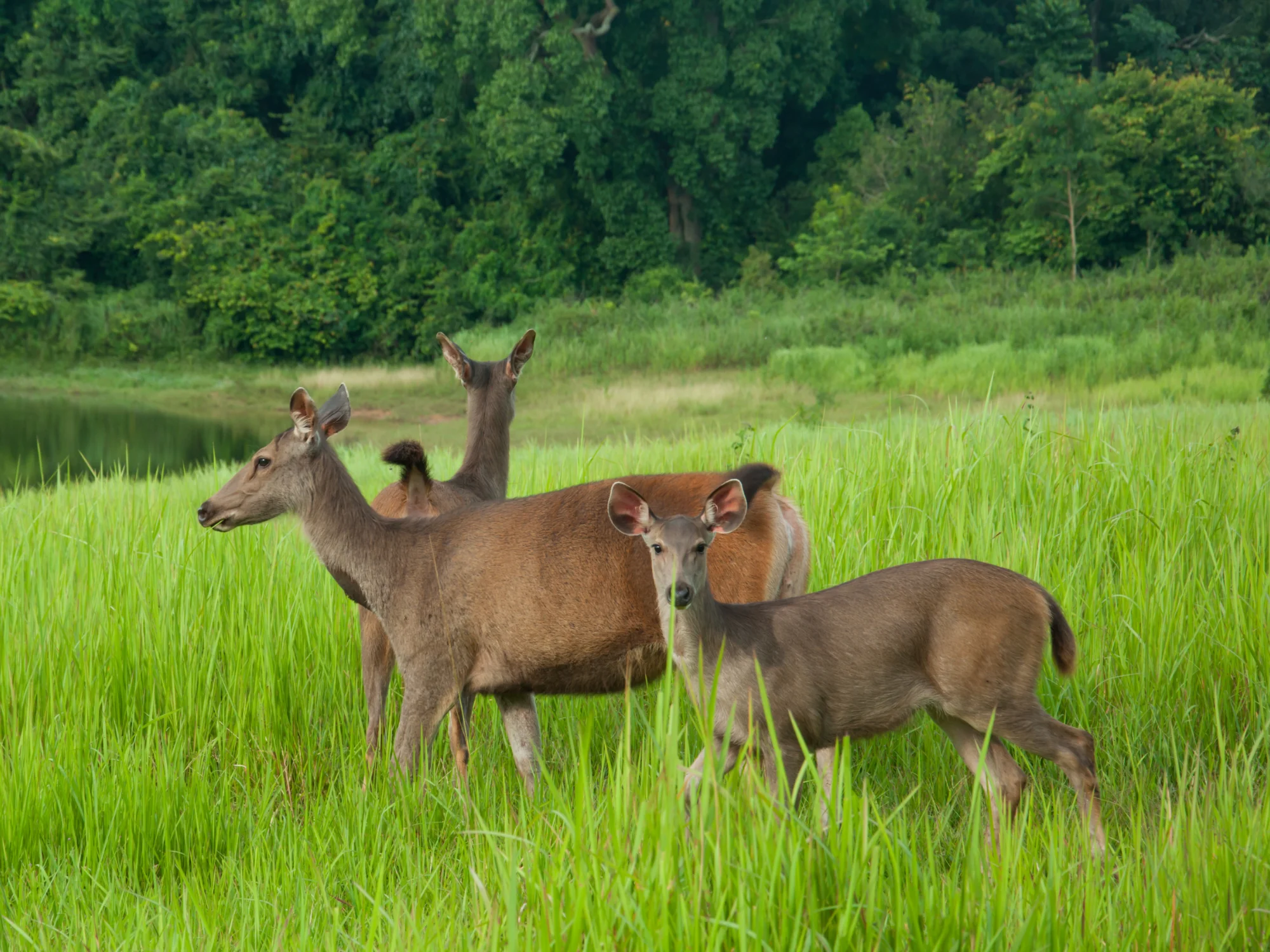
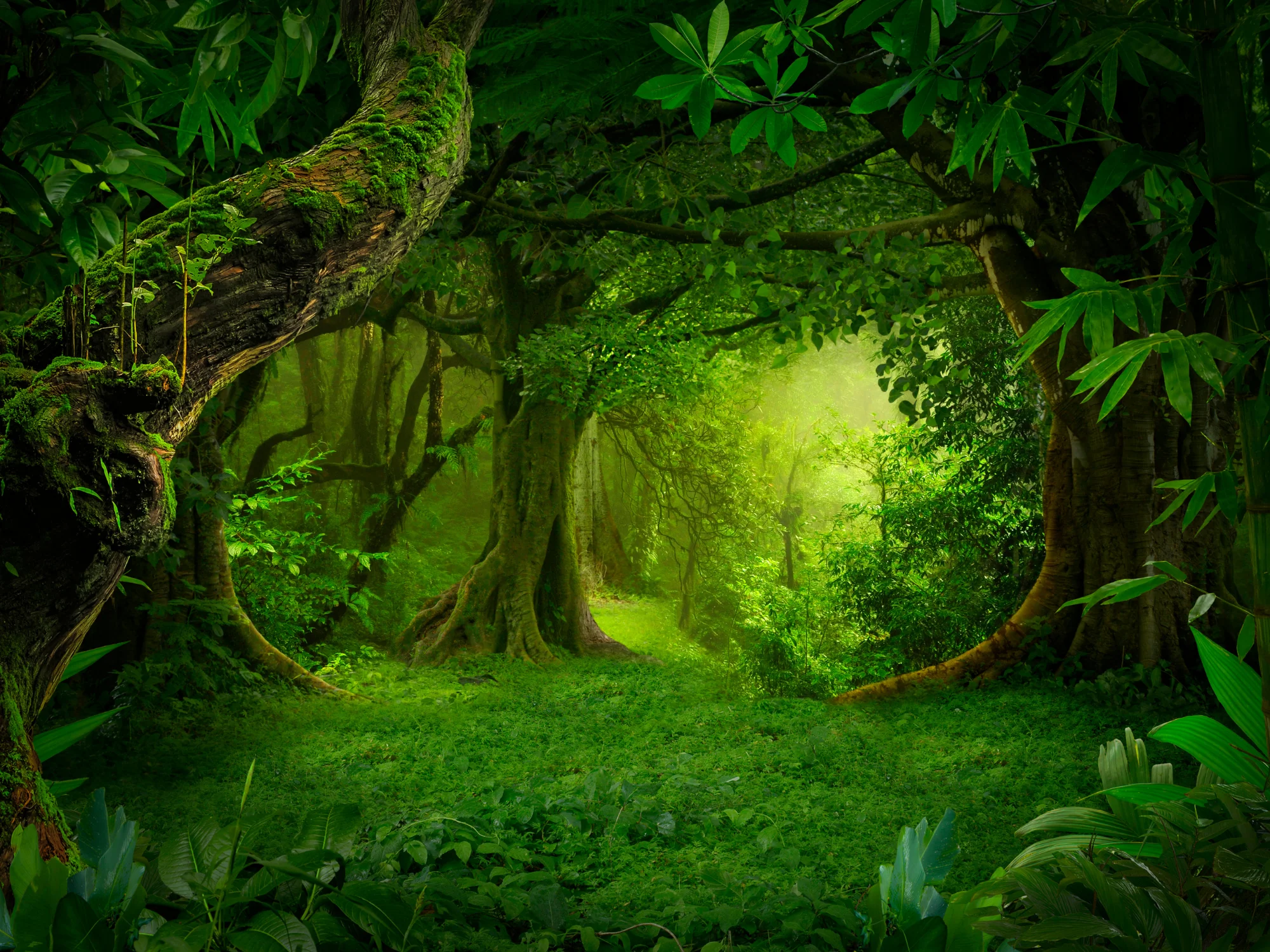
Tropical island with unique vegetation and endemic animals showing island biodiversity
Island ecosystems are like natural laboratories where evolution creates incredible surprises! When animals and plants become isolated on islands, they often evolve in amazing ways - some birds lose the ability to fly, some animals become giants, and many develop features found nowhere else on Earth.
Islands of Evolution
Oceanic islands like Hawaii and the Galápagos started as underwater volcanoes with no life at all. Every plant and animal had to arrive by flying, swimming, or floating there. Over millions of years, these colonizers evolved into completely new species found nowhere else on Earth!
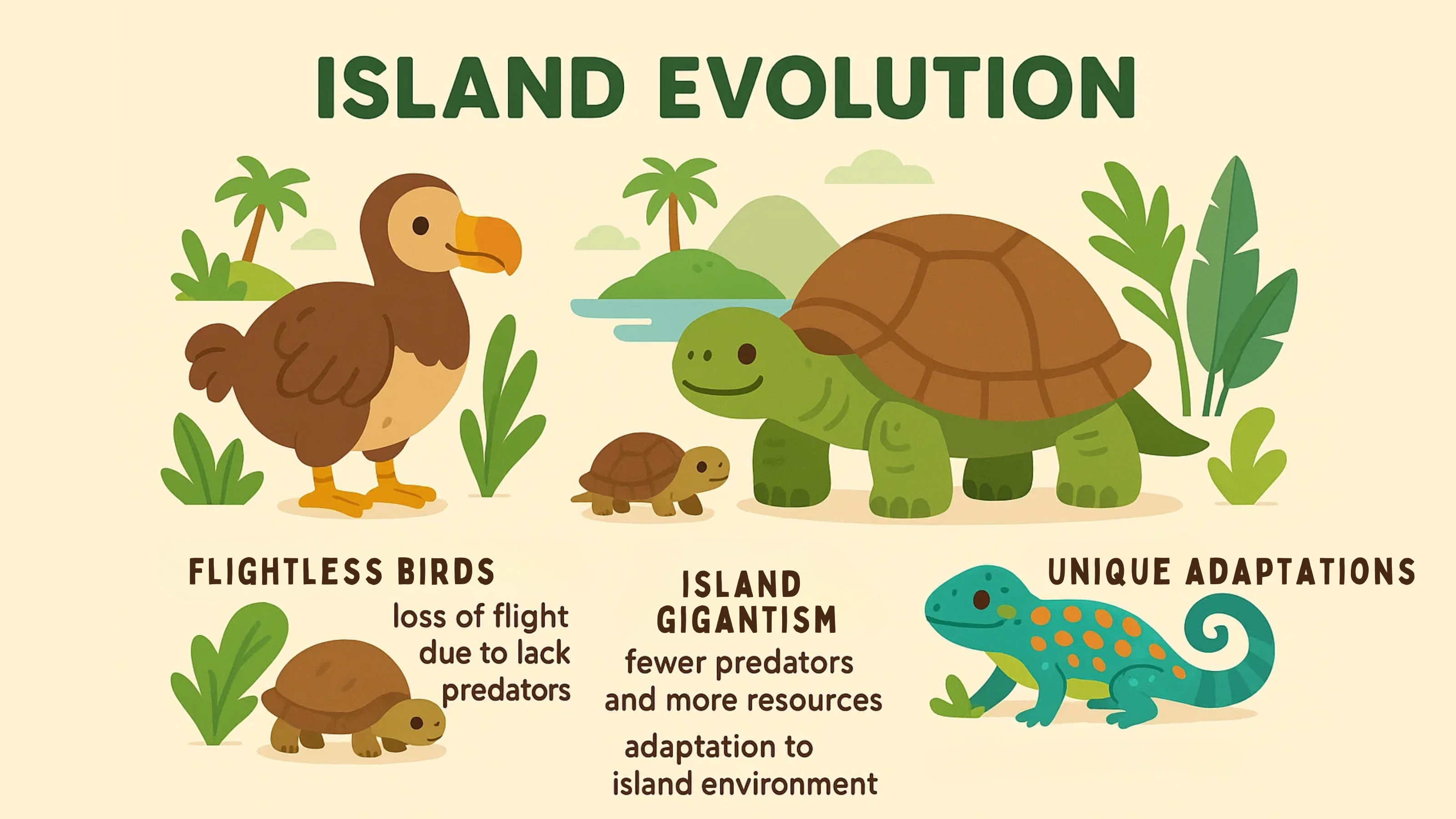 Examples of island evolution showing how animals became flightless, giant, or developed unique features
Continental islands like Madagascar and New Zealand broke away from larger continents, taking ancient animals with them. Isolated for millions of years, these animals evolved separately from their mainland relatives, creating living museums of unique species.

Amazing Island Animals
Galápagos giant tortoises can weigh 500 pounds and live over 150 years - they helped inspire Darwin's theory of evolution! Madagascar lemurs evolved into over 100 different species found nowhere else. Komodo dragons are the world's largest lizards, living only on a few Indonesian islands.
Kiwi birds in New Zealand are flightless and have nostrils at the tips of their beaks for finding food in the dark. Hawaiian monk seals are critically endangered marine mammals that exist only in Hawaiian waters. Dodo birds were flightless island birds that went extinct when humans arrived with predators.
Island ecosystems teach us how precious and fragile biodiversity can be - these isolated worlds show us evolution in action and remind us how important it is to protect the unique species that exist nowhere else on Earth!