Tundra
Explore Earth's coldest ecosystem where tough plants and animals survive freezing temperatures and endless winters

The tundra is a cold, treeless land where only tough plants can grow, and snow covers the ground for most of the year.
The tundra is Earth's coldest ecosystem, where winter lasts 8-9 months and temperatures can drop to -70°F! This frozen frontier might seem empty and lifeless, but it's actually home to specially adapted plants and animals that have learned incredible survival tricks for life in one of the planet's most challenging environments.
Life on the Frozen Frontier
Permafrost - permanently frozen ground - lies just a few inches below the surface throughout most of the tundra. This frozen layer prevents water from draining away, creating countless shallow ponds and marshy areas during the brief summer. Only the top few inches of soil thaw each year.
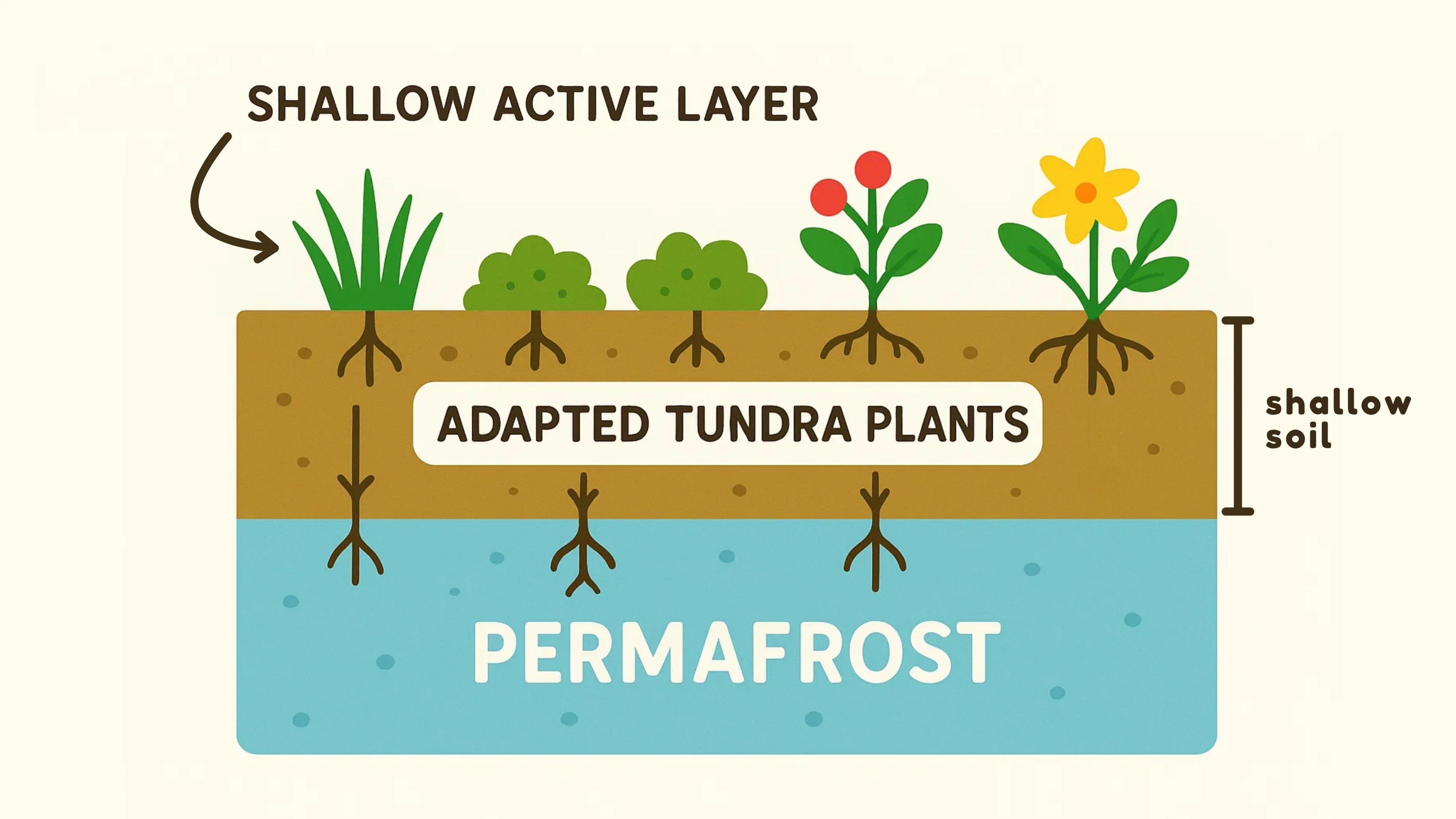 Cross-section showing permafrost layer and how plants adapt to shallow soil in tundra
Tundra plants stay small and low to the ground to avoid freezing winds. Arctic willow trees grow only a few inches tall but can be hundreds of years old! Lichens and mosses cover rocks and soil, growing incredibly slowly but living for decades. Many plants have fuzzy leaves or waxy coatings to protect against cold and wind.

Amazing Tundra Animals
Caribou make one of the world's longest migrations, traveling over 3,000 miles each year across the tundra following food sources. Arctic foxes change color from brown in summer to pure white in winter for perfect camouflage. Snowy owls have feathers on their feet that work like snowshoes.
Polar bears are the tundra's largest predators, perfectly adapted for life on sea ice. Musk oxen have two layers of fur - a warm undercoat and long guard hairs that almost reach the ground. Arctic terns make the ultimate migration, flying from Arctic tundra to Antarctic and back each year!
The tundra teaches us that life can thrive anywhere on Earth - these hardy ecosystems show us the incredible power of adaptation and remind us how climate change is affecting our planet's most vulnerable environments!