Wetlands
Discover nature's water filters where land meets water and amazing animals make their homes

In the wetlands, magpie geese and a tall white egret search for food in the shallow water, surrounded by blooming water lilies.
DIAGRAM BY Royal Geographical Society of Queensland, Wikimedia Commons
Wetlands are special places where land and water meet to create some of Earth's most important ecosystems! These soggy areas might look like just muddy water, but they're actually nature's superheroes - cleaning water, preventing floods, and providing homes for incredible animals that can't live anywhere else.
Types of Wetlands
Marshes are wetlands dominated by soft-stemmed plants like cattails and sedges. Swamps are wetlands with trees and woody shrubs growing in or near the water. Bogs are acidic wetlands fed only by rainwater and home to unique plants like carnivorous pitcher plants.
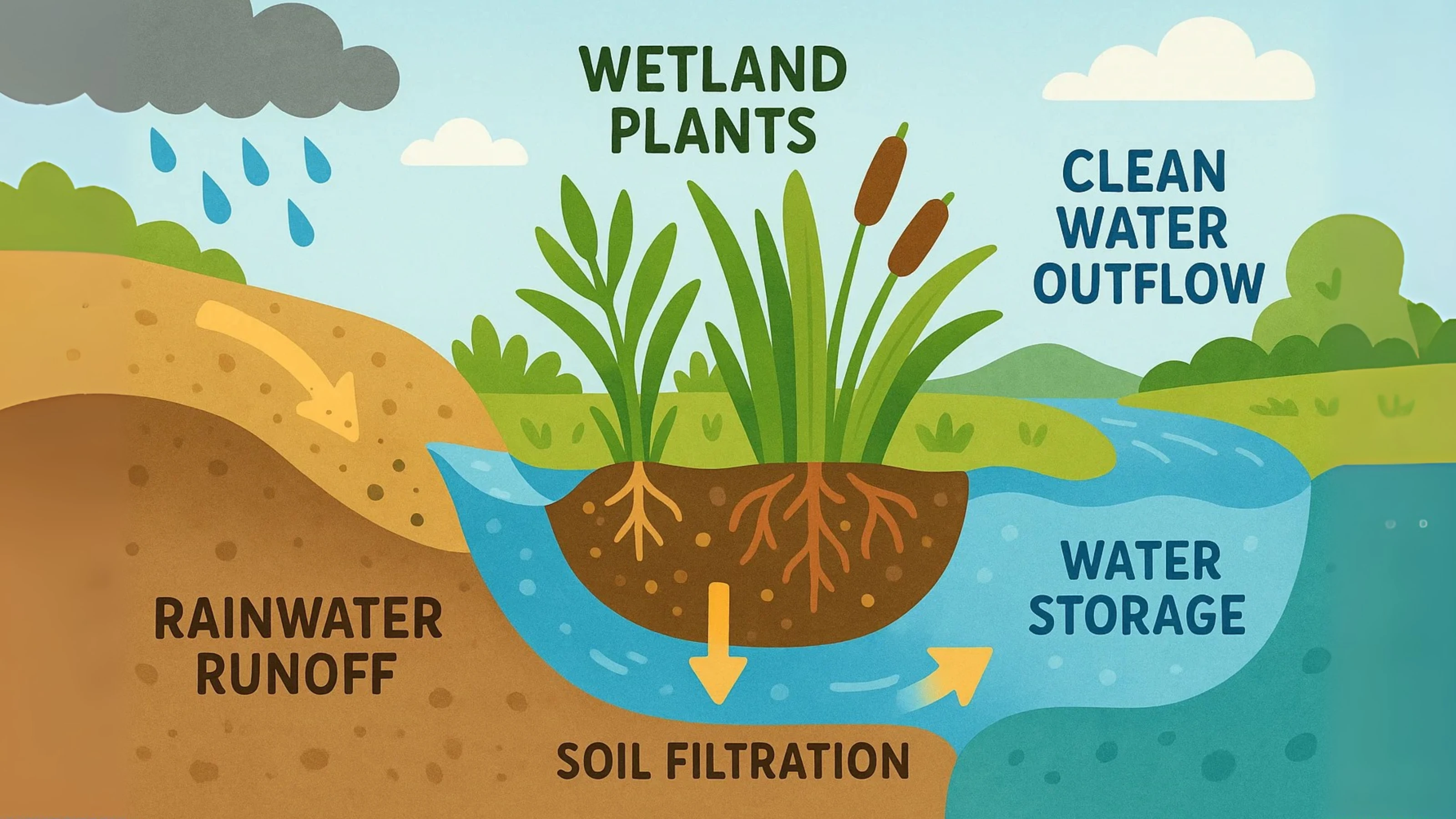 Diagram showing how wetlands filter water and prevent flooding by absorbing excess water
Prairie potholes are small, shallow wetlands scattered across grasslands that are crucial for waterfowl breeding. Coastal wetlands like salt marshes protect shorelines from storms and provide nurseries for fish and shellfish. Each type of wetland has its own special community of plants and animals.

Amazing Wetland Animals
Wetlands are home to some of the most interesting animals on Earth! Great blue herons stand motionless in shallow water, then strike like lightning to catch fish. Beavers build dams that create new wetland habitats. Dragonflies are incredible aerial hunters that catch mosquitoes and other flying insects.
Frogs and toads need wetlands to lay their eggs and raise their tadpoles. Red-winged blackbirds build nests in cattails and defend their territories fiercely. Muskrats are excellent swimmers that build dome-shaped houses from marsh plants. Alligators are apex predators in southern swamps.
Wetlands prove that some of Earth's most valuable ecosystems might not look glamorous, but they work incredibly hard behind the scenes to keep our water clean, our communities safe from floods, and our wildlife thriving!