Temperate Forests
Discover forests that change colors with the seasons and are home to bears, deer, and many woodland creatures

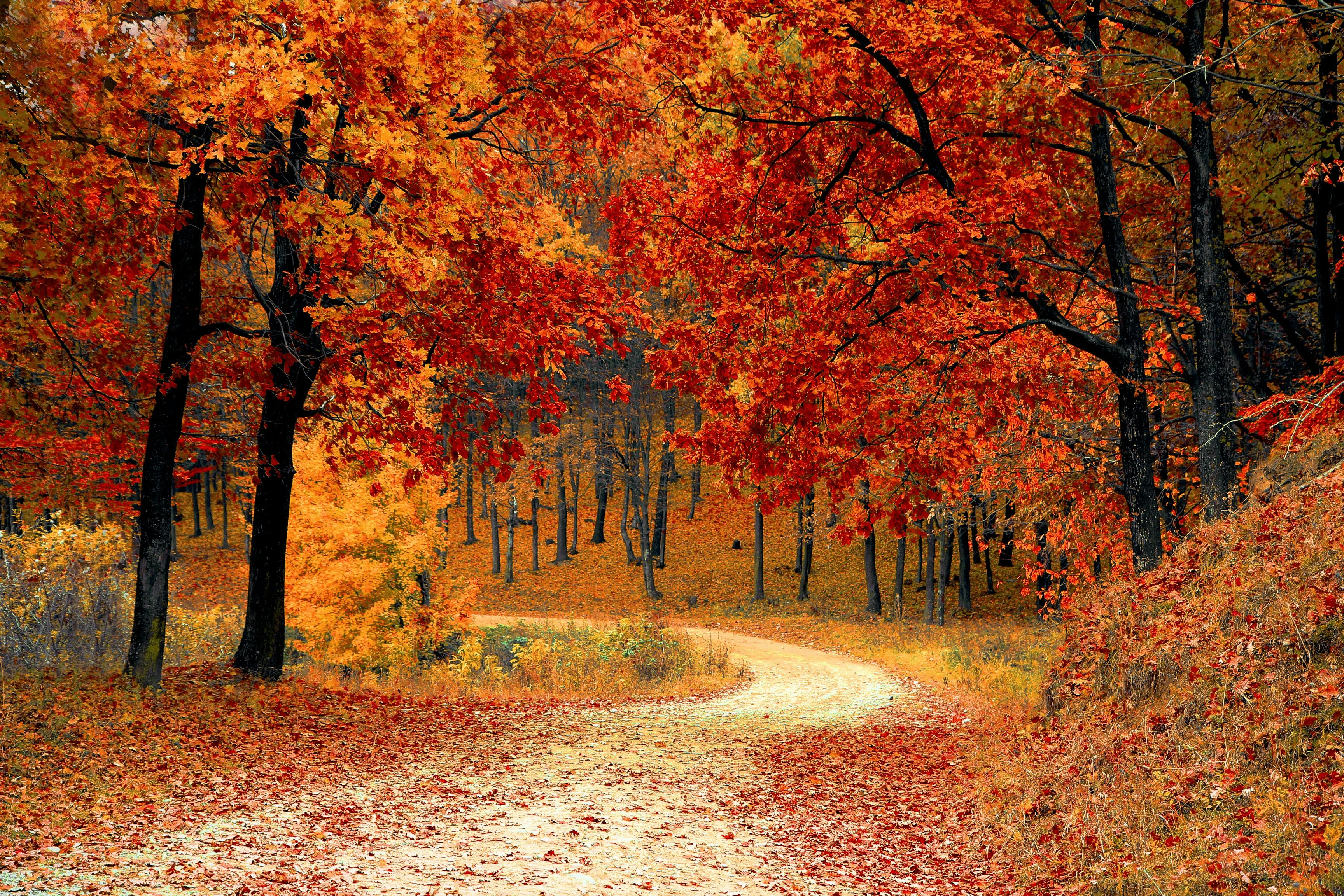
A temperate forest with trees that have changed colours
Temperate forests are nature's costume changers! These amazing forests put on a different outfit every season. In spring they wear fresh green leaves, summer brings thick green canopies, autumn shows off brilliant reds and golds, and winter reveals bare branches covered in snow.
The Magic of Changing Seasons
Unlike rainforests that stay the same all year, temperate forests are always changing! Deciduous trees are the stars of these forests - they drop their leaves every fall and grow new ones in spring. This happens because it gets too cold in winter for leaves to survive.
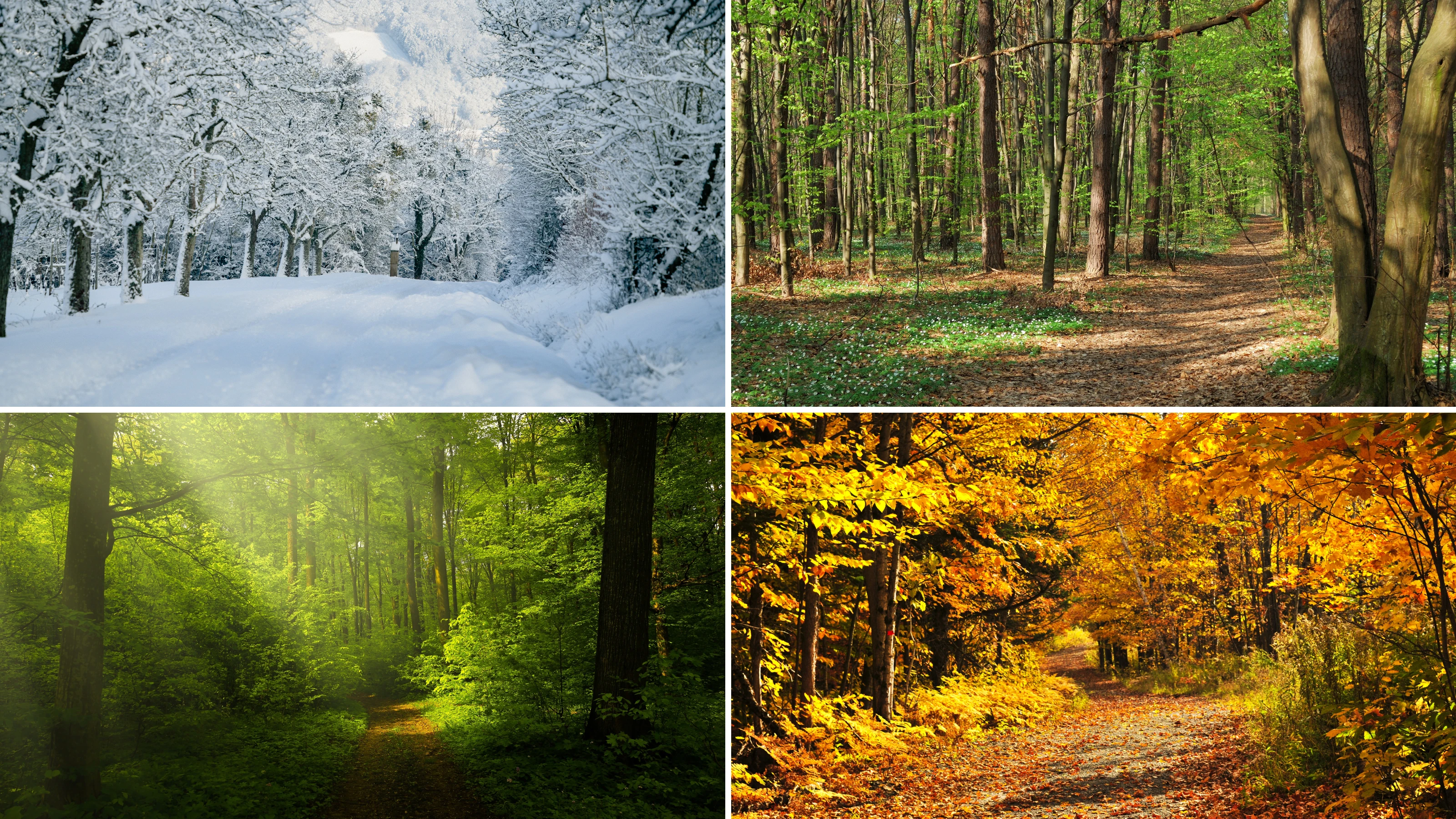 Four seasons comparison showing the similar forests in spring, summer, autumn, and winter
Before leaves fall, trees pull all the green color back into their trunks to save for next year. This reveals the hidden yellow, orange, and red colors that were there all along! It's like nature's own magic trick.
Amazing Forest Animals
Temperate forest animals are experts at dealing with changing seasons! Black bears eat lots of food in fall, then sleep through winter in cozy dens. Squirrels collect nuts and acorns all autumn, burying them like treasure to find later.
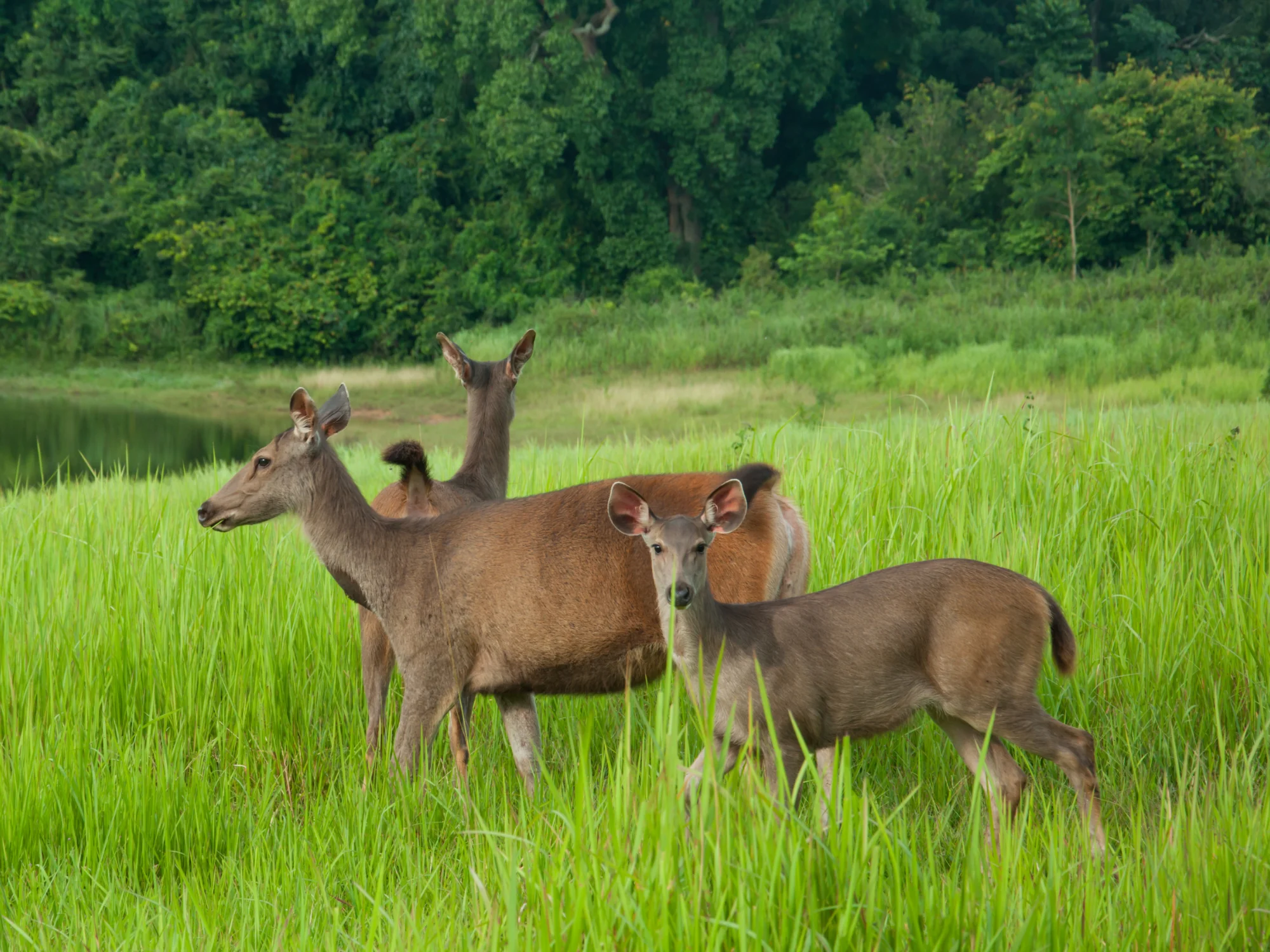
Deer grow thick winter coats and scrape snow away to find food underneath. Many birds fly thousands of miles south when it gets cold, returning in spring to build nests. Chipmunks stuff their cheeks with seeds and hibernate in underground burrows.
Temperate forests teach us that change can be beautiful - they show us how nature adapts and thrives through every season of the year!