Ocean Trenches
Explore the deepest places on Earth where the ocean floor drops down into mysterious underwater canyons
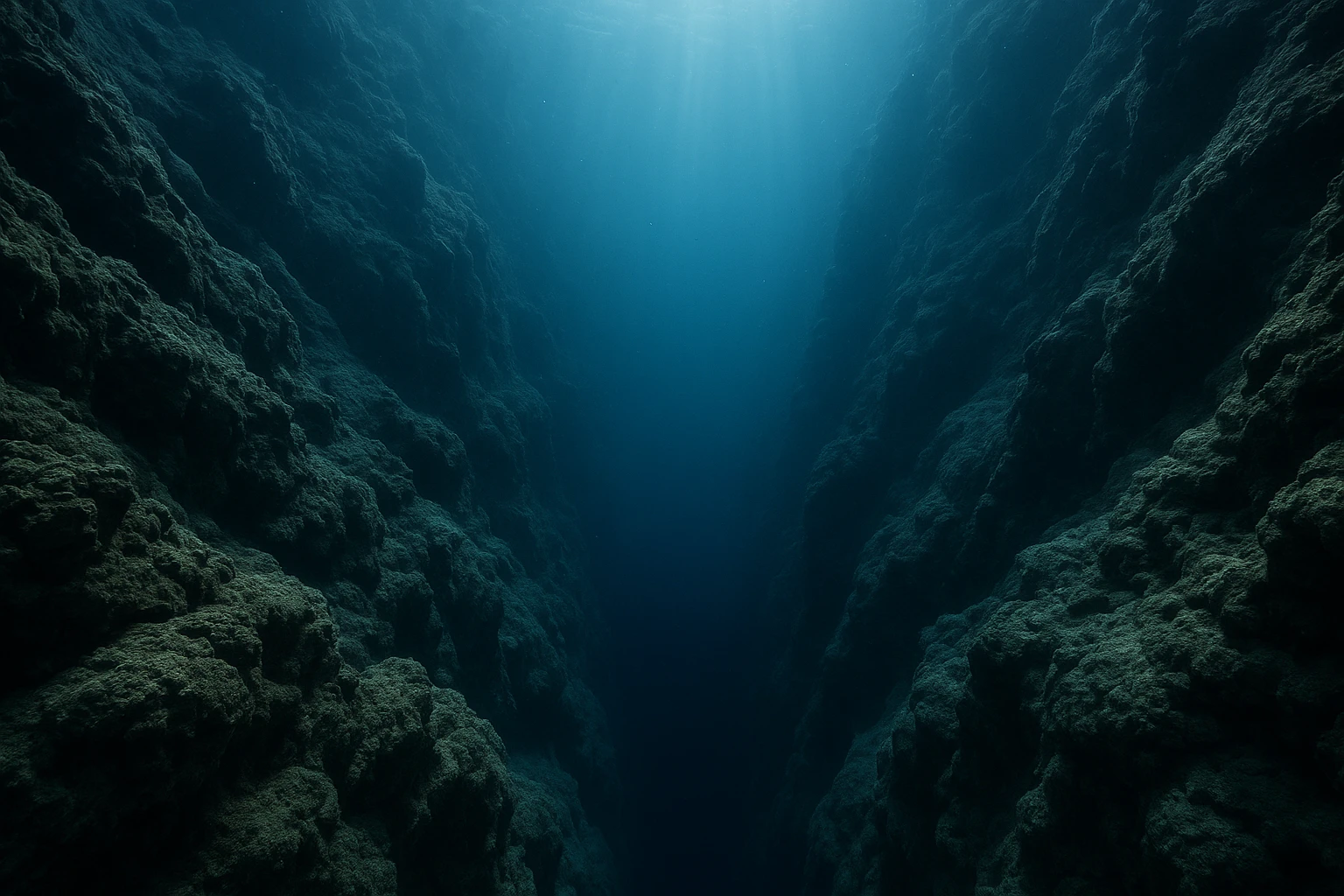
Ocean trenches are the deepest valleys in the sea, where sunlight fades and strange deep-sea creatures make their home.
PHOTOGRAPH BY Duskbloom Littles (AI-generated)
Ocean trenches are the deepest places on our planet - underwater canyons so deep that if Mount Everest were placed inside the deepest one, its peak would still be over a mile underwater! These incredible features form when pieces of Earth's ocean floor crash into each other and one slides underneath the other, creating mind-bogglingly deep valleys.
Earth's Deepest Secrets
The Mariana Trench in the Pacific Ocean is the deepest place on Earth, plunging down 36,200 feet - that's almost 7 miles straight down! Challenger Deep is the deepest part of the Mariana Trench, where the pressure is over 1,000 times stronger than at sea level. Only a few humans have ever visited this alien underwater world.
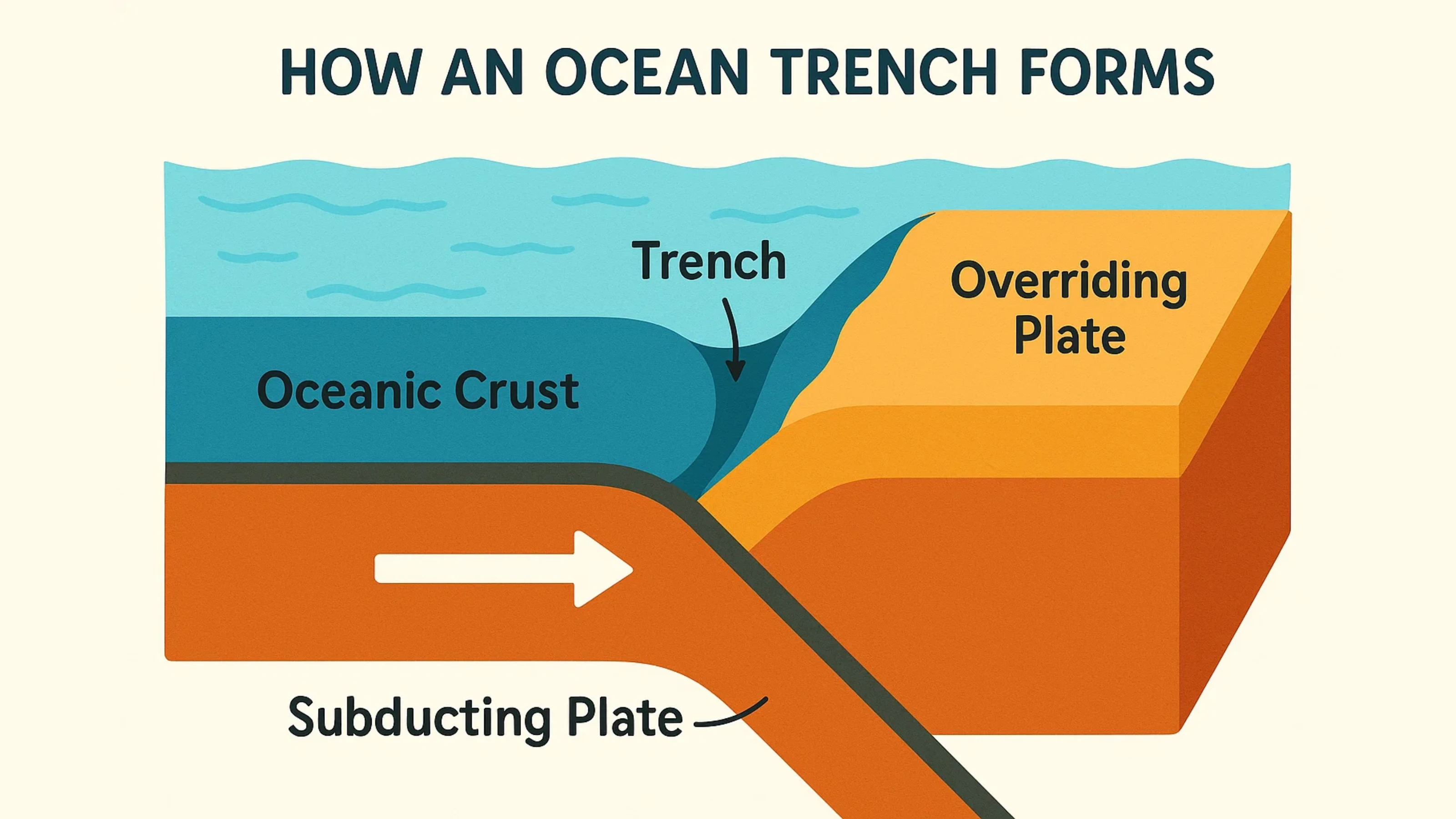 How ocean trenches form when one piece of ocean floor slides under another piece
Tectonic plate movement creates these underwater canyons when denser ocean plates dive beneath lighter continental plates in a process called subduction. Earthquakes and underwater volcanoes often happen near trenches as the diving plates create friction and heat deep underground.
Life in the Abyss
Deep trench creatures are some of the strangest animals on Earth! Barotrauma-resistant fish have special adaptations to survive crushing pressure. Giant tube worms grow around underwater vents without needing sunlight. Dumbo octopuses use ear-like fins to gracefully swim through the dark depths.
Xenophyophores are single-celled organisms that grow as large as dinner plates on the trench floor. Snailfish hold the record for deepest-living fish, found over 26,000 feet down. Amphipods are tiny shrimp-like creatures that somehow thrive in conditions that would instantly crush surface life.
Ocean trenches show us that there are still unexplored frontiers right here on Earth - these underwater valleys hold secrets about our planet's formation and are home to some of the most amazing creatures that science is only beginning to discover!