Riptides
Learn about dangerous ocean currents near beaches that can pull swimmers away from shore

Lifeguards and beach safety signs warning swimmers about dangerous riptide areas
PHOTOGRAPH BY Richard Masoner / Cyclelicious, Wikimedia Commons
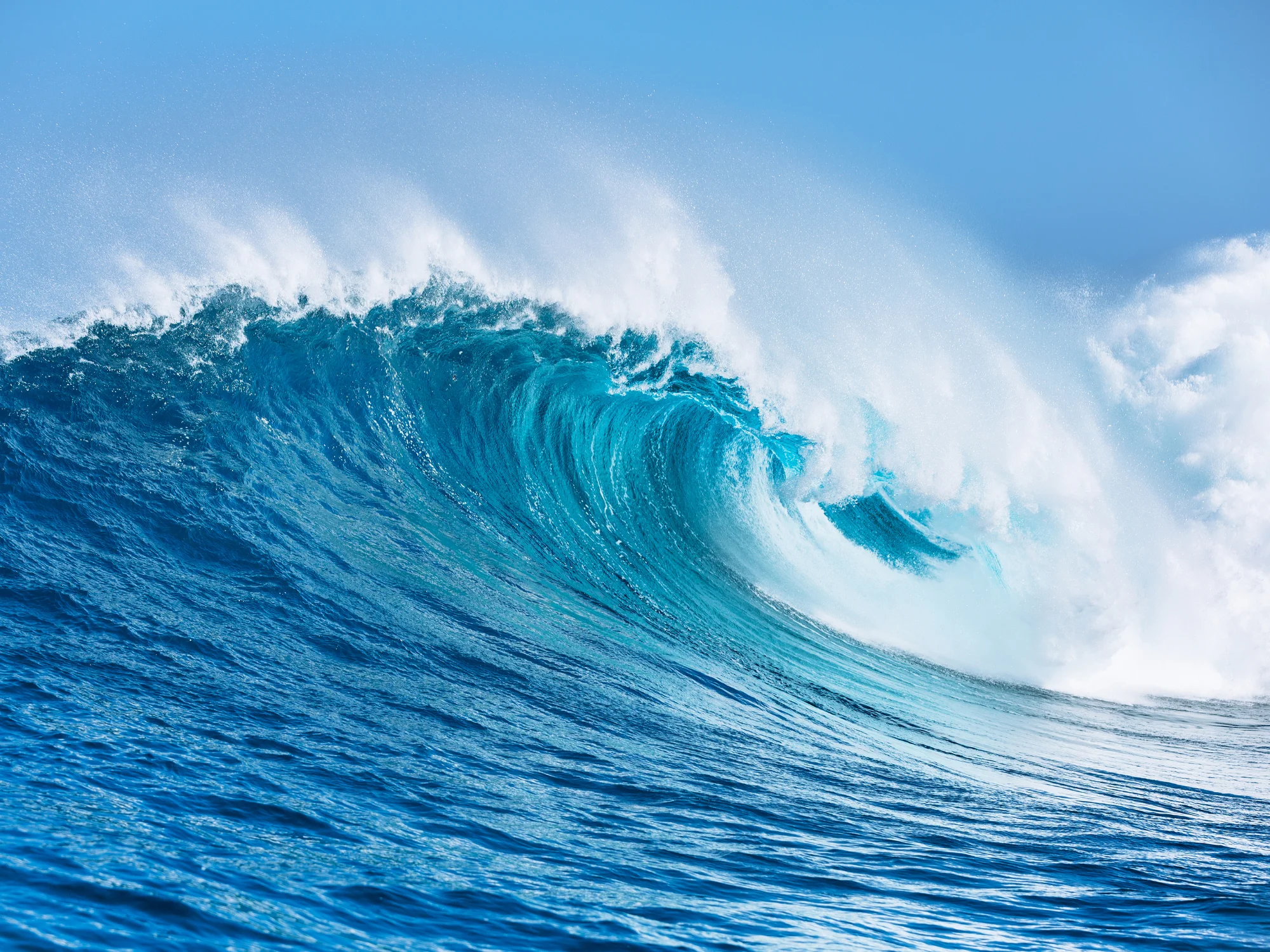
Riptides (also called rip currents) are like invisible rivers in the ocean that can pull swimmers away from the beach! These powerful currents happen when waves bring lots of water to shore, and that water needs to find a way back out to sea. While riptides aren't trying to pull people underwater, they can carry swimmers far from shore very quickly.
Ocean's Invisible Rivers
Riptides form when waves push water up onto the beach faster than it can spread out along the shore. This piled-up water finds the easiest path back to deeper water, creating a narrow channel of fast-moving current flowing away from the beach. Sandbars and underwater features often help create these dangerous currents.
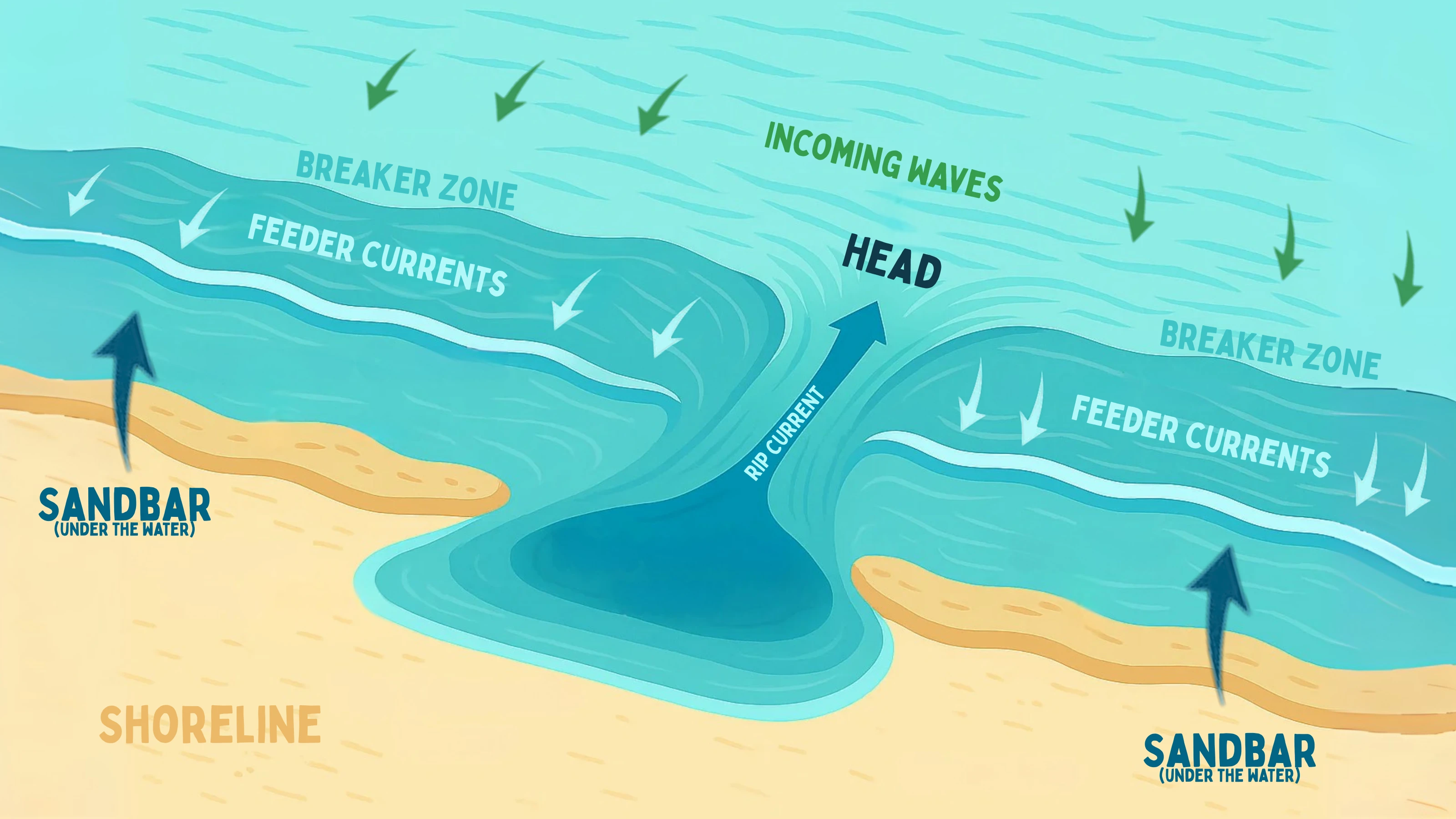 This is how riptide currents form in the sea! When waves crash toward the shore, they push water in. That water has to go somewhere — so it rushes back out to sea through a narrow path between sandbars. This fast-moving water is called a rip current. It pulls water (and anything in it!) out to sea. Smaller currents called feeder currents help push water into the rip current. You can’t always see them, but they’re very strong, so it's important to know how they work!
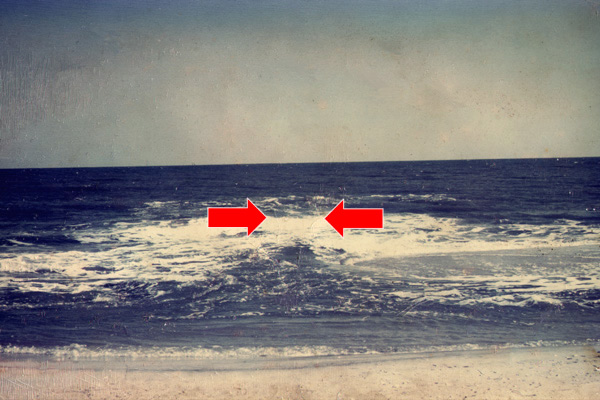
Breaking wave patterns can help spot riptides - look for areas where waves aren't breaking as much, or where there's a channel of different-colored or foamy water. Riptides are strongest near the surface and usually extend from the beach out past the breaking waves before weakening in deeper water.
Staying Safe in Ocean Waters
Recognizing riptides can save your life! Look for channels where waves aren't breaking, lines of foam or debris moving seaward, or discolored water flowing away from shore. If caught in a riptide, don't panic and don't try to swim directly back to shore - the current is usually stronger than you are.
Escape strategy: Swim parallel to the beach (sideways along the shore) until you're out of the current, then swim back to shore at an angle. If you can't swim out, float or tread water and wave for help. Lifeguards are trained to rescue people from riptides and can reach you quickly with proper equipment.
Riptides remind us that even beautiful, calm-looking beaches can have hidden dangers - understanding these ocean currents and knowing how to respond can help everyone enjoy the beach safely while respecting the power of moving water!