Tidal Bores
Discover amazing waves that travel up rivers backwards when ocean tides push against river flow

A tidal bore on the River Winster, where the rising tide pushes a wave of water upstream against the river’s flow
PHOTOGRAPH BY Don Burgess (Tidal Bore on the River Winster), Wikimedia Commons
Tidal bores are some of nature's most unusual waves - they're waves that flow backwards up rivers! These incredible phenomena happen when powerful ocean tides push so much water into river mouths that it creates waves traveling upstream against the river's normal flow. It's like watching the river suddenly reverse direction and flow backwards!
Rivers Running Backwards
Tidal bores form when a strong incoming ocean tide meets a river flowing toward the sea. If the conditions are just right - with the right river shape, tide strength, and water depth - the tide water creates a wave that travels up the river like a moving wall of water going the wrong way!
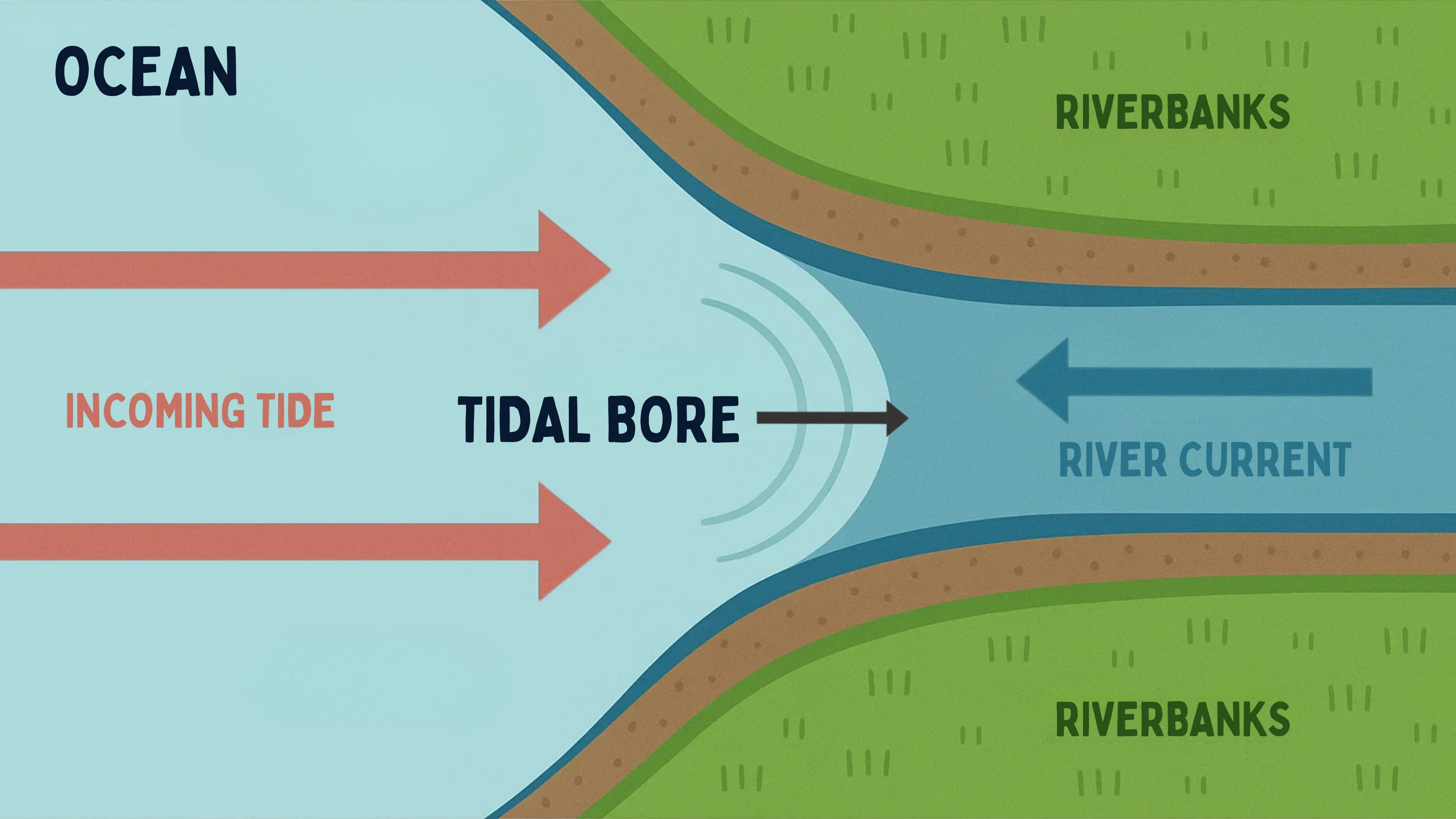 How tidal bore waves form when ocean tide water pushes up into rivers
Spring tides (the highest tides) create the biggest and best tidal bores. Funnel-shaped river mouths help focus the tidal energy into powerful upstream waves. Shallow rivers with muddy or sandy bottoms are perfect for tidal bore formation because they help the wave maintain its shape as it travels inland.
Amazing River Surfing
The Severn Bore in England is one of the world's most famous tidal bores, and surfers can ride it for over 7 miles upstream! Pororoca is the name for the Amazon River's tidal bore - it can be 12 feet high and travel 500 miles inland. China's Qiantang River has tidal bores up to 30 feet tall that move at 25 mph.
River surfing on tidal bores is completely different from ocean surfing because the wave never breaks - surfers can ride the same wave for miles as it travels up the river! Bore watching has become a popular activity where people gather along riverbanks to watch these amazing backwards waves flow past.
Tidal bores show us the amazing power of tides and remind us that rivers and oceans are connected in surprising ways - these backwards waves create some of the most unique and exciting water experiences found anywhere in nature!