Whirlpools
Discover how spinning water creates amazing spirals that can pull objects down into swirling underwater funnels

Big spinning whirlpool in the ocean with water swirling around in a circle
Whirlpools are like nature's washing machines in the ocean! These incredible spinning water features happen when ocean currents, tides, and underwater obstacles combine to create rotating spirals of water. While most whirlpools are small and harmless, some can be powerful enough to spin boats around or pull floating objects underwater.
How Water Starts Spinning
Whirlpools form when fast-moving water encounters obstacles or gets squeezed through narrow spaces between islands or rocks. Tidal currents flowing in opposite directions can create spinning motions when they meet. Underwater valleys and seamounts force water to change direction suddenly, starting the rotating motion.
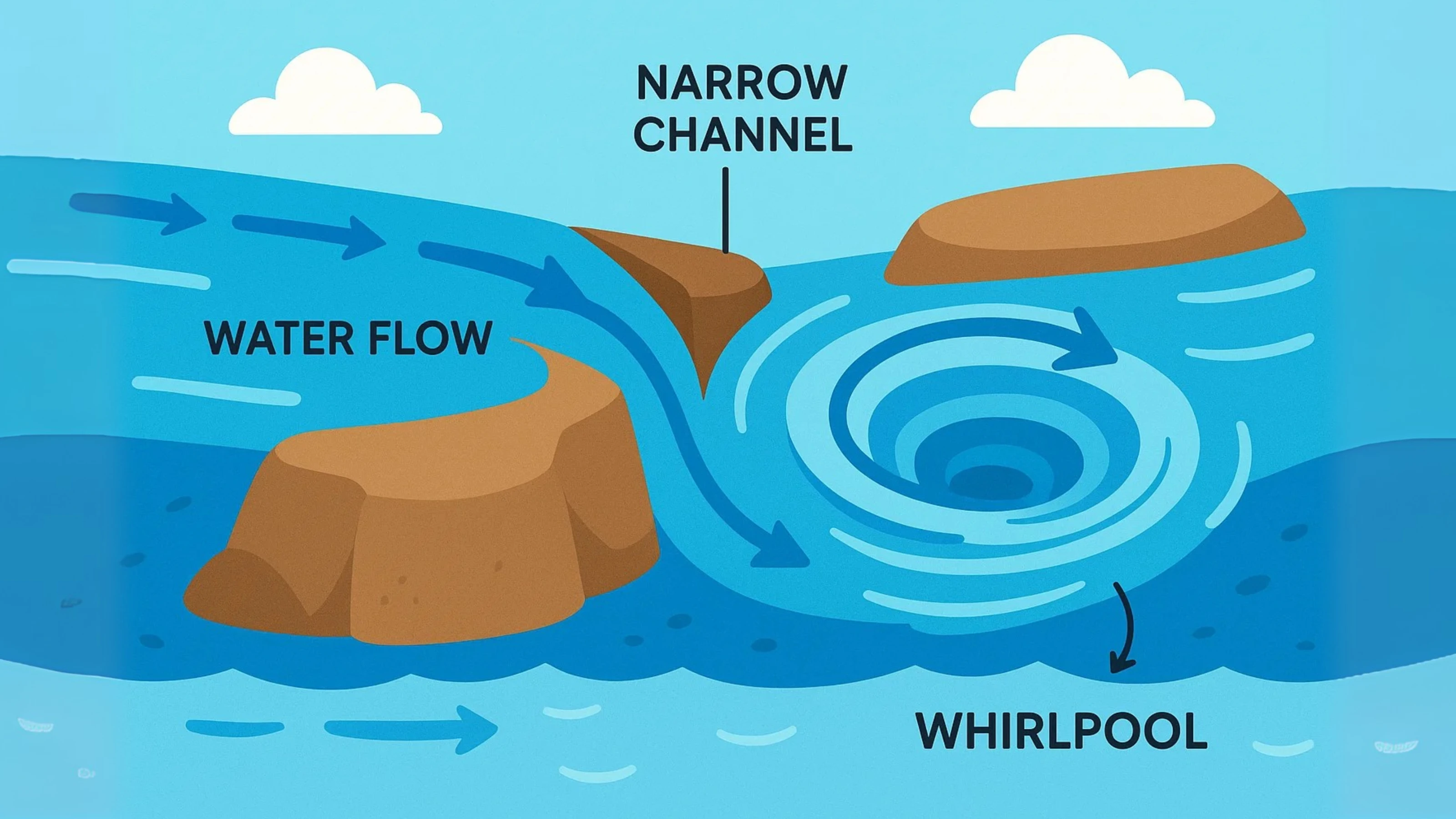 How whirlpools form when water gets squeezed through tight spaces and starts spinning
The Coriolis effect from Earth's rotation can influence large whirlpools, making them spin counterclockwise in the Northern Hemisphere and clockwise in the Southern Hemisphere. Differences in water temperature and density can also contribute to whirlpool formation when lighter and heavier water masses meet.
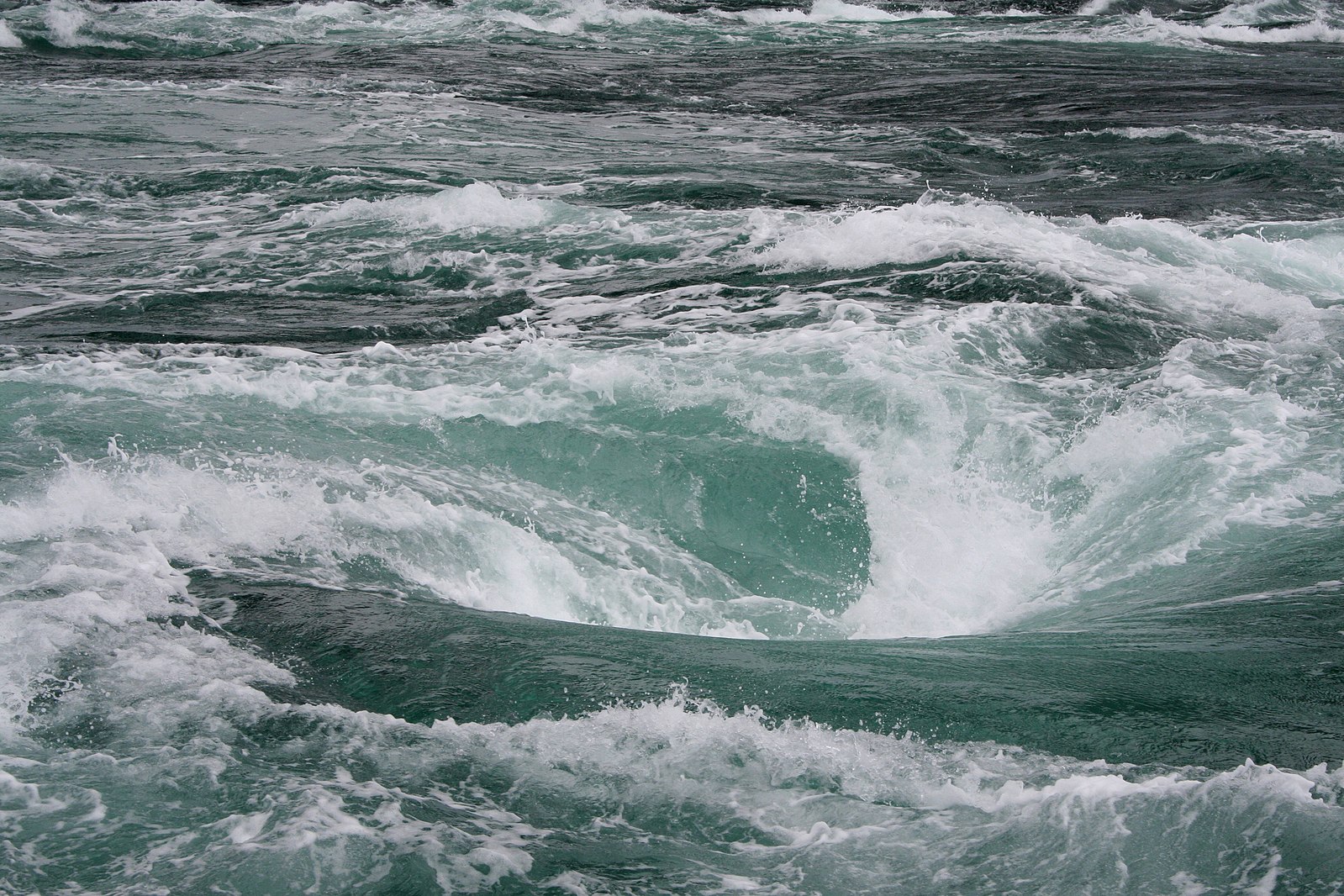
Famous Whirlpools Around the World
The Naruto Whirlpool in Japan can grow up to 100 feet across during strong tides and spins so fast it creates a roaring sound! Corryvreckan in Scotland is one of the most dangerous whirlpools in the world, with waters that can spin at 28 mph. Old Sow between Maine and Canada is the largest whirlpool in the Western Hemisphere.
Saltstraumen in Norway creates whirlpools when billions of gallons of water rush through a narrow strait during tidal changes. Skookumchuck Narrows in Canada produces whirlpools that kayakers actually surf on for fun! These natural phenomena show the incredible power of moving water.
Whirlpools remind us that water is always moving and changing - these spinning wonders show us the amazing power of ocean currents and tides working together to create some of nature's most mesmerizing water displays!