Desert Plants
Discover how cacti, succulents, and other amazing plants survive in the hottest, driest places on Earth
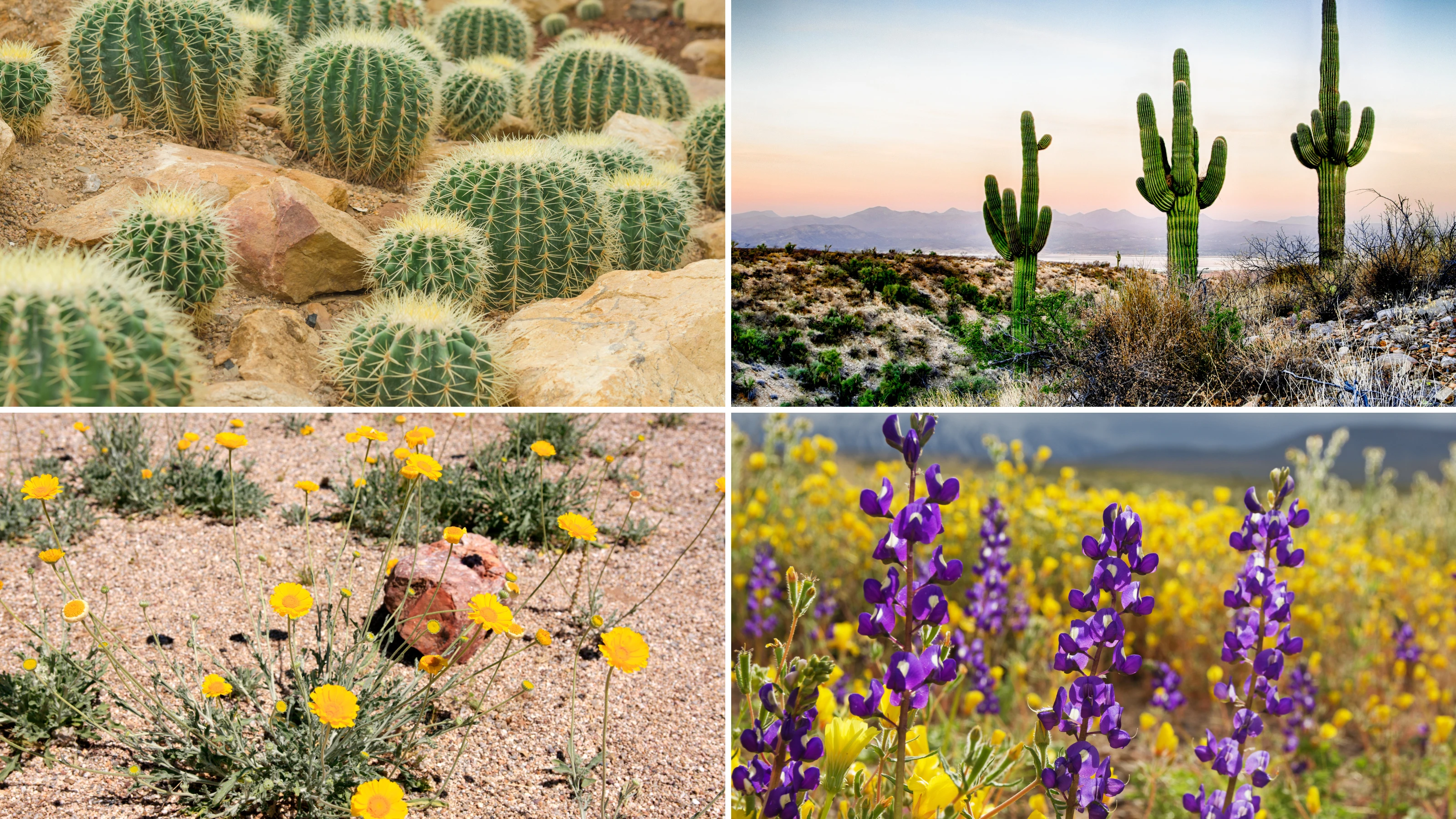
Plants of the desert! Top left: Barrel cactus, Top right: Saguaro cactus, Bottom left: Desert marigold, Bottom right: Lupine wildflowers.
COLLAGE BY Duskbloom Littles
Desert plants are nature's ultimate survivors! These incredible plants have learned amazing tricks to live in places where it hardly ever rains and the sun beats down mercilessly all day. They're like plant superheroes with special powers for surviving in Earth's toughest environments.
Water Storage Champions
Cacti are the kings of water storage! Instead of having leaves that lose water, they have thick, waxy stems that can store gallons of water for months. Their sharp spines aren't just for protection - they also help collect moisture from the air and provide shade for the plant's surface.
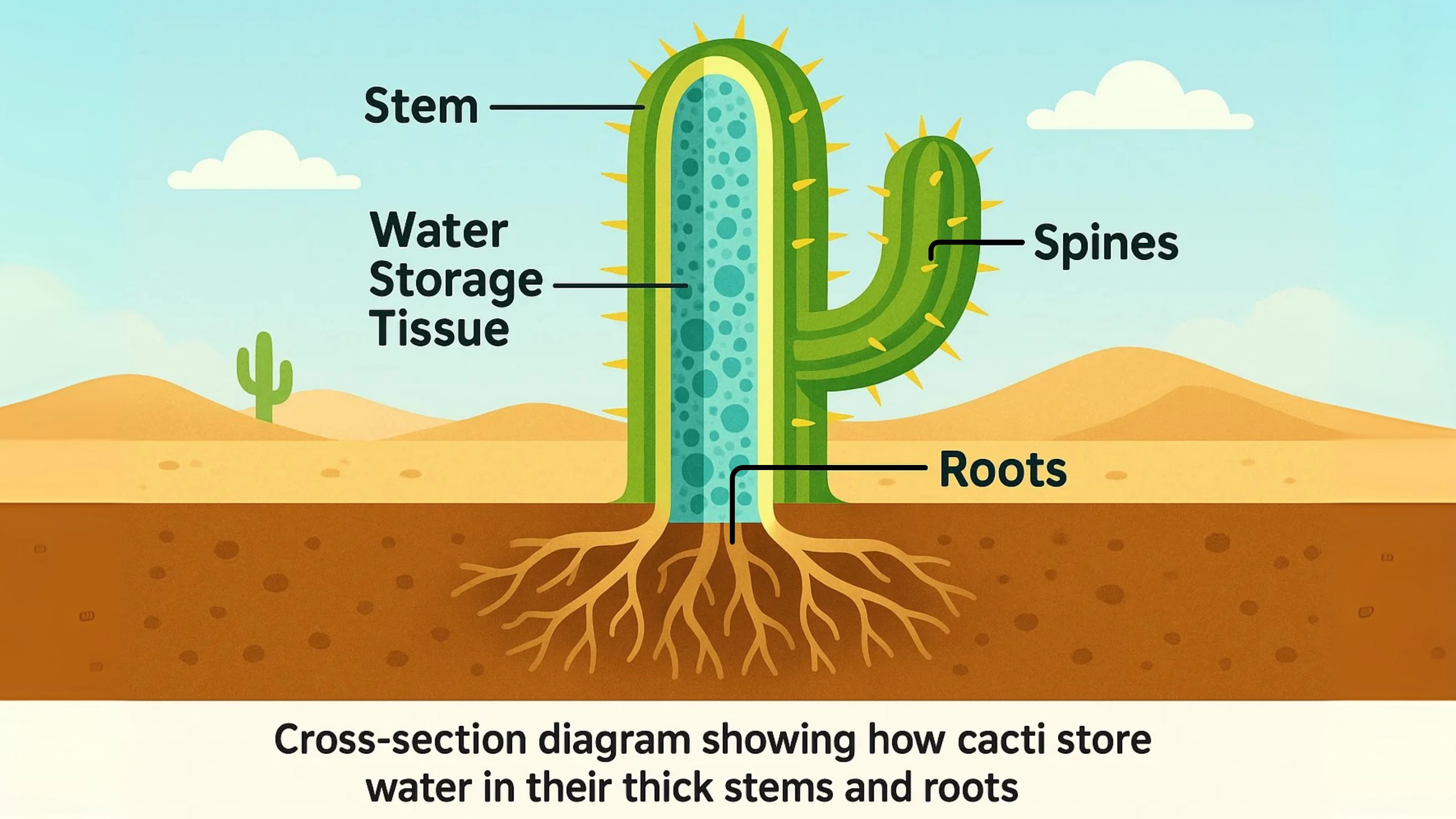 Cross-section diagram showing how cacti store water in their thick stems and roots
Barrel cacti can store up to 94% water in their bodies - they're like living water tanks! Saguaro cacti can grow 60 feet tall and live for 200 years, storing up to 200 gallons of water. Some cacti have accordion-like sides that expand when it rains and shrink during dry times.

Desert Flowers and Trees
Desert plants don't just survive - they create amazing beauty! Desert marigolds, ghost plants, and desert lupines paint the desert with brilliant colors when they bloom. Joshua trees look like giant alien sculptures and can live for 1,000 years in California's Mojave Desert.
Ocotillo plants look dead most of the year, but after rain they quickly sprout green leaves and bright red flowers at their tips. Palo verde trees have green bark that does photosynthesis when the tree drops its leaves during dry periods.
Desert plants teach us that life finds a way to thrive anywhere on Earth - their incredible adaptations show us the amazing power of nature to overcome even the most challenging conditions!