Plant Adaptations
Discover the amazing ways plants have changed over time to survive in different environments around the world
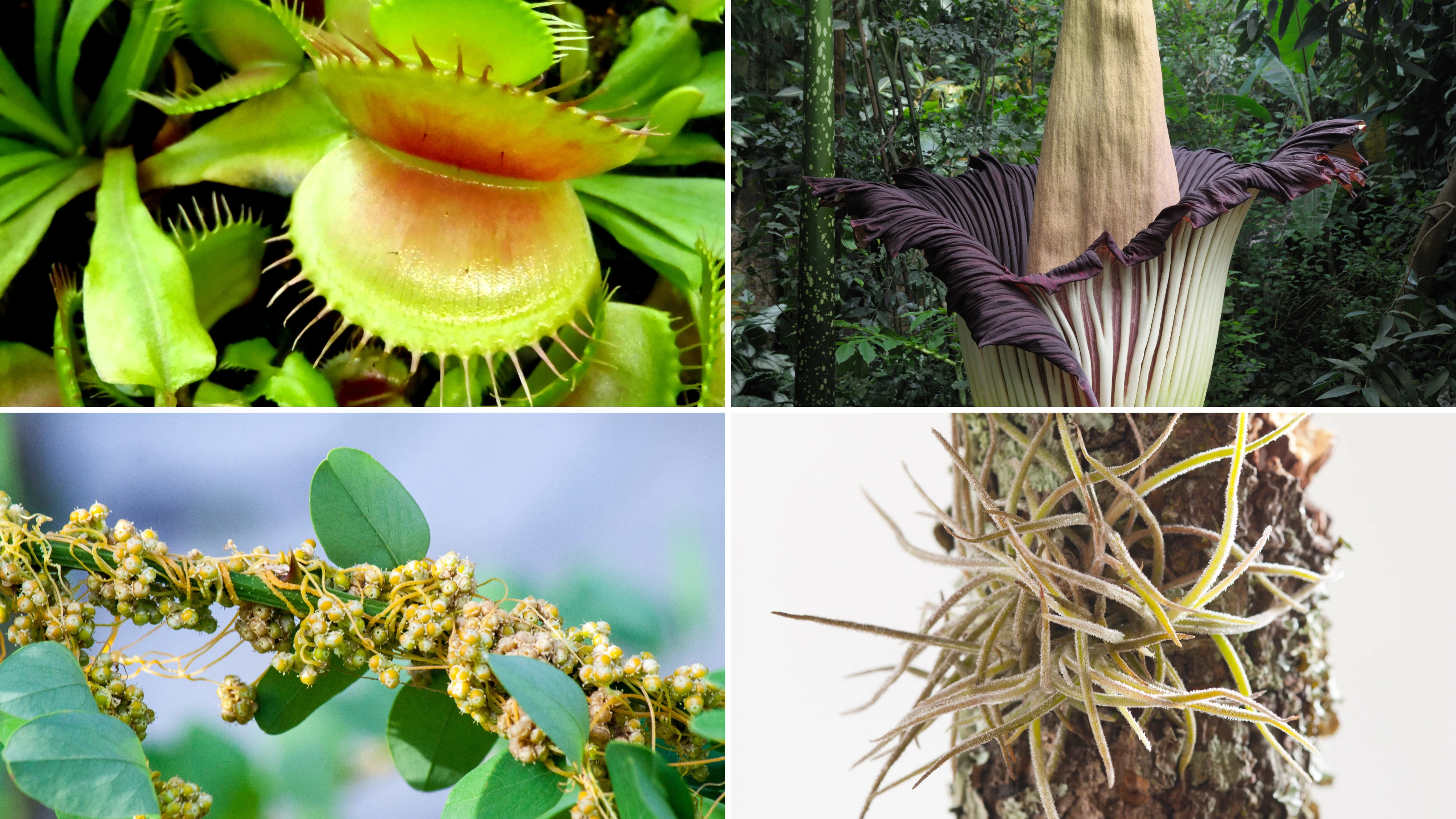
Plants with amazing adaptations! Top left: Venus flytrap – snaps shut to catch insects. Top right: Titan arum – the world’s tallest flower with a strong smell. Bottom left: Dodder vine – a parasitic plant that steals nutrients. Bottom right: Air plant – grows without soil, taking moisture from the air.
COLLAGE BY Duskbloom Littles
Plant adaptations are the amazing ways plants have changed over millions of years to survive in different environments! Just like animals, plants have developed incredible special features that help them get water, find light, avoid being eaten, and reproduce successfully wherever they live.
Water-Saving Adaptations
Plants living in dry places have developed brilliant water-saving tricks! Desert plants like cacti store water in thick, waxy stems and have spines instead of leaves to reduce water loss. Succulent plants have fleshy leaves that work like water storage tanks.
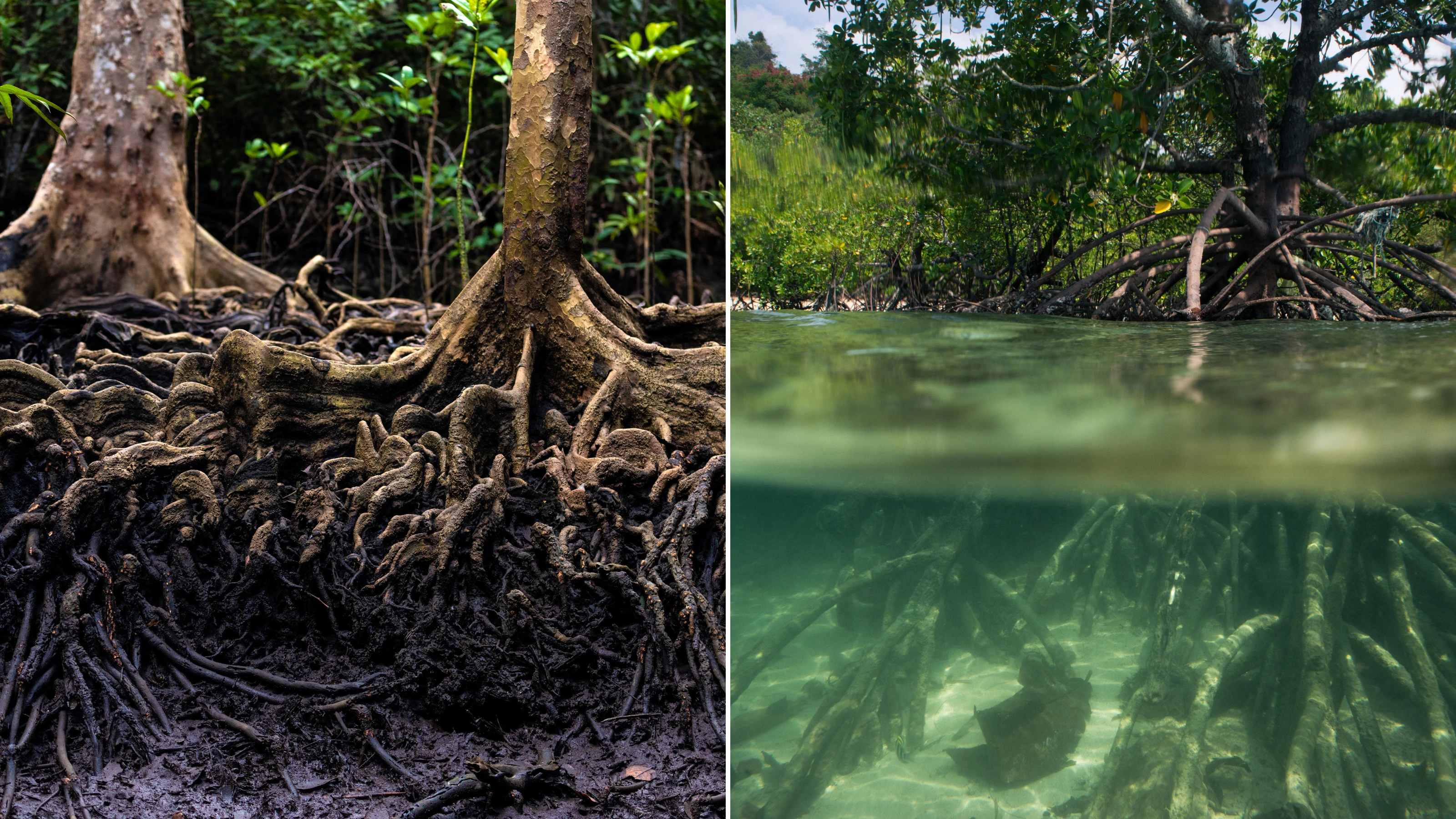 Mangrove trees have special roots that grow above the water, helping them survive in salty, muddy coastal areas.
Some desert plants have waxy coatings on their surfaces that prevent water from evaporating. Others have deep tap roots that reach far underground to find hidden water sources, or wide, shallow roots that quickly collect every drop of rare rainfall.
Amazing Survival Strategies
Plants have developed incredible ways to get what they need! Climbing plants like vines wrap around trees to reach sunlight without using energy to build strong trunks. Epiphytes (air plants) grow on tree branches to get closer to light while getting water from rain and humidity.
Carnivorous plants evolved to eat insects in nutrient-poor soils. Parasitic plants steal water and nutrients from other plants. Some plants can even move - like sunflowers that track the sun across the sky, or sensitive plants that fold their leaves when touched!
Plant adaptations show us that life is incredibly creative - given millions of years, plants have found amazing solutions to survive and thrive in almost every environment on Earth!