Plant Communication
Discover the amazing ways plants talk to each other through chemicals, roots, and secret underground networks

Plants releasing chemical signals into the air to warn neighboring plants of danger
Plant communication might sound like science fiction, but it's real! Plants can't talk like people or animals, but they have amazing ways to send messages to each other. They use chemical signals, underground networks, and even electrical impulses to share information about food, water, and danger.
The Wood Wide Web
Scientists have discovered that trees in forests are connected by an incredible underground network called the "wood wide web"! This network is made of tiny fungal threads that connect tree roots, allowing them to share nutrients, water, and information across the entire forest.
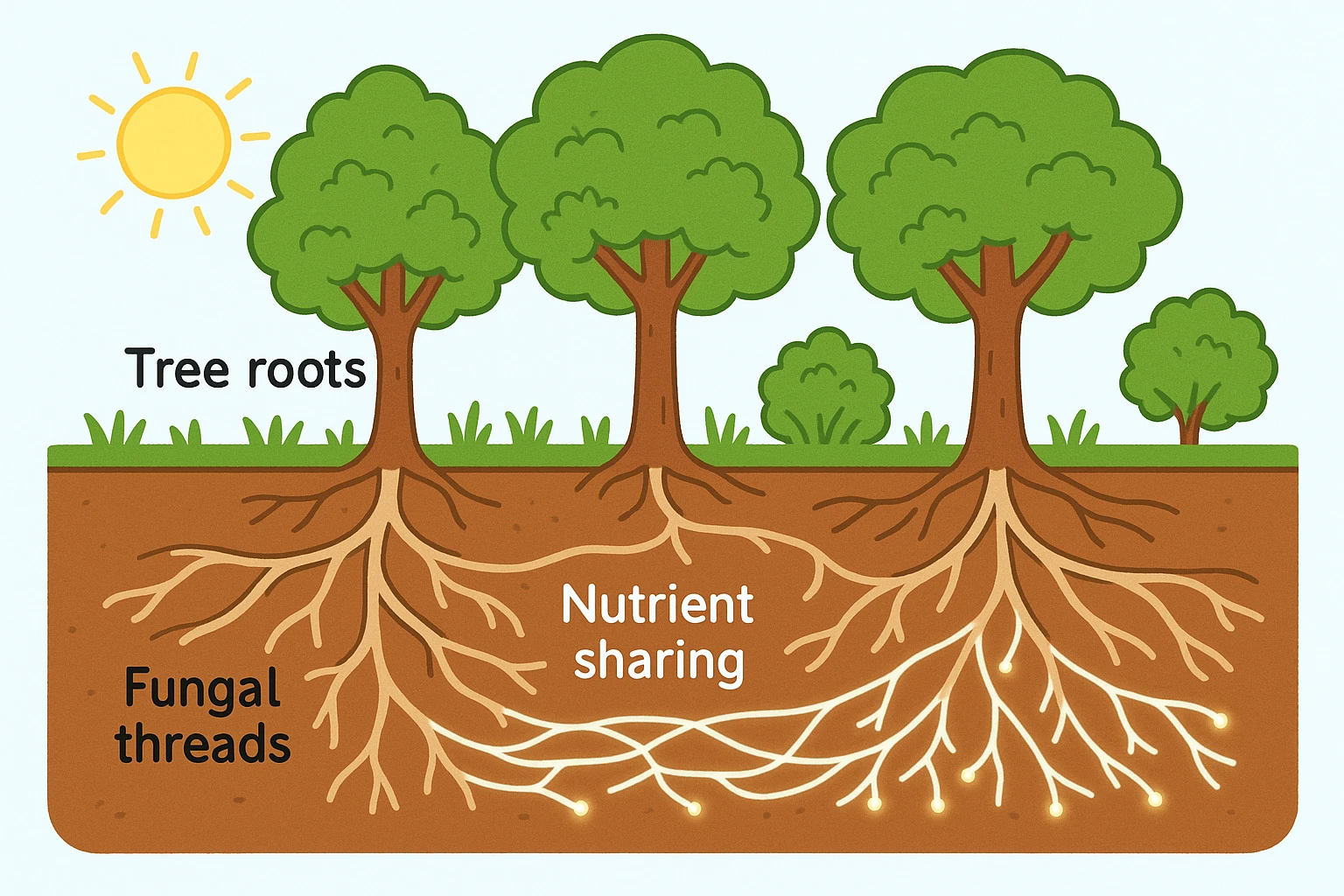 Diagram showing how trees share nutrients and information through underground fungal networks
Mother trees (large, old trees) act like community leaders, sharing resources with younger trees and even their own offspring. When a tree is attacked by insects, it can send chemical warning signals through this network to alert other trees to start producing defensive chemicals.
Chemical Messages
Plants are master chemists! When acacia trees in Africa are being eaten by giraffes, they quickly start producing bitter-tasting toxins in their leaves. Even more amazing, they release chemicals into the air that warn nearby acacia trees to start making their own defensive chemicals before the giraffes reach them.
Corn plants under attack by caterpillars release special scents that attract wasps - the wasps come and eat the caterpillars, saving the corn! Willow trees can detect when their neighbors are being attacked and start producing protective chemicals in advance.
Plant communication shows us that forests are not just collections of individual trees, but living communities where plants help each other survive, share resources, and work together in ways that are more complex and caring than we ever imagined!