Plant Defenses
Discover the amazing ways plants protect themselves from being eaten and defend against diseases and pests
Chemical plant defenses showing bitter leaves, toxic berries, and warning coloration
COLLAGE BY Duskbloom Littles
Plant defenses are the amazing ways plants protect themselves from being eaten by animals, attacked by diseases, or damaged by harsh weather. Since plants can't run away like animals, they've developed incredible built-in weapons and shields that would make any superhero jealous!
Physical Plant Armor
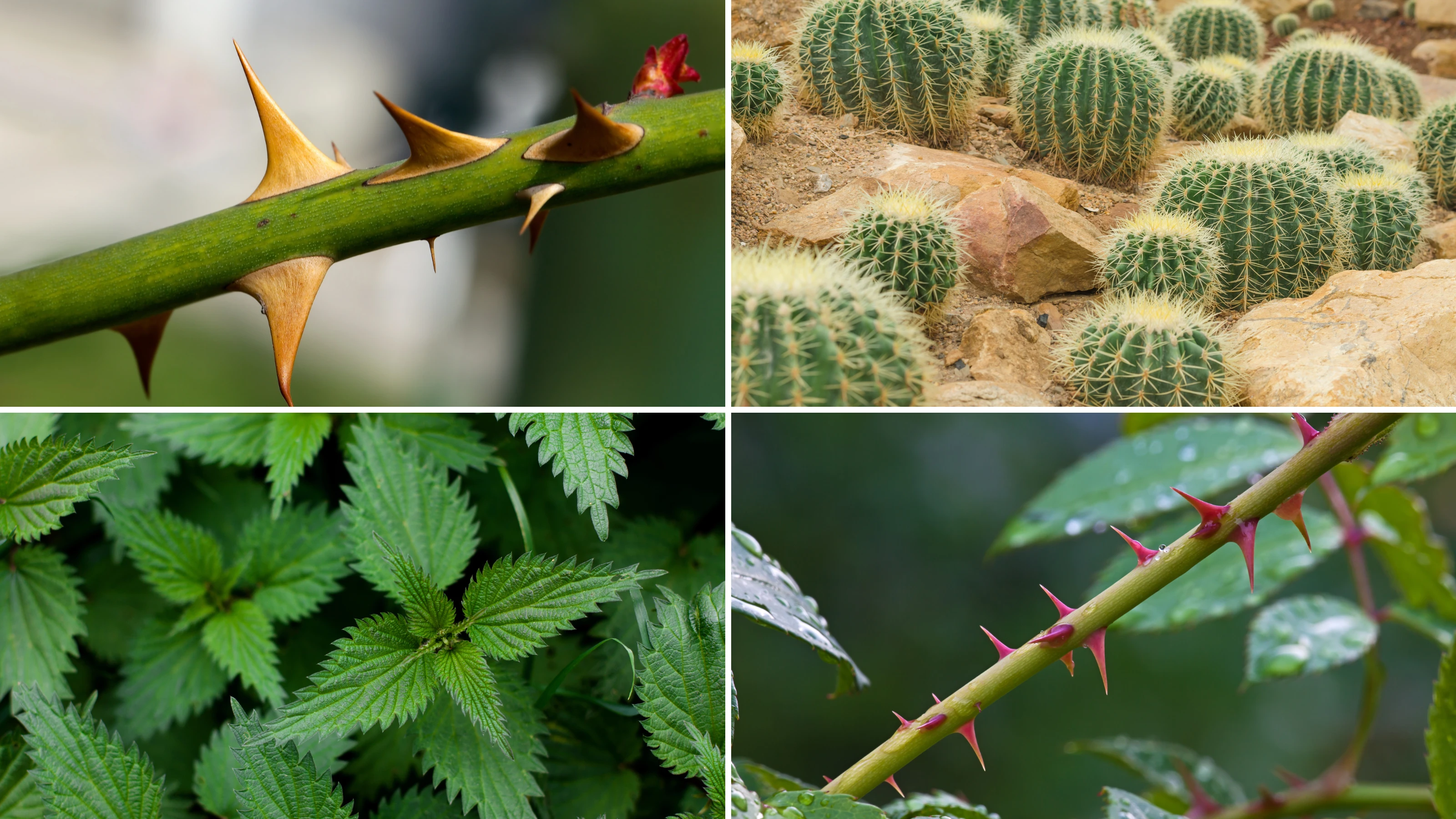
Many plants use thorns, spines, and prickles as their first line of defense! Rose bushes have sharp thorns that make animals think twice before trying to eat their stems. Cactus spines are actually modified leaves that protect the plant's water-storing stems from thirsty desert animals.
Examples of physical plant defenses like cactus spines, rose thorns, and stinging nettle hairs
Stinging nettles have tiny hollow hairs filled with chemicals that inject irritating substances when touched. Holly leaves have sharp, spiky edges that make them difficult and painful to eat. Some plants even have tough, leathery leaves that are too hard for most animals to chew.
Chemical Warfare
Plants are master chemists that make powerful defensive chemicals! Poison ivy produces oils that cause painful rashes on human skin. Milkweed plants contain toxins that make monarch butterfly caterpillars poisonous to predators - the caterpillars actually benefit from eating these toxic plants!
Garlic and onions make sulfur compounds that burn and irritate when bitten. Hot peppers contain capsaicin that makes mammals' mouths burn, but birds can't taste it at all - this helps the plant because birds spread seeds better than mammals do.
Plant defenses remind us that even though plants seem peaceful and defenseless, they're actually incredibly well-armed survivors that have been winning battles against herbivores for millions of years!