Autumn Colors
Discover why leaves change from green to brilliant reds, oranges, and yellows during fall

Forest in autumn with trees showing bright red, orange, and yellow leaves
Autumn Colors create one of nature's most spectacular art shows! Every fall, trees put on an amazing display of brilliant reds, bright oranges, and golden yellows before their leaves fall to the ground. This incredible color change happens when trees get ready for winter by stopping their summer food-making and revealing the hidden colors that were there all along.
Nature's Hidden Rainbow
Chlorophyll is the green chemical that helps leaves make food from sunlight during spring and summer. As days get shorter and temperatures drop, trees stop making new chlorophyll and the green color slowly disappears. Hidden colors that were always in the leaves - yellows, oranges, and reds - finally get their chance to shine!
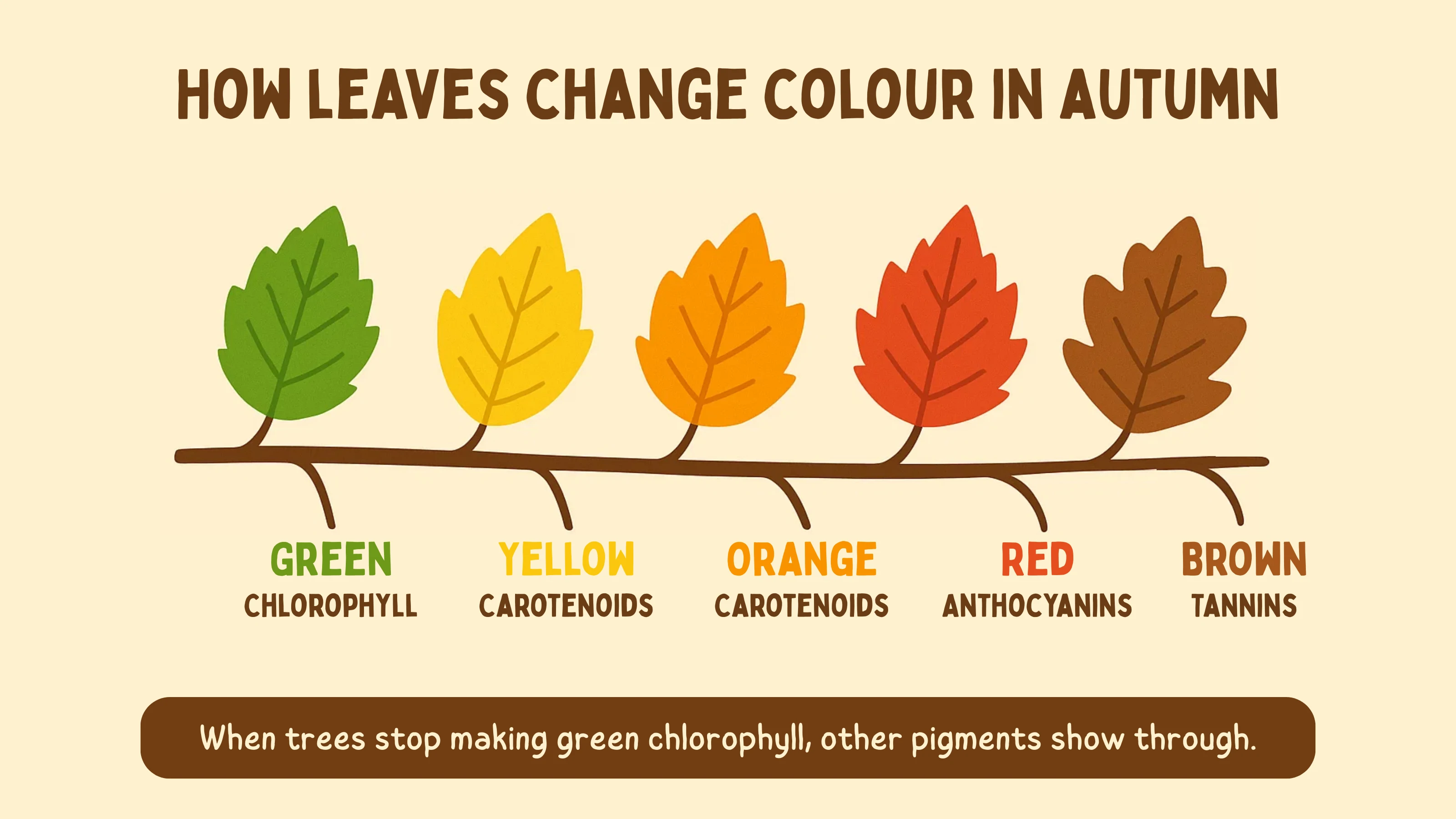 How leaves change color when trees stop making green chlorophyll and other colors show through
Different trees have different hidden colors waiting to appear. Sugar maples turn brilliant red and orange. Birch trees become bright yellow like golden coins. Oak trees show off rich browns and deep reds. Aspen trees create shimmering walls of gold that flutter in autumn breezes.

Perfect Conditions for Color
Sunny autumn days and cool nights create the most brilliant fall colors because this weather helps trees make more red pigments while keeping existing colors bright. Too much rain can make colors dull, while early frost can end the color show too quickly by killing leaves before they reach peak beauty.
Sugar concentration in leaves affects red color intensity - that's why sugar maple trees are famous for their amazing autumn reds! Soil moisture and tree health also influence how vibrant the colors become. Different elevation levels create waves of color as autumn progresses from mountain tops to valleys.
Autumn colors remind us that even endings can be beautiful - these spectacular leaf displays show us how nature prepares for winter while creating one of the most magnificent seasonal celebrations on Earth!