Hibernation
Discover how animals survive harsh winters by sleeping deeply for months without eating or drinking

A bear at the entrance of its den, getting ready for a long winter’s sleep.
Hibernation is like nature's ultimate winter nap! Some animals have discovered an amazing way to survive cold, snowy winters when food is scarce - they sleep deeply for months without eating, drinking, or even going to the bathroom. Their bodies slow down so much that they barely seem alive, but they're perfectly safe and cozy in their winter hideaways.
Nature's Super Sleep
True hibernation is much more than regular sleep - it's like putting life on pause! Hibernating animals lower their body temperature, slow their heartbeat to just a few beats per minute, and breathe only a few times per minute. Ground squirrels can lower their body temperature to just above freezing and seem almost frozen solid!
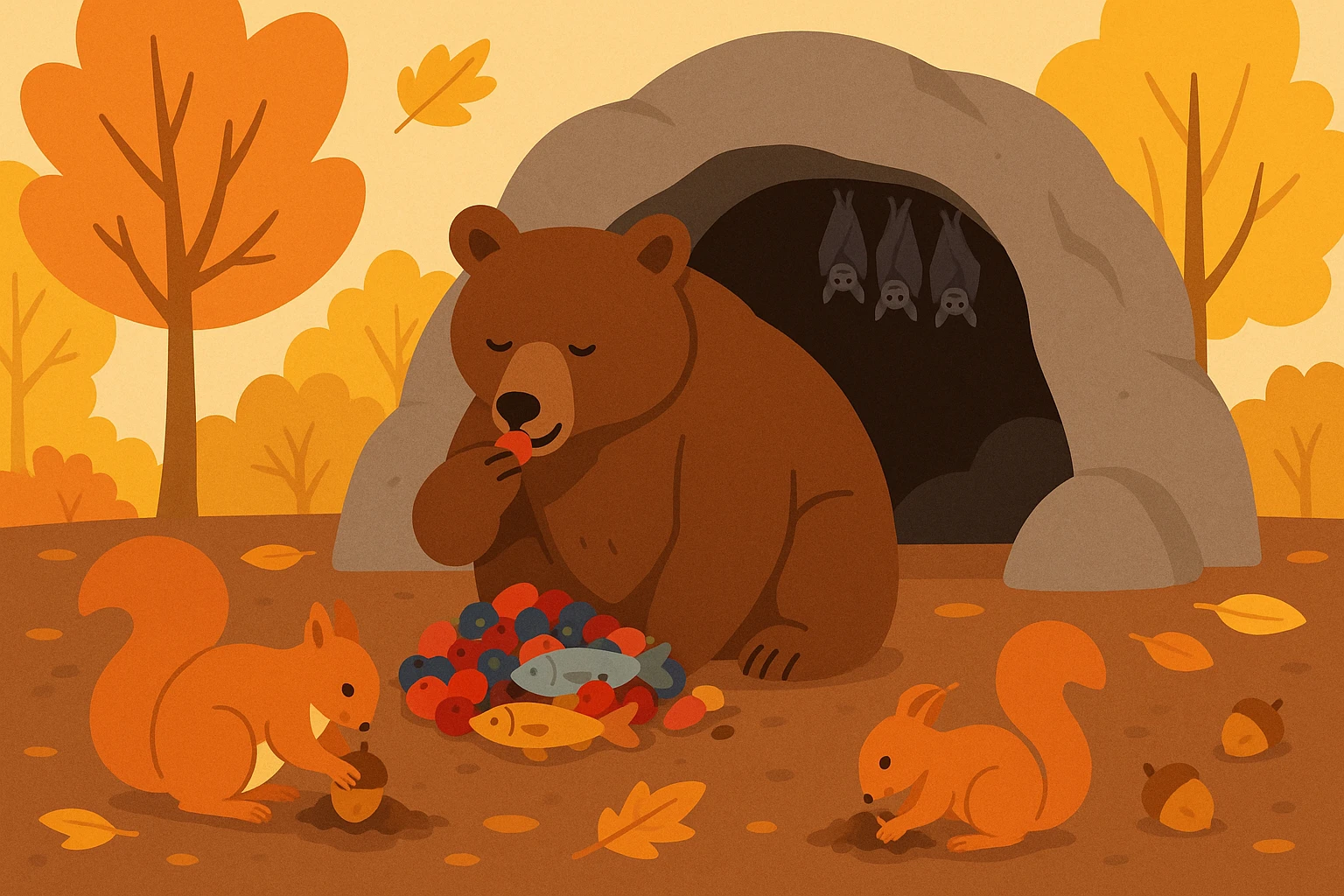 How animals prepare for hibernation by eating lots of food and finding safe winter homes
Before hibernating, animals spend autumn eating as much as possible to build up fat stores that will fuel their bodies all winter long. Bears can gain 400 pounds before winter! Woodchucks nearly double their weight. This stored fat is like a slow-burning fuel that keeps them alive while they sleep.

Different Types of Winter Sleep
True hibernators like ground squirrels and bats enter such deep sleep that they're hard to wake up. Bears actually don't truly hibernate - they enter torpor, a lighter sleep where they can still wake up if disturbed. Chipmunks practice light hibernation, waking up occasionally to eat stored food.
Bats are amazing hibernators who hang upside down in caves all winter. Frogs can actually freeze solid and survive! Some insects hibernate as eggs, larvae, or adults. Arctic ground squirrels are super-hibernators whose body temperature drops below freezing without them dying.
Hibernation shows us one of nature's most amazing survival strategies - these incredible sleepers teach us how animals have evolved creative ways to survive challenging seasons and remind us that sometimes the best solution to a difficult situation is to wait it out patiently!