Polar Night
Discover the mysterious time when the sun disappears for months and polar regions stay dark all day and night

How people and animals survive during the long polar night with special lights and adaptations
Polar Night is the opposite of Midnight Sun - it's when the sun completely disappears for weeks or months, leaving polar regions in continuous darkness! During this mysterious time, people living near the North and South Poles experience what feels like the longest night ever, with only moonlight, stars, and aurora to light up their world.
When Night Never Ends
Polar Night happens because of the same Earth tilt that creates Midnight Sun, but during winter instead of summer. When the Arctic tilts away from the sun during winter months, some areas never receive any direct sunlight for weeks or months. It's like that part of Earth is hiding from the sun!
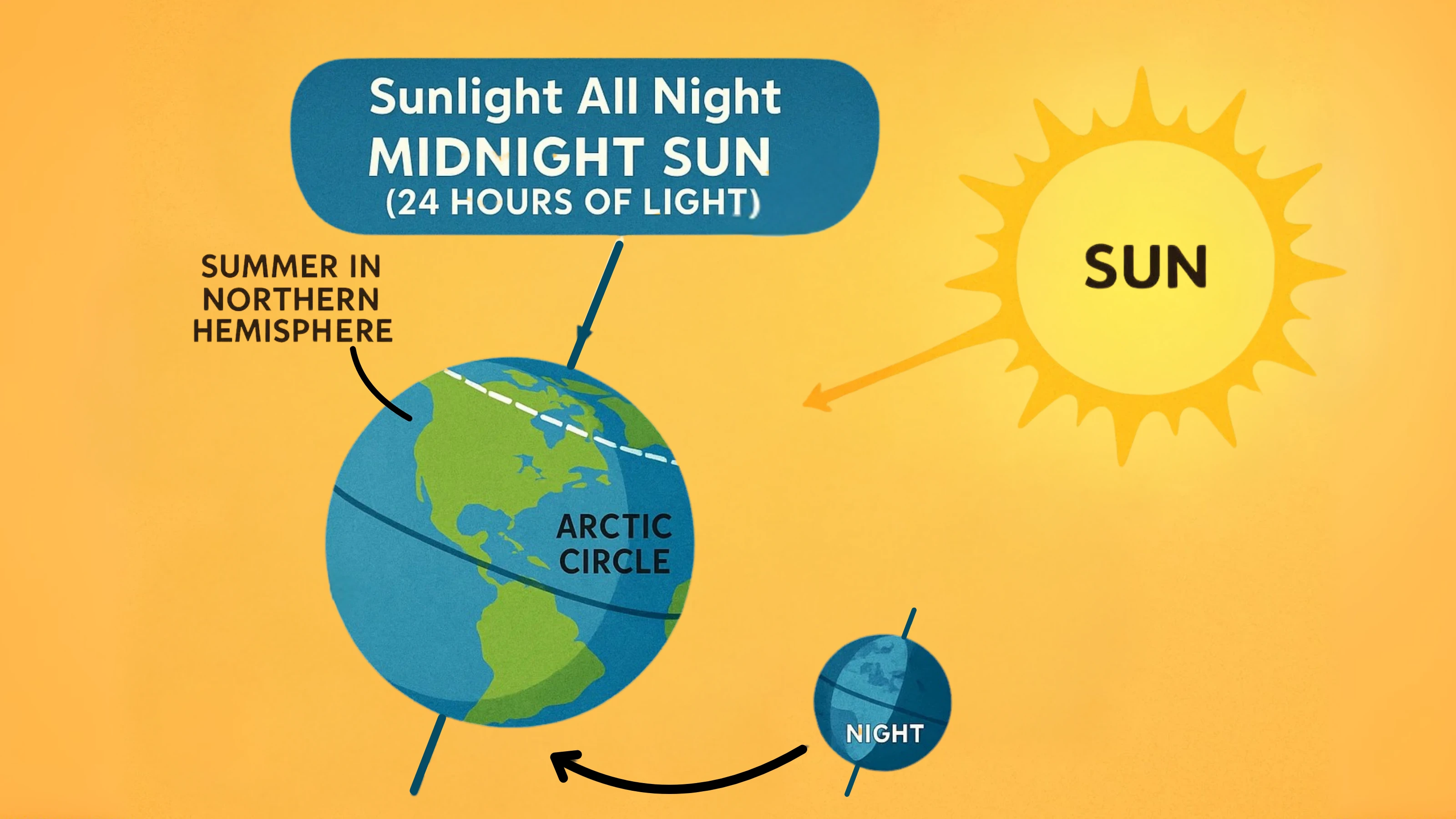 How Earth's tilt makes some places have no sunlight for months during winter
The farther north you go, the longer the polar night lasts. Utqiagvik, Alaska has about 65 days of darkness from November to January. At the North Pole, the polar night lasts about 6 months! Even though it's called "night," there can still be some twilight during the middle of the day when the sun is closest to the horizon.
Surviving the Long Dark
People living through polar night use special bright lights to help their bodies stay healthy without sunlight. Vitamin D supplements help replace what they normally get from sun exposure. Community activities and indoor hobbies become very important for staying happy during the long darkness.
Arctic animals have amazing adaptations for polar night! Polar bears have excellent night vision and thick fur for warmth. Arctic foxes change to white winter coats for camouflage in the snow. Snowy owls are perfectly adapted for hunting in low light conditions with their exceptional hearing and silent flight.
Polar Night shows us how dramatically different life can be in different parts of our planet - this extreme seasonal phenomenon teaches us about human and animal resilience while reminding us how much we depend on the sun's light and warmth!