Seasonal Migrations
Follow amazing animal journeys as millions of creatures travel thousands of miles with the changing seasons
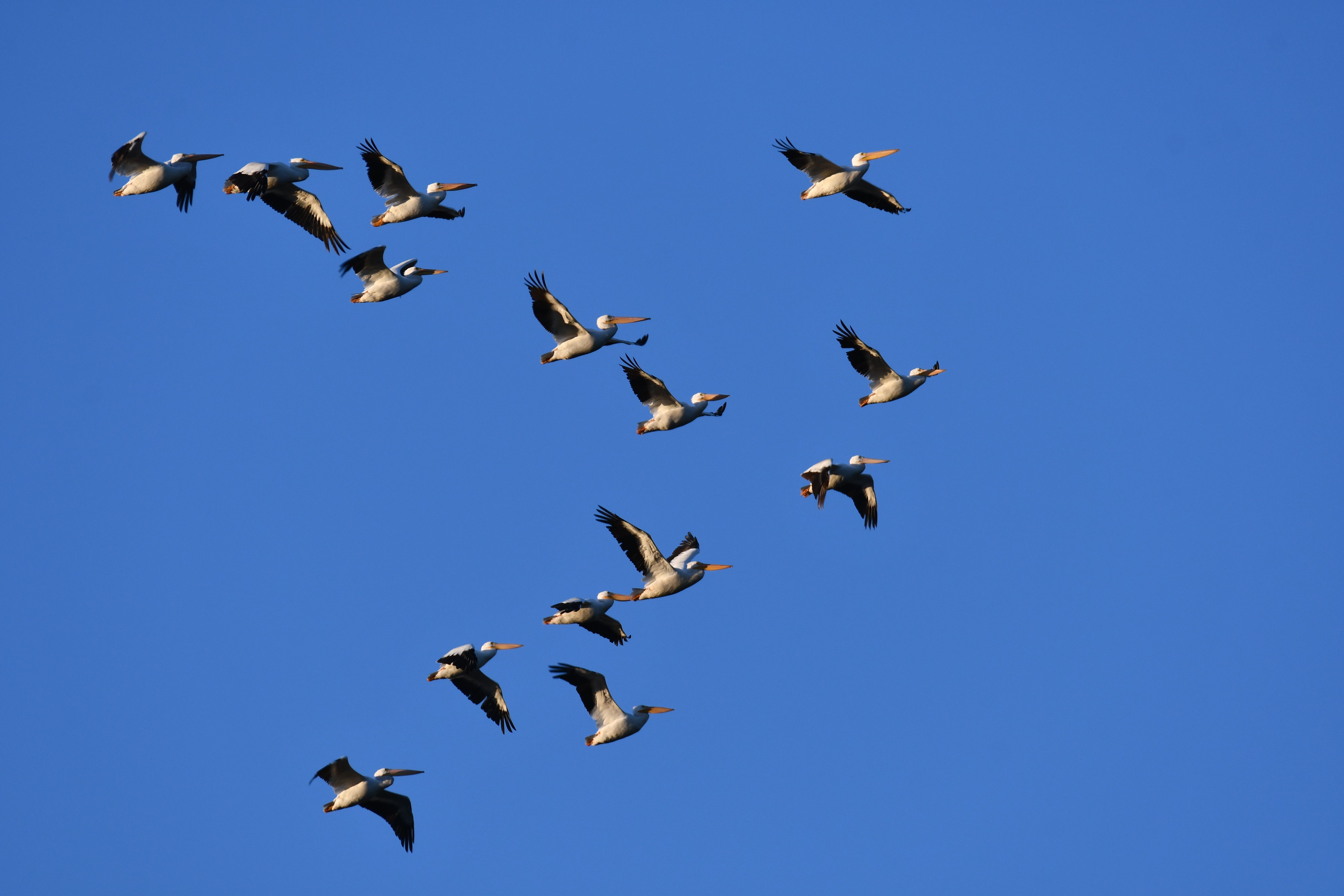
Huge flocks of birds flying in V-formation across the sky during their long migration journey
Seasonal migrations are some of nature's most incredible journeys! Every year, billions of animals travel thousands of miles following food, favorable weather, and safe places to raise their babies. These amazing travelers include tiny hummingbirds, massive whales, and even delicate butterflies that somehow find their way across entire continents.
Nature's Greatest Travelers
Migration triggers include changing daylight hours, temperature drops, and food scarcity that tell animals it's time to move. Arctic terns make the longest migration of any animal, flying from Arctic to Antarctic and back each year - a round trip of about 44,000 miles! Ruby-throated hummingbirds cross the entire Gulf of Mexico in one non-stop flight.
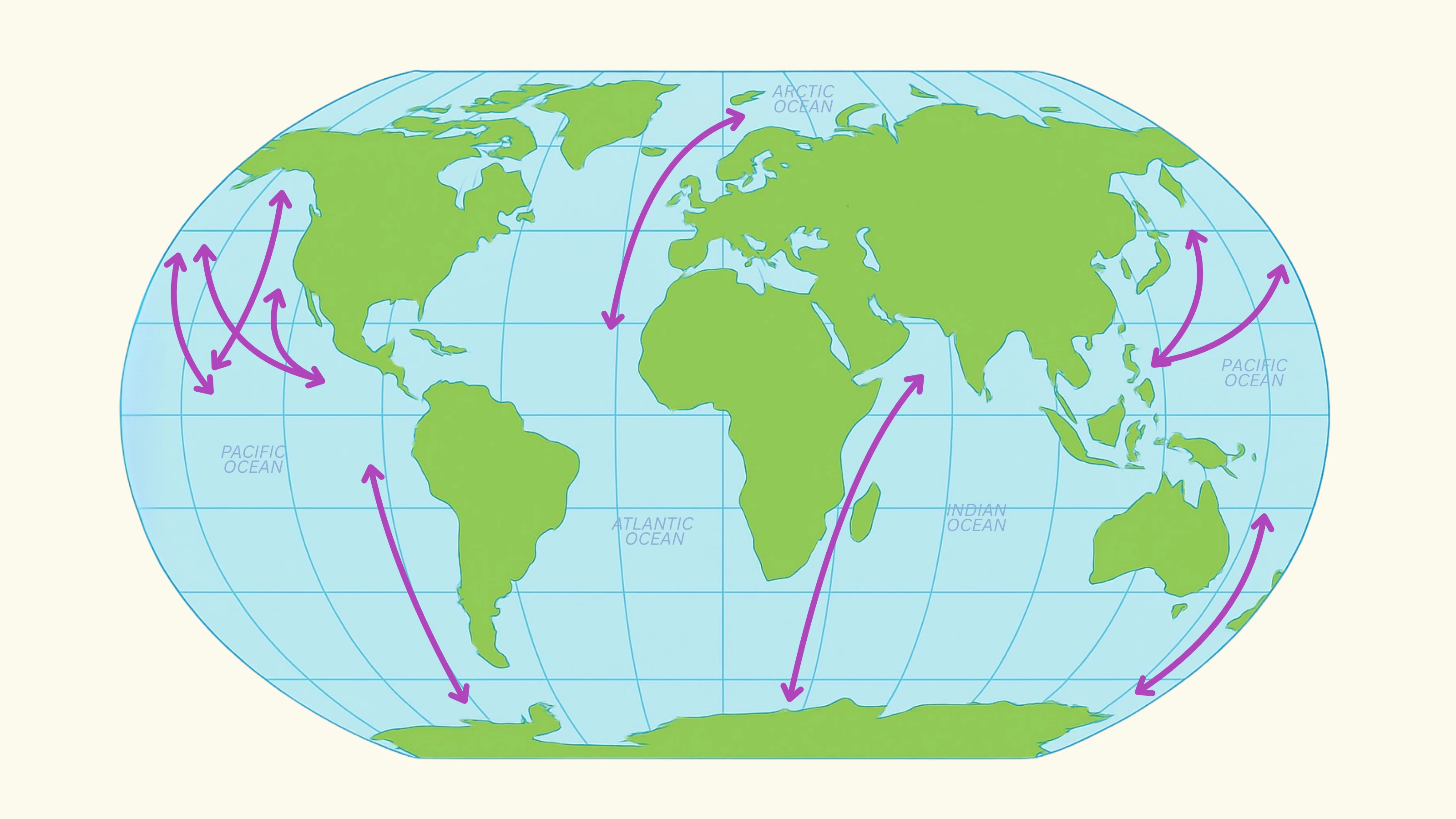 Migration routes showing how different humpback whales travel around the world following food and good weather
Built-in navigation systems help animals find their way using the sun, stars, Earth's magnetic field, and even smells! Salmon return to the exact same streams where they were born after years in the ocean. Sea turtles navigate thousands of miles using magnetic fields to find their nesting beaches.
Amazing Migration Stories
Monarch butterflies are super migration champions! These delicate insects travel up to 3,000 miles from Canada to Mexico, and amazingly, it takes 3-4 generations to complete the round trip. The butterflies that return north have never been there before, yet they know exactly where to go!
Gray whales make one of the longest mammal migrations, traveling 12,000 miles round trip between Alaska and Mexico. Caribou travel in huge herds across the Arctic tundra, following ancient routes their ancestors used for thousands of years. Millions of wildebeest cross dangerous rivers in Africa during their circular journey following the rains.
Seasonal migrations show us the incredible determination and navigation abilities of animals - these epic journeys remind us how connected different parts of our planet are and how important it is to protect the routes and habitats that migrating animals depend on!