Summer Storms
Learn about powerful thunderstorms that bring lightning, heavy rain, and dramatic weather during hot summer days

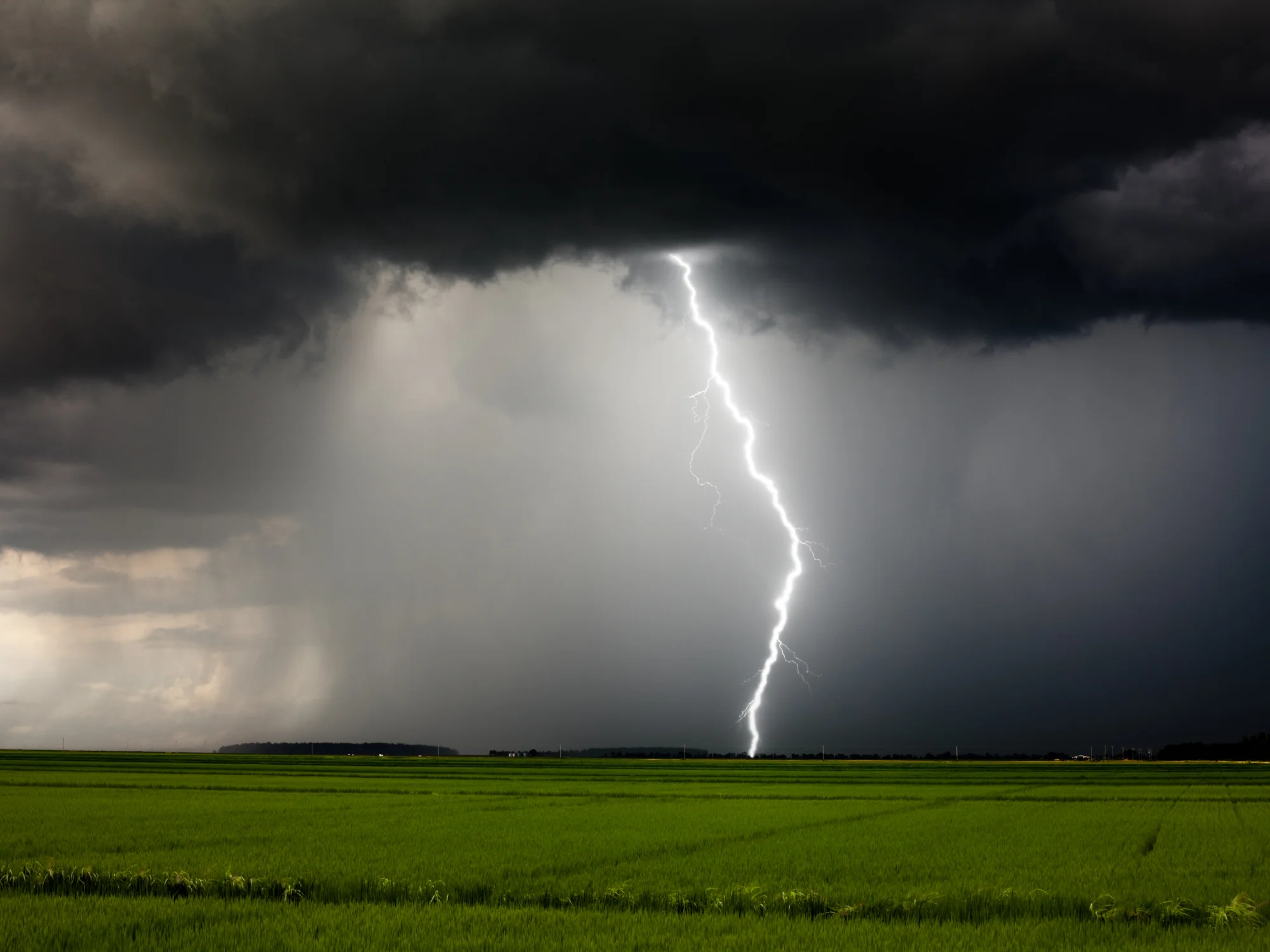
Dark storm clouds building up on a hot summer day with lightning flashing in the distance
Summer storms are nature's most dramatic summer shows! These powerful thunderstorms develop when hot summer air meets cooler air high above, creating towering storm clouds that can reach 60,000 feet tall. Summer storms bring exciting lightning displays, rumbling thunder, and cooling rains that provide relief from hot, humid summer days.
How Hot Days Create Wild Weather
Summer thunderstorms form when the sun heats the ground, causing hot, moist air to rise rapidly into the cooler atmosphere above. As this air rises, it cools and condenses into towering cumulonimbus clouds that look like giant cotton balls reaching toward space. These storm clouds can grow incredibly tall in just 30-60 minutes!
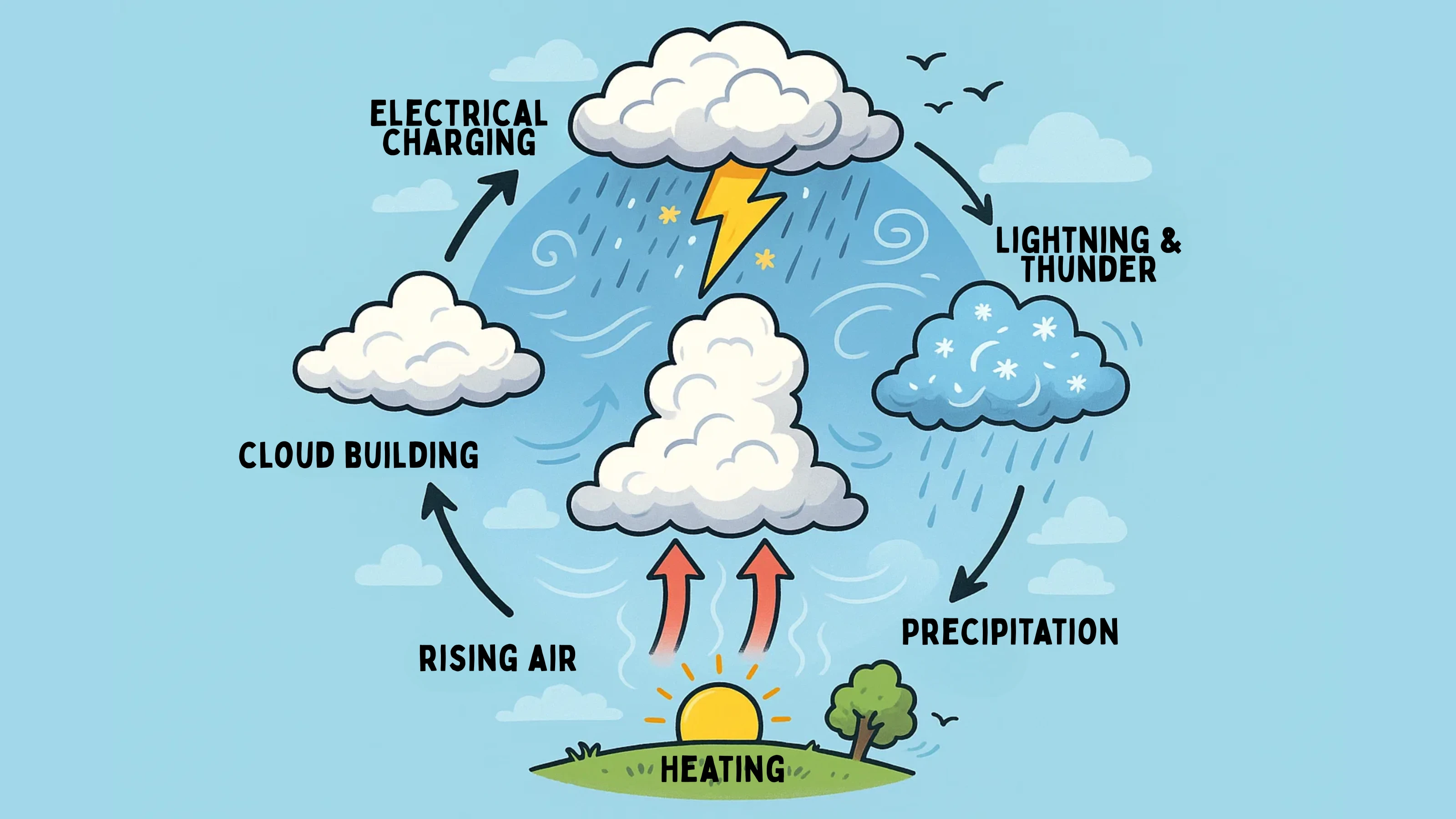 Thunderstorms form when the summer sun heats the ground and warm air rises into the sky. The rising air builds a huge cloud called a cumulonimbus. These clouds can grow miles tall, with a dark, rainy bottom, strong winds in the middle, and an icy top that spreads out like an anvil. Inside, the storm charges up with electricity, creating lightning, thunder, and heavy rain
Afternoon and evening are peak times for summer storms because that's when the ground is hottest from a full day of sunshine. Heat islands over cities often trigger more storms than surrounding areas. Mountain slopes create extra lifting of hot air, making summer storms especially common in mountainous regions.

Types of Summer Storms
Single-cell thunderstorms are the most common type, lasting 30-60 minutes and bringing brief but intense rain, lightning, and wind. Multi-cell storms are groups of storms that can last several hours as new cells develop. Supercell storms are the most dangerous, with rotating winds that can produce tornadoes and baseball-sized hail.
Heat lightning is lightning so far away you can see the flashes but not hear the thunder. Microbursts are sudden downdrafts of air that can damage trees and buildings. Flash flooding can occur when summer storms drop large amounts of rain in short periods, especially in urban areas with lots of concrete.
Summer storms remind us of the incredible energy in our atmosphere - these powerful weather events show us how the sun's heat drives dramatic changes in our sky while providing the water and cooling that help life thrive during hot summer months!