
Winter Survival
Learn amazing ways plants and animals survive freezing cold, deep snow, and months without food
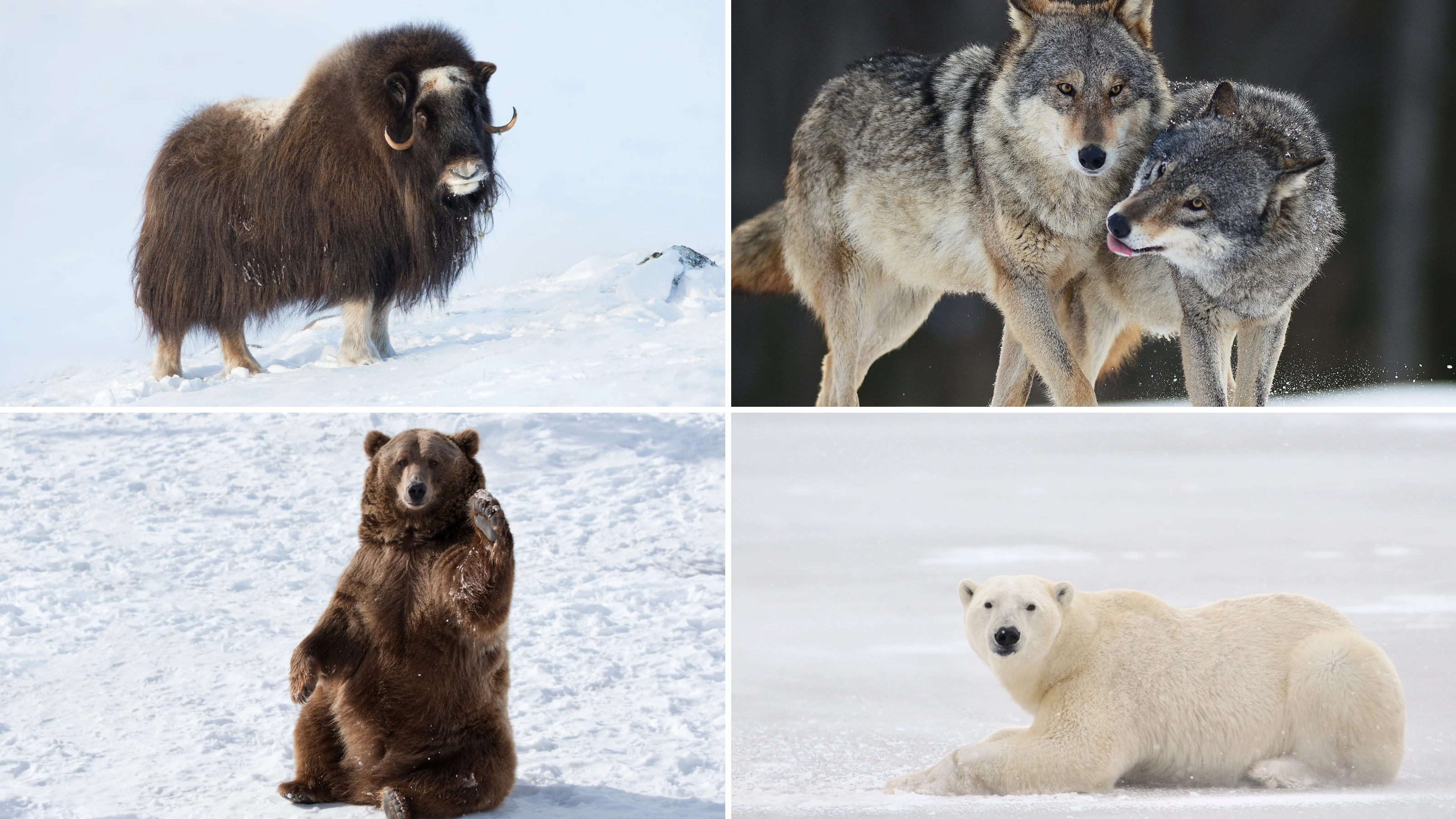
Animals with thick winter fur coats surviving in snowy, cold winter landscape
COLLAGE BY Duskbloom Littles
Winter Survival showcases nature's most incredible adaptations! When temperatures drop below freezing and food becomes scarce, plants and animals use amazing strategies to survive months of harsh conditions. From growing antifreeze to changing colours, winter survivors have evolved fascinating ways to beat the cold and live through Earth's most challenging season.
Nature's Winter Warriors
Animals have developed incredible cold-weather gear! Arctic foxes grow winter coats so thick and warm they can sleep comfortably on snow at -40°F. Caribou have hollow hairs that trap warm air like tiny sleeping bags. Penguins huddle together in groups of thousands, taking turns being on the warm inside of the group.
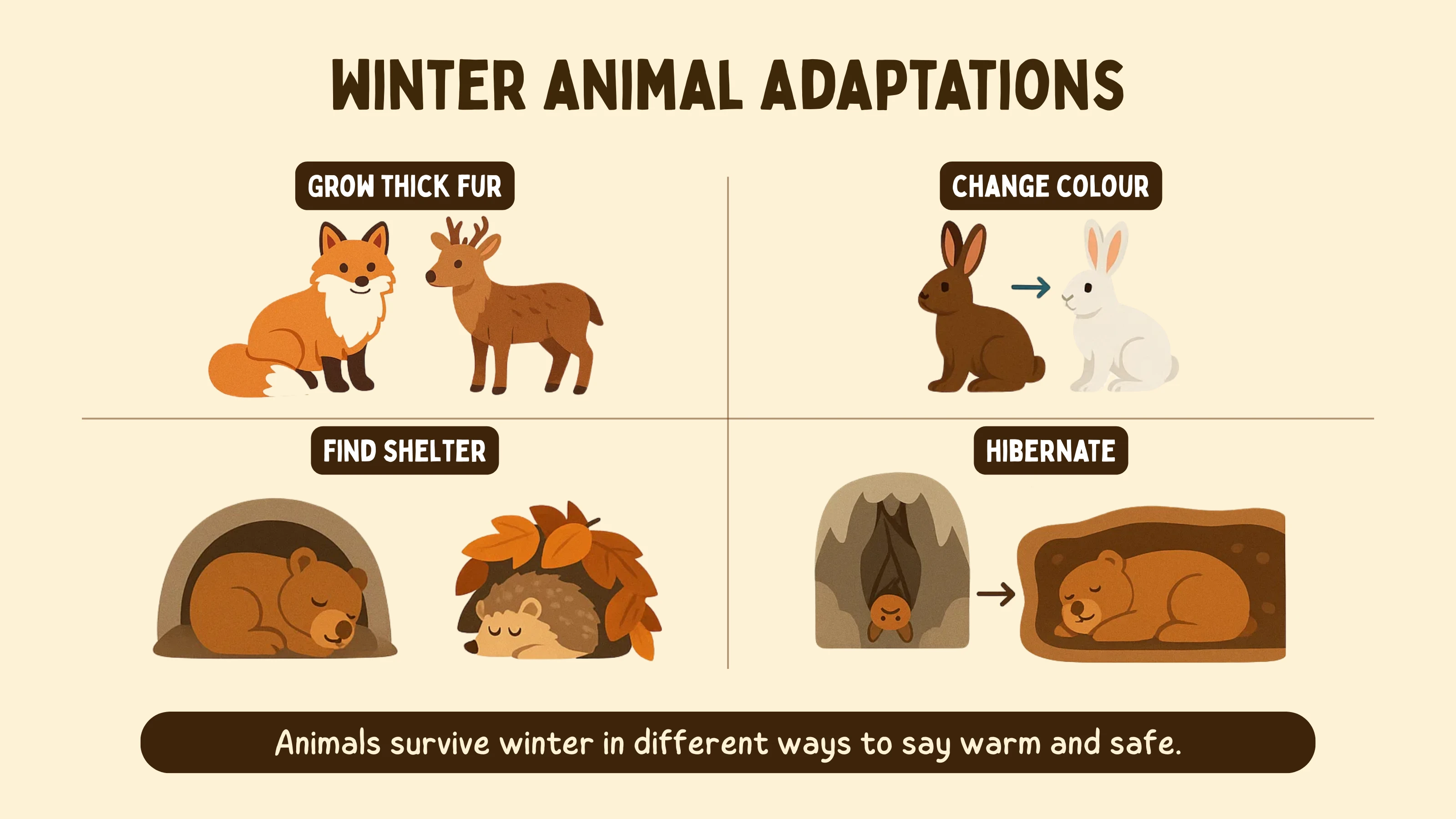 Different ways animals survive winter including growing thick fur, changing colours, and finding shelter
Colour-changing champions like arctic foxes and snowshoe hares turn white in winter for perfect camouflage in snow, then change back to brown in summer. Ptarmigan birds even grow feathers on their feet that work like natural snowshoes! Musk oxen have two layers of fur - soft warm underwear and a long outer coat.

Plant Winter Tactics
Plants can't migrate or huddle for warmth, so they've developed amazing cold survival tricks! Deciduous trees drop their leaves and go dormant, storing energy in their roots underground where it stays warmer. Evergreen trees have needle-shaped leaves with waxy coatings that prevent water loss and freezing damage.
Some plants make their own antifreeze! Winter-active plants produce special chemicals that prevent ice crystals from forming in their cells. Bulb plants like tulips and daffodils hide underground all winter, using stored energy to burst into bloom when spring returns. Tree bark acts like a winter coat, protecting the living wood underneath.
Winter survival shows us the incredible creativity of evolution - these amazing adaptations remind us that life finds ways to thrive even in the harshest conditions and teach us about resilience, preparation, and the power of adaptation!