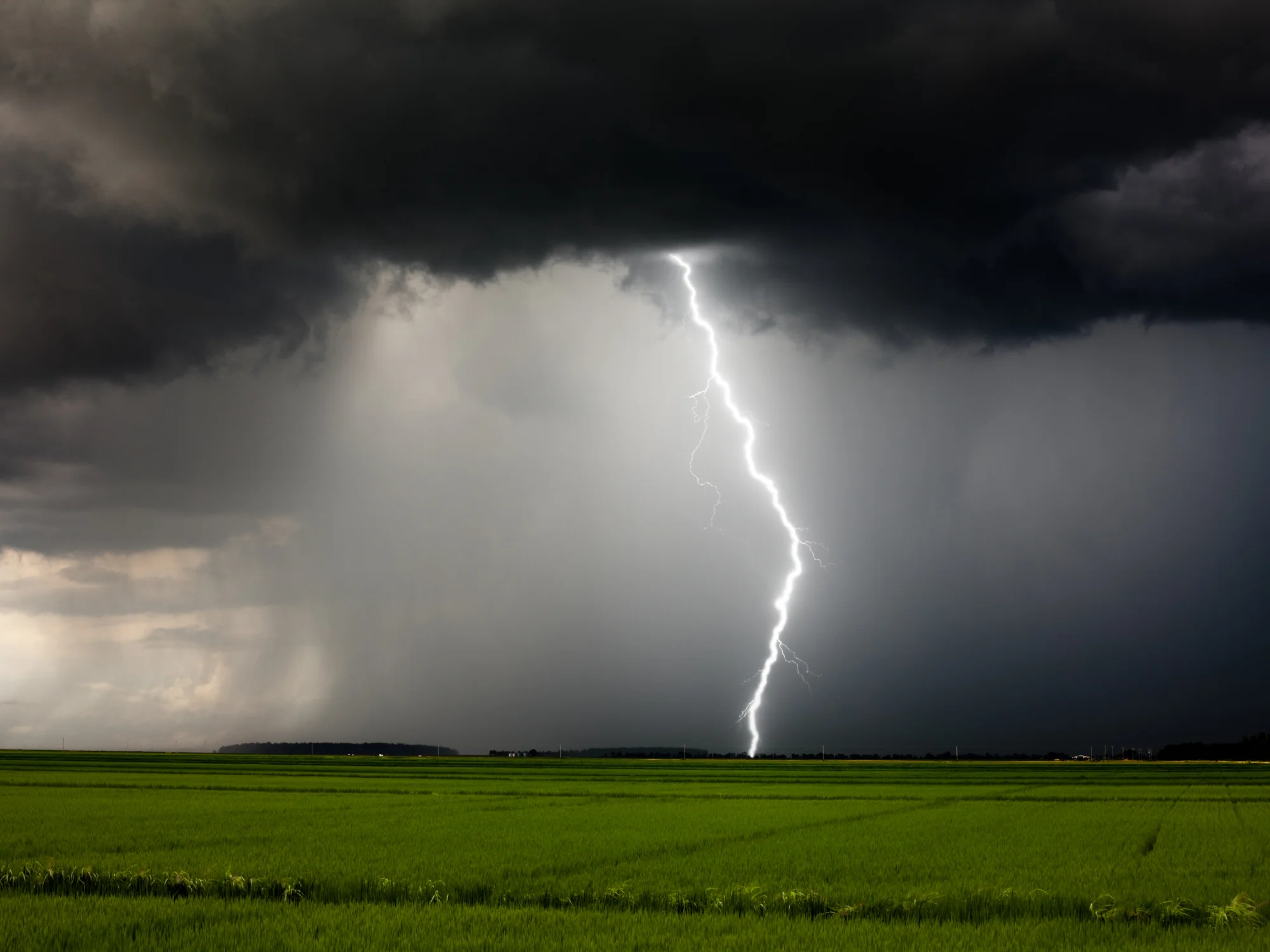
Hailstorms
Discover how ice balls form in thunderstorms and fall from the sky during severe weather

Large hailstones scattered on ground after severe thunderstorm showing various sizes
Hailstorms create one of nature's most surprising weather events - ice balls falling from the sky during warm weather! These frozen projectiles form high inside thunderstorms and can range from tiny ice pellets smaller than peas to giant hailstones bigger than softballs that can cause serious damage and injury.
How Hailstones Form
Hail forms inside powerful supercell thunderstorms with extremely strong updrafts - upward-moving air currents that can reach speeds of 100 mph! Raindrops get caught in these updrafts and carried high into the freezing part of the storm cloud where they turn into ice.
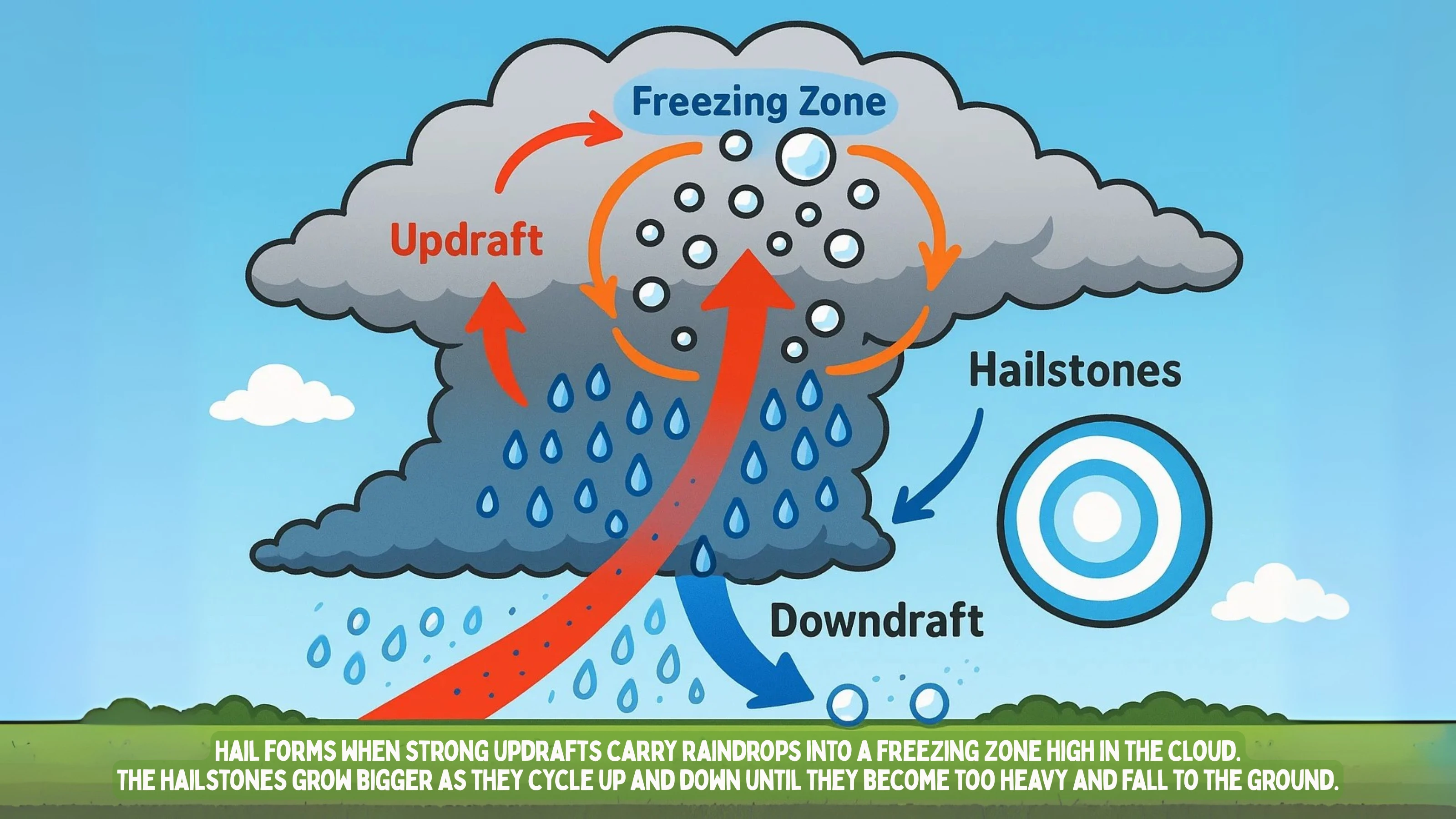 Cross-section diagram showing how hailstones form and grow inside thunderstorm updrafts
The hailstone falls back down but gets caught in the updraft again and carried back up to freeze another layer of ice around it. This process repeats over and over - each trip up and down adds another layer of ice, making the hailstone bigger and bigger until it becomes too heavy for the updraft to carry!
Hailstorm Damage and Safety
Large hailstones can be extremely dangerous! Golf ball-sized hail can dent cars, break windows, and damage roofs. Baseball-sized hail can cause serious injuries to people and animals caught outside. The largest hailstones can punch holes through roofs, total cars, and even kill livestock.
Hail damage to crops can destroy entire harvests in minutes. Greenhouses are especially vulnerable to hail damage. Aircraft caught in hailstorms can suffer severe damage to engines and windshields, which is why pilots work hard to avoid these dangerous storms.
Hailstorms remind us that Earth's atmosphere can create amazing and powerful phenomena - while we must always seek shelter when hail threatens, these icy storms are fascinating examples of how water moves through our atmosphere in surprising ways!