Lightning
Explore nature's incredible electric show and learn how lightning forms in thunderstorms

Dramatic lightning bolt striking from dark storm clouds during nighttime thunderstorm
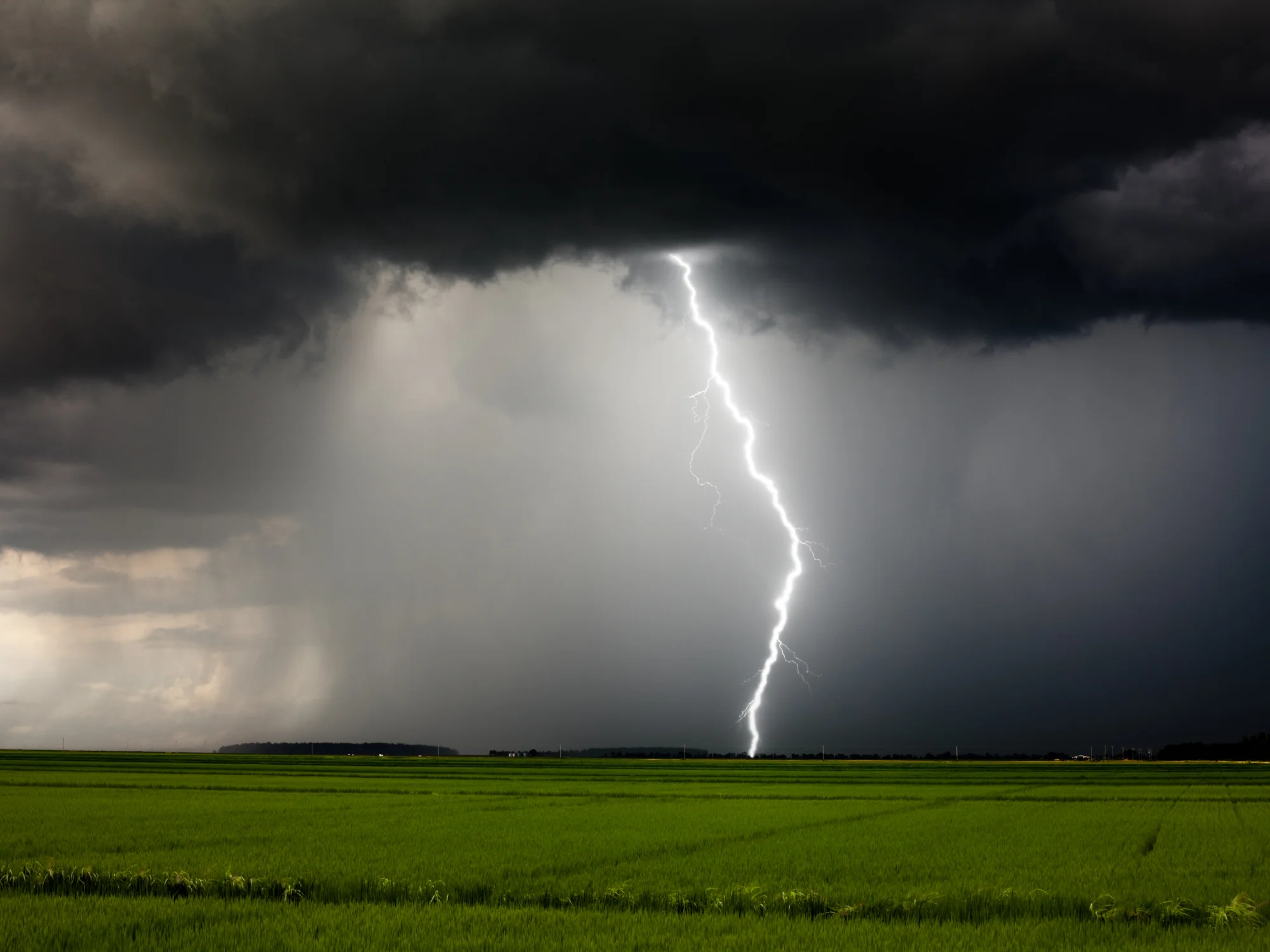
Lightning is one of nature's most spectacular and powerful displays! These brilliant flashes of electricity can heat the air to 50,000°F - five times hotter than the surface of the sun! Lightning strikes Earth about 100 times every second, creating an amazing natural light show that has fascinated people throughout history.
How Lightning Forms
Lightning starts inside thunderstorm clouds where ice particles and water droplets crash into each other as they're tossed around by powerful winds. This creates static electricity - the same type that makes your hair stand up when you rub a balloon on it, but millions of times stronger!
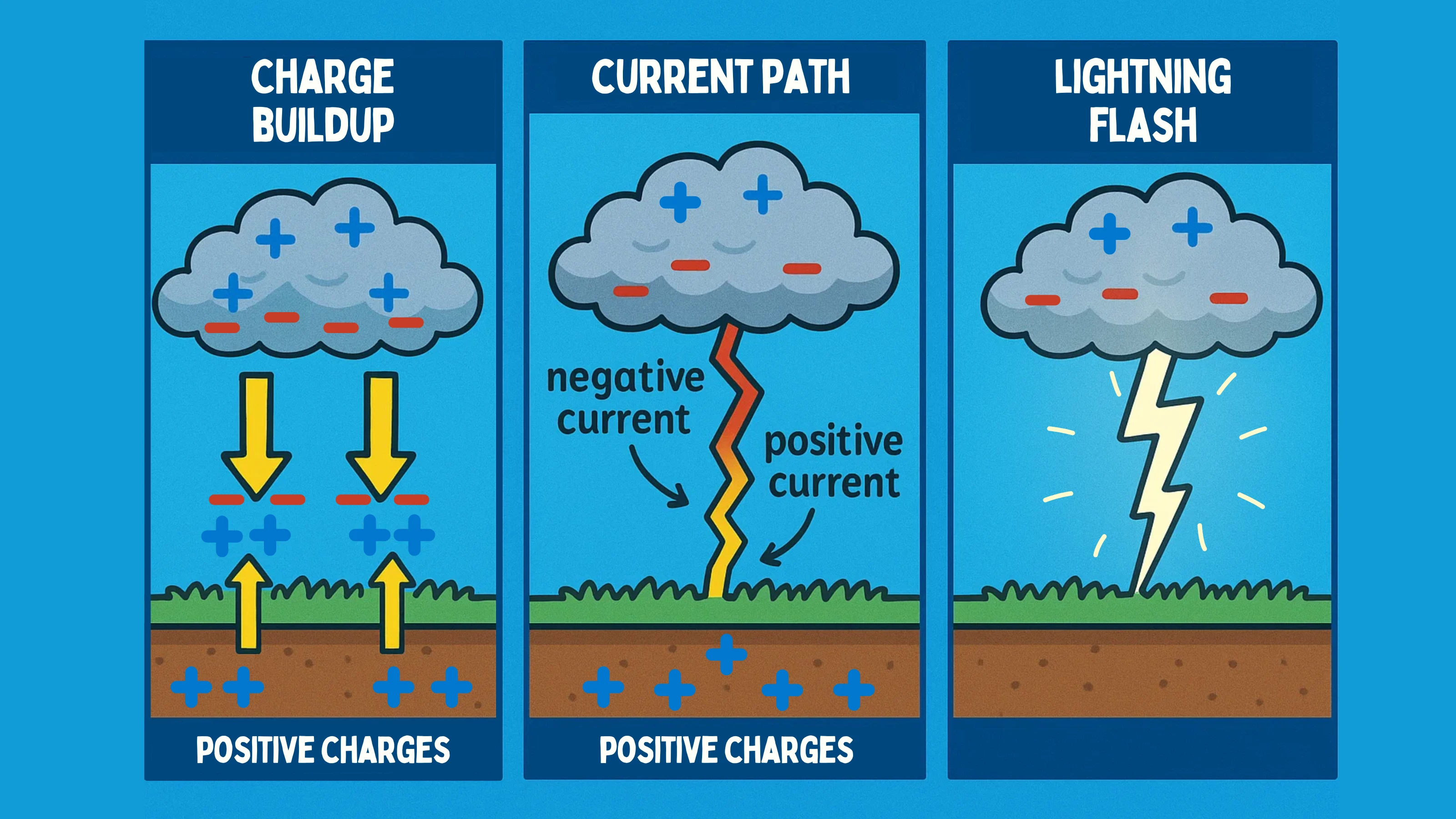 Diagram showing how electrical charges build up in storm clouds to create lightning
Positive charges collect at the top of the cloud while negative charges gather at the bottom. When the electrical difference becomes too great, it creates a powerful electrical discharge that we see as lightning! The electricity follows the path of least resistance as it jumps through the air.
Types of Lightning and Thunder
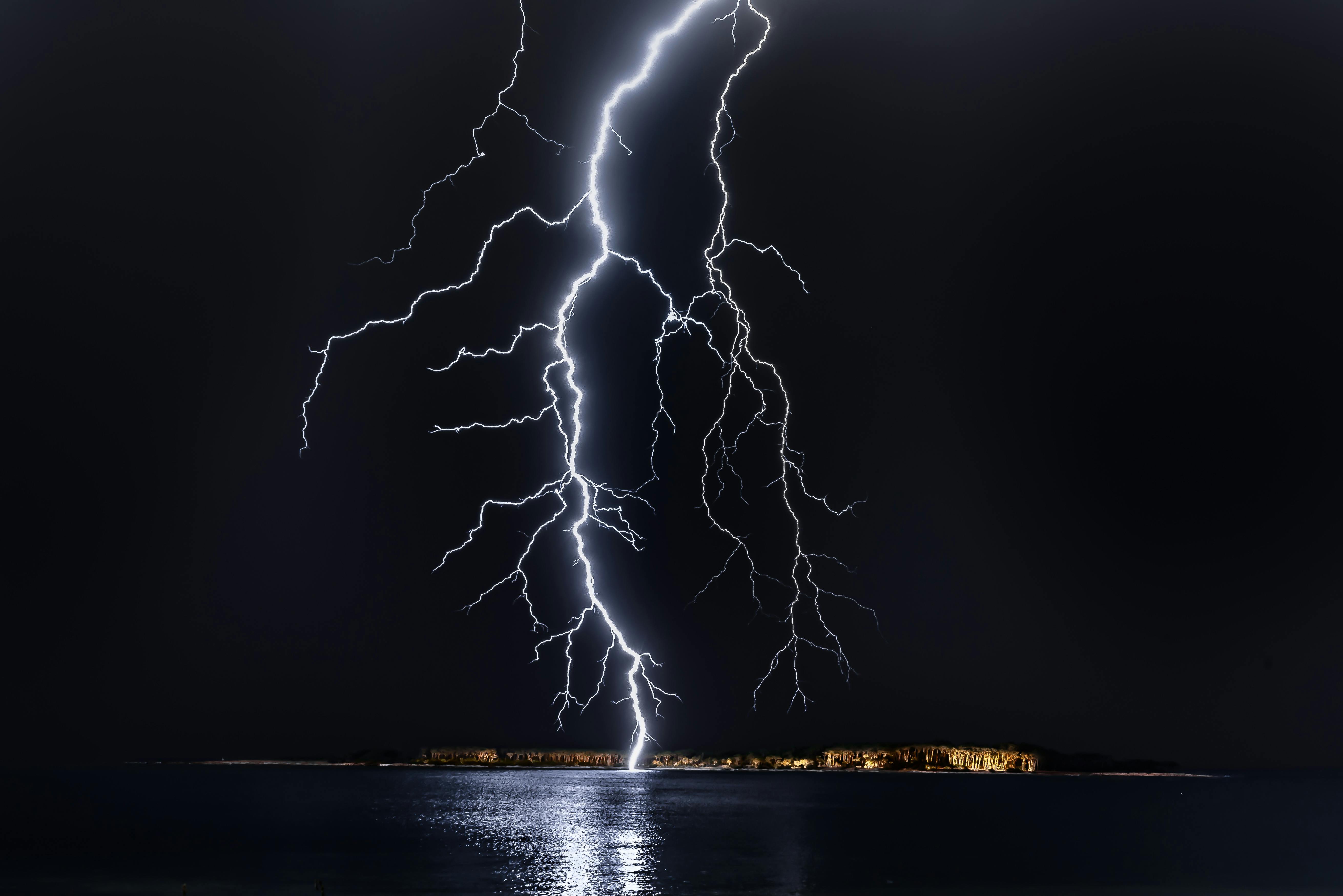
Cloud-to-ground lightning is what we usually think of - bolts that strike from clouds to Earth. Cloud-to-cloud lightning happens between different parts of the same cloud or between different clouds. Intracloud lightning occurs within a single cloud and is the most common type.
Thunder is the sound lightning makes! The electrical discharge instantly heats the air, causing it to expand so quickly it creates a shock wave we hear as thunder. You can estimate how far away lightning is by counting the seconds between the flash and thunder, then dividing by 5 - that's roughly how many miles away it struck.
Lightning reminds us that our atmosphere is filled with incredible energy - while we must always respect its danger and seek shelter during storms, lightning is also one of nature's most beautiful and important phenomena!