Tornadoes
Learn about nature's most powerful spinning storms and how to stay safe when tornado warnings are issued
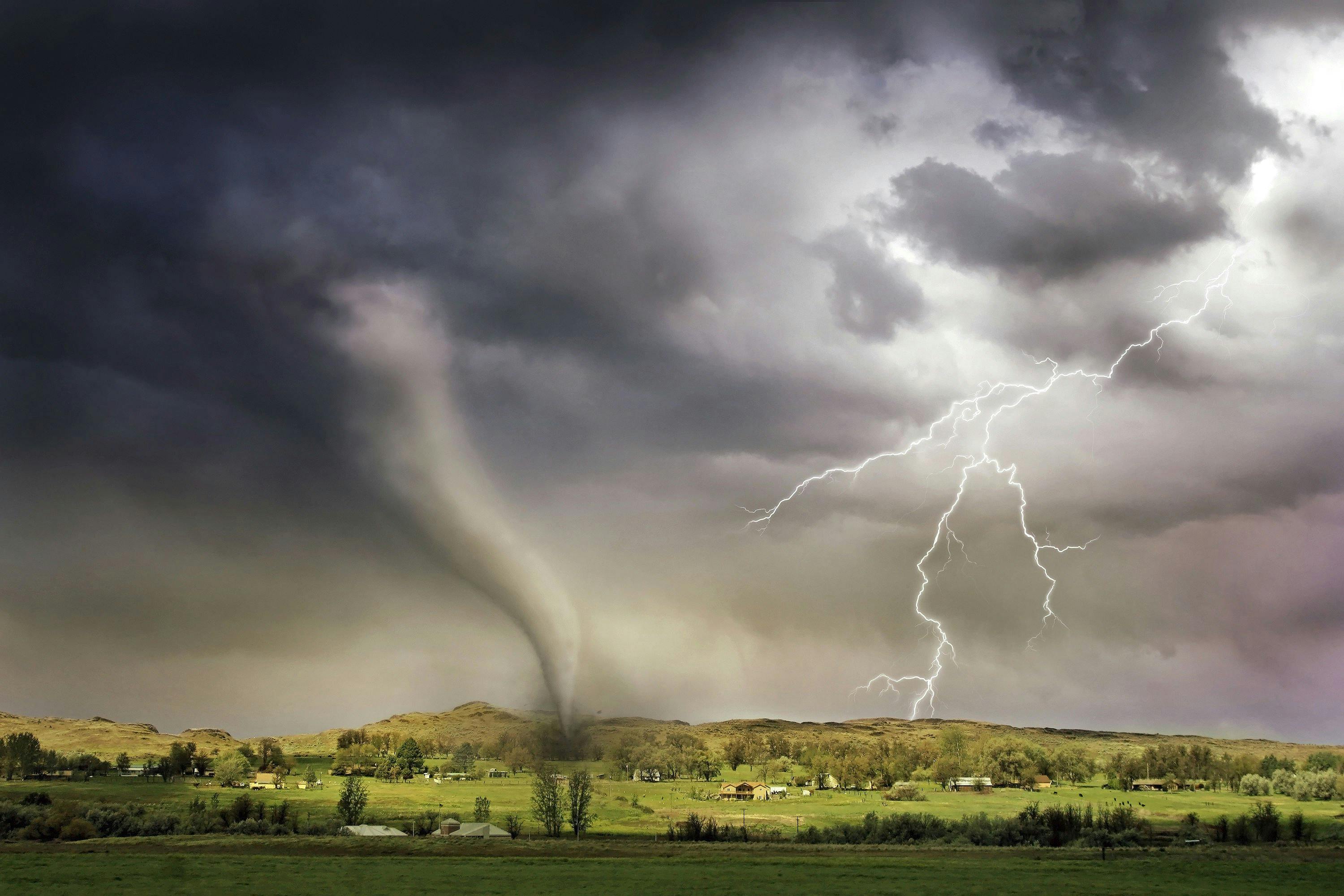
Dramatic tornado funnel cloud touching the ground with dark storm clouds and lightning overhead
Tornadoes are nature's most violent windstorms! These incredible spinning columns of air can pack winds over 200 mph and cause amazing destruction in just minutes. While tornadoes can be terrifying and dangerous, understanding how they form and knowing tornado safety can help keep people safe.
How Tornadoes Form
Tornadoes are born from supercell thunderstorms - giant rotating storms that can be 10 miles wide and 50,000 feet tall! When warm, moist air near the ground meets cold, dry air high above, it creates the perfect conditions for rotation. Wind shear (winds blowing different directions at different heights) starts the spinning motion.
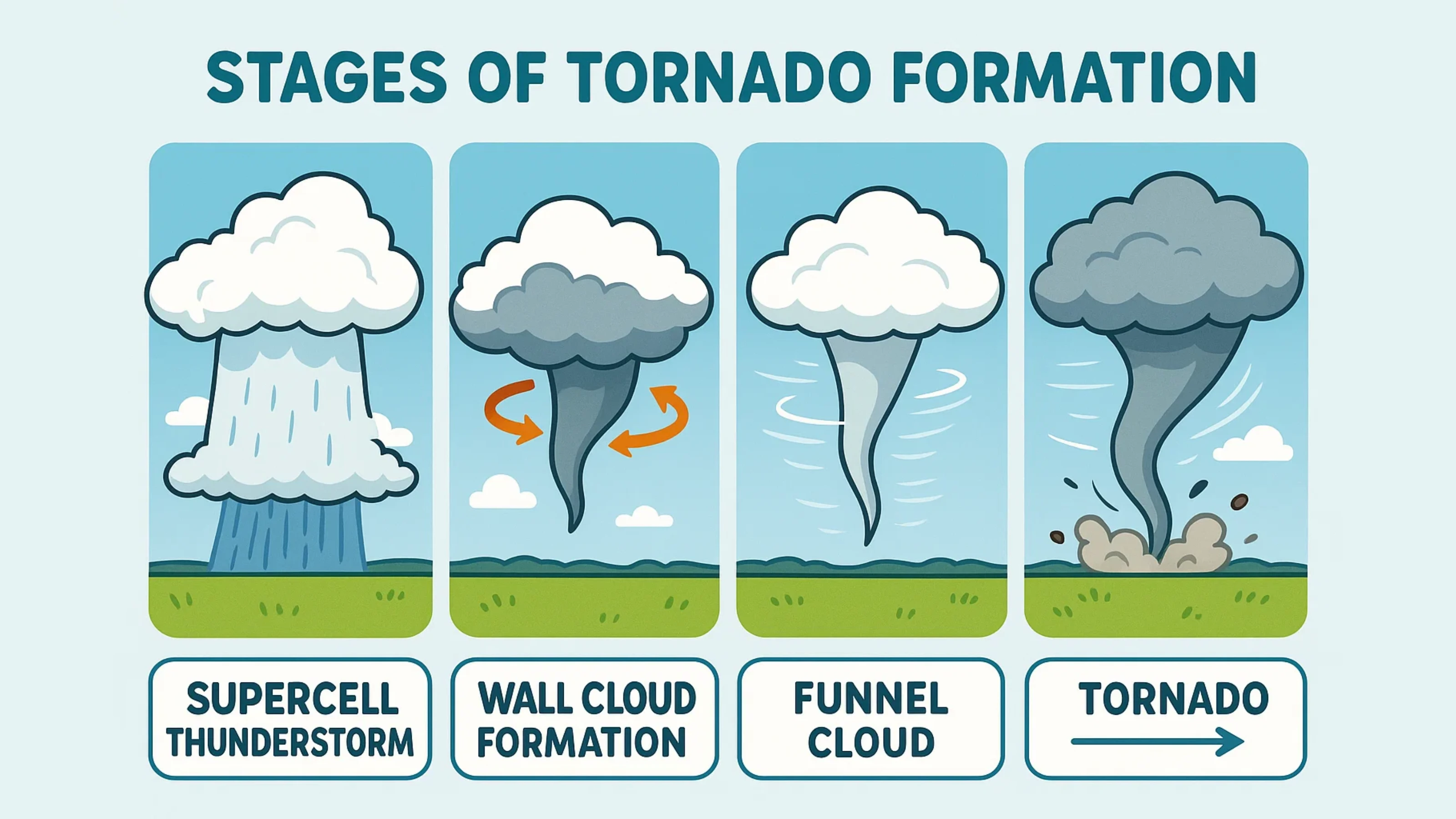 Tornado formation stages showing supercell thunderstorm developing into funnel cloud
The rotating air column starts horizontal but gets tilted vertical by powerful updrafts in the thunderstorm. When this spinning air reaches down from the cloud and touches the ground, it becomes a tornado! Most tornadoes are less than 100 yards wide and last less than 10 minutes.

Tornado Alley and Tornado Scales
The central United States is called "Tornado Alley" because it has the perfect geography for tornado formation. Texas, Oklahoma, Kansas, and Nebraska see the most tornadoes because warm, moist air from the Gulf of Mexico collides with cool, dry air from Canada across the flat Great Plains.
Tornadoes are measured using the Enhanced Fujita Scale (EF-Scale) from EF0 to EF5. EF0 tornadoes have winds 65-85 mph and cause light damage. EF5 tornadoes have winds over 200 mph and can completely destroy well-built homes, toss cars like toys, and even change the course of rivers!
Tornadoes remind us of nature's incredible power, but with proper preparation, early warning systems, and safe shelters, people can protect themselves from these amazing but dangerous spinning storms!