Amphibians

Discover frogs, toads, and salamanders - amazing animals that start life in water and move to land


Amphibians are nature's ultimate shape-shifters! These amazing animals start their lives as water-breathing babies and transform into air-breathing adults. The name "amphibian" means "double life," and that perfectly describes these creatures that master both aquatic and terrestrial worlds.

What Makes an Amphibian?

Amphibians have unique characteristics that set them apart from other animals. They're cold-blooded, have moist, permeable skin they can breathe through, and undergo metamorphosis - a complete transformation from water babies to land adults. Most lay their jelly-like eggs in water.

AMPHIBIAN CHARACTERISTICS
COLD-BLOODED: Body temperature changes with environment
MOIST SKIN: Thin, wet skin that allows gas exchange
METAMORPHOSIS: Complete transformation from aquatic larvae to terrestrial adults
DUAL BREATHING: Can breathe through lungs, skin, and (when young) gills
WATER-DEPENDENT: Need water or moisture for reproduction and survival

The Amazing Transformation: Metamorphosis

Metamorphosis is like watching magic happen! Frogs start as tiny tadpoles with tails and gills, living completely underwater. Gradually, they grow legs, lose their tails, develop lungs, and transform into adult frogs that can live on land. It's one of nature's most incredible makeovers!

FROG METAMORPHOSIS STAGES
EGG: Jelly-like eggs laid in water
TADPOLE: Fish-like larvae with gills and tails
FROGLET: Growing legs, shrinking tail, developing lungs
ADULT FROG: Four legs, no tail, breathes air and through skin
TIME FRAME: Takes 6-24 weeks depending on species and temperature
DIET CHANGE: Tadpoles eat plants, adult frogs eat insects
Info box image

Types of Amphibians

There are three main groups of amphibians: Frogs and toads (which can jump and have long hind legs), salamanders and newts (which have tails and four equal-sized legs), and caecilians (which look like worms but are actually amphibians that live underground or in water).
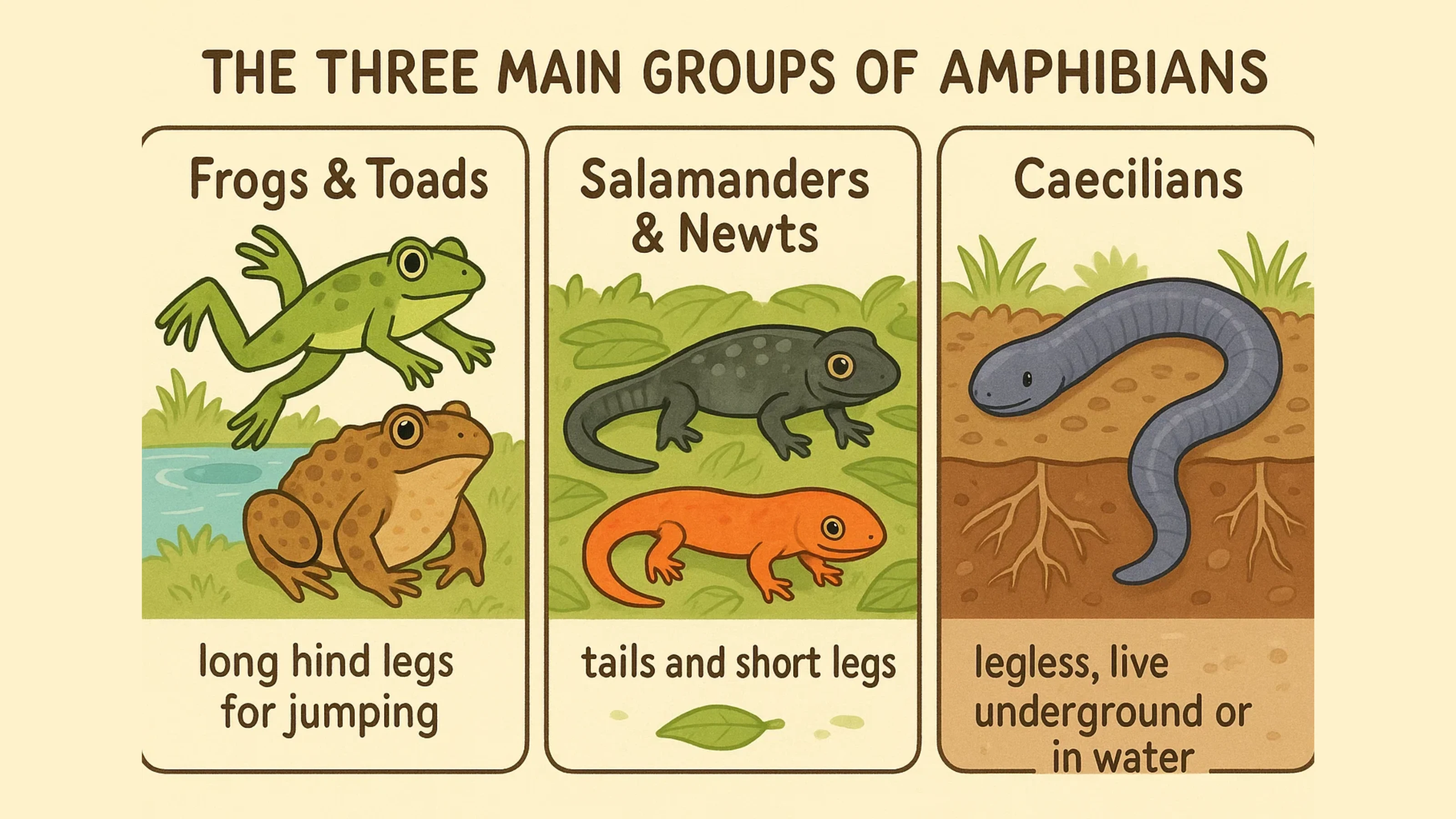
Amphibian Groups Diagram

Amphibian Superpowers

Amphibians have incredible abilities! They can breathe through their skin, which is why their skin must stay moist. Many can regenerate lost body parts - salamanders can regrow entire limbs! Some frogs can freeze solid in winter and thaw out alive in spring. Others can change colors for camouflage.

AMPHIBIAN OBSERVATION ACTIVITIES
Listen for frog and toad calls near ponds in spring
Look for tadpoles in shallow water (don't disturb them!)
Find salamanders under logs or rocks in moist areas
Create a chart tracking metamorphosis stages

AMPHIBIAN ADAPTATIONS
STICKY TONGUES: Many amphibians catch insects with lightning-fast tongues
POISON SKIN: Some frogs have toxic skin to deter predators
LOUD CALLS: Male frogs attract mates with distinctive songs
BURROWING: Some amphibians dig underground to stay moist
FREEZE TOLERANCE: Some frogs survive being frozen solid

AMPHIBIANS AS ENVIRONMENTAL INDICATORS
SENSITIVE SKIN: Pollution easily affects amphibians through their permeable skin
DECLINING POPULATIONS: Many amphibian species are threatened worldwide
ECOSYSTEM HEALTH: Healthy amphibian populations indicate clean environments
PEST CONTROL: Amphibians eat enormous numbers of insects
FOOD WEB: Important prey for birds, fish, snakes, and mammals

HELPING AMPHIBIANS
Keep ponds and wetlands clean and chemical-free
Create frog-friendly gardens with water features
Don't use pesticides that can poison amphibians through their skin
Support wetland conservation efforts
Turn off outdoor lights during breeding season (can confuse migrating amphibians)

Amphibians remind us that life is full of amazing transformations - they show us that change can lead to incredible new possibilities!